
Oleh Chernysh, BBC News Ukraine, Kyiv
Russia is preparing to intensify its offensive in eastern Ukraine and aims to achieve its goal of capturing the entire Donbas region by fall. It is already moving reserves there. At least, this is what Ukrainian military intelligence reports according to data.
The Commander-in-Chief of the Armed Forces of Ukraine, Oleksandr Syrskyi, stated on April 22 that the Russian army is “regrouping and bringing in reserves.”
According to analysts, the Russian offensive may begin in the next month when greenery increases and foggy or rainy weather prevails in eastern Ukraine, which hinders UAVs but favors infantry and mechanized assaults.
Currently, about 20% of the territory of the Donetsk region remains under the control of Ukraine, along with a key defensive line – the “fortress belt,” namely the Sloviansk-Kramatorsk-Druzhkivka-Kostiantynivka agglomeration. It is the most protected area in the country with engineering and fortification structures.
From the north and southwest, it is covered by two more powerful fortified areas – the cities of Lyman and Dobropillya.
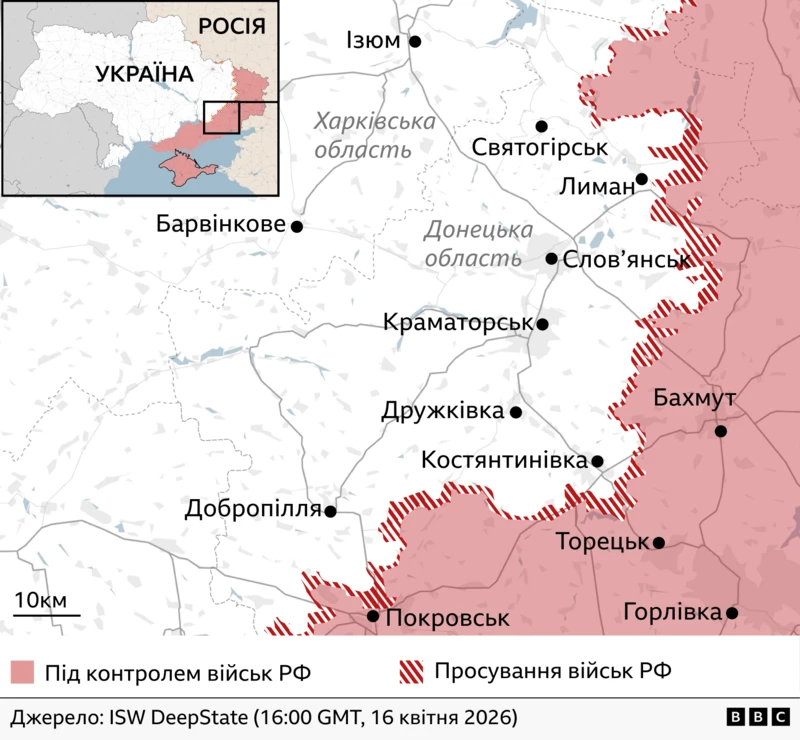
The Kremlin’s demand to withdraw the Armed Forces of Ukraine from these territories to supposedly end the war is rejected by Ukrainian authorities. According to Volodymyr Zelensky, the US is also pressuring Ukraine to withdraw troops from Donbas.
However, Kyiv doubts that such concessions would actually appease Moscow’s ambitions. The territories of the western districts of Donetsk are prepared defensive lines for the protection of neighboring Kharkiv and Dnipropetrovsk regions.
So, if Ukraine dismisses the option of withdrawing troops, is Russia truly capable of forcefully taking Donetsk, as it claims?
This specifically concerns the city of Sloviansk, which holds “symbolic significance” as the place where Russian hybrid aggression in eastern Ukraine began in 2014, and where the Russian army suffered its first defeat by Ukrainian forces.
The Influence of Terrain
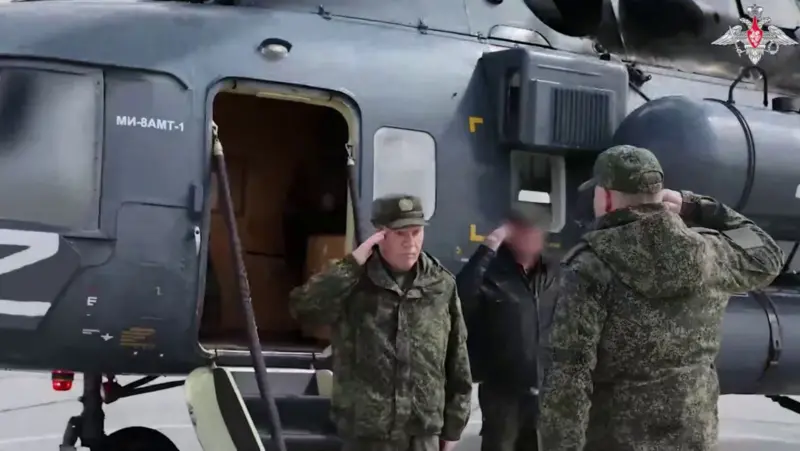
“Our army is moving towards Sloviansk. The day is not far when we will liberate both Sloviansk and Kramatorsk – this is all Donetsk land,” stated on April 21 the Chief of the General Staff of the Russian Armed Forces, Valery Gerasimov, inspecting the positions of the “South” group on the front.
According to him, the Russians have already approached Sloviansk at a distance of 12 km and Kramatorsk at 7 km.
However, OSINT analysts dispute these figures.
For example, the American “Institute for the Study of War” (ISW) states that, according to their estimates, Russian troops are currently 14 km from Kramatorsk and 9 km from Sloviansk.
The defense of these cities is the responsibility of the 11th Army Corps of the Armed Forces of Ukraine.
The spokesman for this group, Lieutenant Colonel Dmytro Zaporozhets, told BBC News Ukraine that Russian forces are indeed more actively asserting themselves in the direction of Slovyansk and are prioritizing attacks in this area.
They are moving towards this city from two converging directions with one goal: from the northeast, the Russians attack along the Siversky Donets River, and from the southeast, parallel to the Slovyansk-Bakhmut road.
In the first case, the fighting is taking place near the villages of Kalenyky, Riznykivka (the Russian Ministry of Defense claimed their capture on March 17, Ukraine denies this) and Kryva Luka.
Near the road from Bakhmut, fighting is occurring in the area of the villages of Pryvillia, Minkivka, Nykyforivka, and Fedorivka Druha (Russia announced their capture during February-March).
The Ukrainian command states that the enemy is trying to maintain the pace of attacks as they plan to reach the heights near Slovyansk for better positions for an offensive.
“The Slovyansk direction is more active due to the geographical location of the enemy. Currently, they are in the lowlands, and as long as we have surrounding heights, we can effectively destroy the enemy,” says Lieutenant Colonel Zaporozhets.
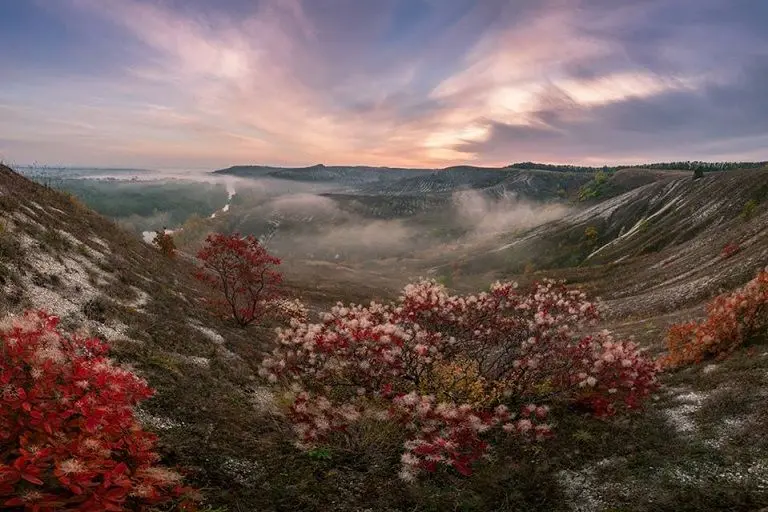
This refers to the so-called chalk cliffs within the “Cretaceous Flora” reserve near the outskirts of the villages Mykolaivka, Zakitne, and Kryva Luka. Battles are currently ongoing here, with the Armed Forces of Ukraine thwarting the enemy’s attempts to establish positions in the area.
“Heights control any logistics. The guys stationed there say that from the heights near Kryva Luka, Slovyansk is ‘in the palm of your hand’. It allows for the use of any unmanned components and puts pressure on the logistics routes that run through Slovyansk to Kramatorsk,” explains Dmytro Zaporozhets.
Former Chief of the Ukrainian General Staff Viktor Muzhenko says that the Ukrainian army used the heights in this area during the liberation of Slovyansk in the summer of 2014 as part of the ATO.
“There are elevations, ravines that allow for effective defense. So the Russian path towards Slovyansk will not be easy and fast, as they might expect,” said the general in an interview with “Radio Liberty.”
Currently, this section of the front is not the “record-holder” for the number of clashes per day (Pokrovsky and Kostiantynivsky directions lead here), but the Russians are making efforts to advance towards Slovyansk not only from the southern bank of the Siversky Donets River from the occupied Siversk, but also from the northern bank – from the Serebryansky Forest, which the RF captured in the fall of 2025.
Here they aim to reach the crossings over the water obstacle near the village of Staryi Karavan (General Gerasimov stated on April 21 that battles are already taking place in this settlement, but OSINT analysts do not confirm this).
The situation for the RF is complicated by the fact that Ukrainians still maintain control over part of the village of Yampil, which ended up deep within the territory controlled by the enemy. Holding positions here allows for creating a flanking threat to the Russian army.
Direction towards Kramatorsk
As for Kramatorsk, Russian troops are less active in this area, notes the spokesperson of the 11th AC.
“They mainly try to move towards Slovyansk, not Kramatorsk. Because there are more prepared engineering structures near it, more open terrain, and moving towards Kramatorsk now is simply a senseless waste of Russia’s resources. That’s why they don’t do it,” says Dmytro Zaporozhets.
On this section, the conditional defense line is the Siversky Donets-Donbas canal. Despite not being filled with water, it still serves as an obstacle for armored vehicles.
“The pipes of the Siversky Donets-Donbas canal still play a fortification role, as the enemy cannot easily pull up armored vehicles. This would improve their logistics and saturate the front line for continuing assault actions,” points out the spokesperson of the 11th AC.
The fighting here occurs east of the canal, in the area of the villages of Minkivka, Nykyforivka, Fedorivka Druha, and Pryvillia. Neither side has confident control over them.
Additionally, events on the Kramatorsk direction are related to the pace of the Russian advance on the neighboring Kostiantynivka direction and near Chasovoy Yar.
Ukrainians are still holding the western outskirts of this city, thus restraining the Russian advance towards Druzhkivka and Kostiantynivka.
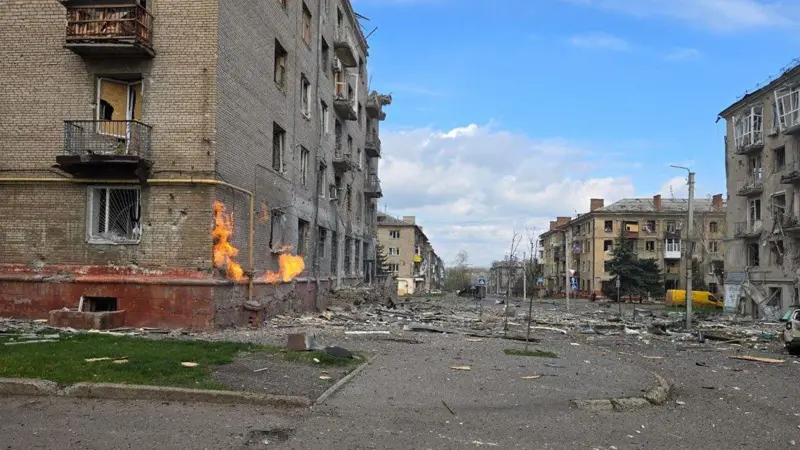
Without significant infantry advancement, Russia has begun more actively bombing towns of the agglomeration from the air.
Using multi-ton guided bombs, it destroys neighborhoods, disrupts logistics, and tries to make the settlements unsuitable for defense.
Regarding the tactics “on the ground,” Russia uses Sieversk, captured in December 2025, as a strongpoint for troop accumulation for further infiltration into neighboring villages.
“A lot of Russian military personnel have entered Sieversk. It’s swarming with their troops; a lot of equipment is being brought in. Likely, there weren’t as many people there before the full-scale invasion as there are now,” said Ruslan Mikula, co-founder of the OSINT project DeepState, who tracks troop movements, to the BBC.
When the offensive will begin
According to the 11th Army Corps, Russia has concentrated about 80,000 fighters in the Slovyansk-Kramatorsk direction and is transferring reinforcements from training centers.
But these forces are insufficient to break through the layered defense of the “fortress belt.” Moreover, the current positions of the Russian army do not facilitate advancement, notes Lieutenant Colonel Zaporozhets.
“While they are in the lowlands, we can destroy them in large numbers, and I doubt they will be able to implement any plans in the near future, even by the end of the summer.”
However, Russian troops continue to gradually accumulate forces and are clearly waiting for favorable weather conditions to start a major offensive, notes analyst Ruslan Mikula.
In his view, they will attempt to act according to this scheme: first, they will pressure Kostyantynivka (currently, fighting is taking place in the southern and eastern quarters of the city), then try to capture or encircle nearby Druzhkivka.
The next task is to take control of Lyman (General Gerasimov’s claims of having control over 70% of this city are denied by the Ukrainian side, with the Ukrainian Armed Forces command stating that there are no Russian troops in the settlement) and advance along the Siverskyi Donets river.
This will allow them to shell Slovyansk from the north bank and potentially create “pincer movements” for capturing the area.
But is it realistic to achieve all this within the next 4 months or even by the end of the year?
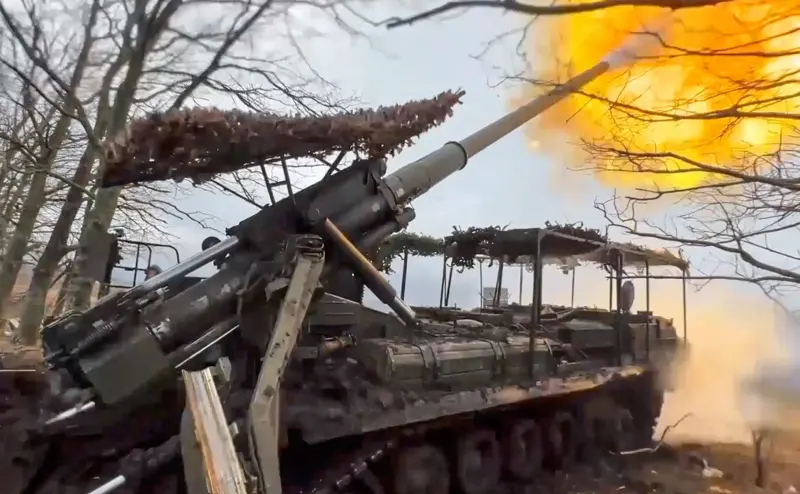
The co-founder of DeepState is convinced that the Russian army is not in the right conditions to accomplish this task now.
“They set such tasks, but it doesn’t correlate with reality,” he said.
Moreover, DeepState analysts do not record large troop transfers specifically to Donetsk. According to Mikula, there are signs that Russia is instead moving reserves, particularly airborne troops, to the Huliaipole area (Zaporizhzhia region).
Additionally, Russia is trying to force Ukraine to transfer additional forces to Sumy and Kharkiv, where its troops have become more active in recent weeks near the border. It is in this section that Russia’s largest advancements were recorded in April.
American military analyst Michael Kofman is confident that the Kremlin lacks the strength and resources to assault the Sloviansk-Kramatorsk agglomeration.
“The threat to these cities and the entire agglomeration is that Russian forces might get close enough for their drones to fly freely over Kramatorsk and Sloviansk.
This would force them to evacuate, and these cities would then face the same fate as Pokrovsk at the end of 2024 – beginning of 2025. That is, Ukraine seemingly controls the city, but it loses viability,” he expressed his opinion in an interview with “Suspilne.”
A similar position was voiced by one of the leaders of Ukraine’s security sector.
“They no longer have the strength for a new major offensive,” he described the enemy’s capabilities in a conversation with BBC News Ukraine.
According to him, the Ukrainian army is currently “confidently holding its positions.”
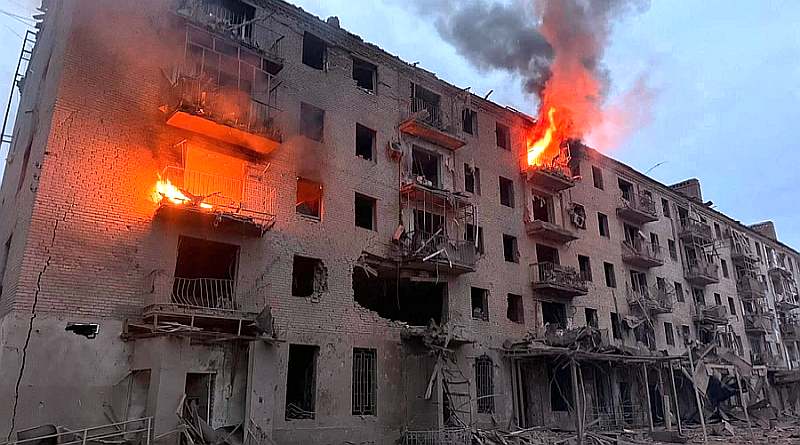
On the cover: Consequences of Russian strikes on Sloviansk. Photo: Facebook Vadim Lyakh
