
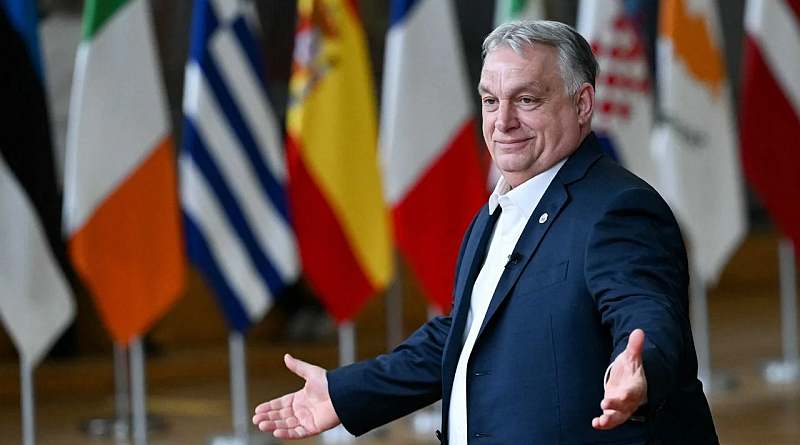
Volodymyr Kim / Dzerkalo Tyzhnya
António Guterres is serving his final weeks as UN Secretary-General: from January 1, 2027, the international organization will have a new leader.
Amid the war in Russia against Ukraine, a series of international crises, and the decline of the UN’s authority, Guterres’ leadership can hardly be called successful, and the new Secretary-General faces the daunting task of restoring trust in the organization. However, it is still unknown who will be entrusted with this mission. Among the candidates mentioned are the Secretary-General of UNCTAD Rebecca Grynspan, IAEA Director-General Rafael Grossi, former President of the UN General Assembly Maria Fernanda Espinosa, Guyana’s Permanent Representative to the UN Caroline Rodrigues-Birkett, and former UAE Permanent Representative to the UN Lana Nusseibeh.
The Secretary-General is appointed by the UN General Assembly upon the recommendation of the UN Security Council. A recommendation requires at least nine votes in favor out of 15 and no vetoes from permanent members. In the course of an indicative (i.e., informal) vote, several candidates have already been eliminated, having failed to secure the support of at least one of the permanent members of the UN Security Council. According to PassBlue, during the last vote in the UN Security Council on October 16, Rebecca Grynspan received nine votes, but two permanent members opposed her candidacy.
Last week, a new name emerged on the list of contenders for the position of UN Secretary-General — an ally of authoritarian rulers and former Prime Minister of Hungary Viktor Orban. His years in power have been marked by the strengthening of authoritarianism in the country, violations of human rights, disregard for the rule of law, restriction of judicial independence, and media freedom, rising corruption, confrontation with the European Commission, conflicts with Ukraine, and flirting with Vladimir Putin…
His candidacy is unacceptable for Ukraine. During the years when Orbán led the Hungarian government, relations between Kyiv and Budapest deteriorated, frequently reaching acute crises. He consistently blocked the allocation of financial and military aid to Kyiv by the EU, hindered the start of negotiations on Ukraine’s EU accession, and demonized Ukrainians, portraying himself as a defender of Hungarian families and sovereignty against the “Ukrainian threat.” Amidst the Russo-Ukrainian war, Orbán’s actions sometimes appeared as opening a second front against Ukraine.
Given this political background, Viktor Orbán’s election as UN Secretary-General would be a significant reputational blow to Europe, as this politician adheres to approaches that contradict the values and principles declared by the EU. Orbán’s Hungary has undermined the European Union and relations with neighboring countries. In light of this, Polish Prime Minister Donald Tusk called the discussions about the former Hungarian prime minister’s candidacy laughable. However, these discussions did not arise out of nowhere.
According to The Wall Street Journal, Orbán’s candidacy is promoted by the Trump administration, which initiated his nomination. A State Department source described the former Hungarian prime minister as a “dream candidate” for MAGA conservatives. If Orbán is nominated for the UN position, he is expected to be supported by Donald Trump and Vice President J.D. Vance, although the official announcement may be delayed until after the U.S. midterm elections.
Although the current White House administration’s relations with the UN are tense (in January, the U.S. withdrew from 31 structures of this international organization and halted its funding!), for Donald Trump, Viktor Orbán represents a way to lead the UN with someone he has friendly relations with and to whom he has provided favors several times. For instance, Trump exempted Hungary from U.S. sanctions on Russian oil and supported Orbán before the parliamentary elections in April. Vice President J.D. Vance even visited Budapest to campaign for him. However, this “help from an American friend” did not benefit Orbán, and the opposition won the elections.
Viktor Orbán himself, albeit with some reservations, has responded favorably to the idea of heading the UN, but is willing to run only if confident in victory. According to The Wall Street Journal, Russia and China are ready to support the former Hungarian prime minister’s candidacy. This is unsurprising, as during his tenure as prime minister in the Carmelite Monastery, Orbán established himself as an ally of authoritarian regimes, consistently advocating for Moscow’s and Beijing’s economic and political interests in Brussels.
During his time as head of the government, he actively developed economic relations with China, attracting Chinese investments to Hungary. Warm relations with Russia have been a hallmark of Orbán, who has repeatedly blocked EU personal and sectoral sanctions against Russia, advocated for the continued supply of Russian gas and oil to Europe and Hungary, and visited Moscow for meetings with Putin. On one occasion, in conversation with the Kremlin host, Orbán compared himself to a “mouse” helping a “lion.”
Moreover, Russia and China consistently strive to expand their influence on the UN agenda, particularly on issues related to the Russian-Ukrainian war and adherence to the fundamental principles of international law and world order. Viktor Orban’s tenure as UN Secretary-General would enhance Moscow and Beijing’s influence within the international organization, which is tasked with ensuring global security, and further weaken its ability to effectively respond to international crises.
“Will other permanent members of the UN Security Council agree with such a candidacy — the United Kingdom and France? I have serious doubts about this, given all the problems Orban has created for Europe over the past few years, not only on issues related to Ukraine,” said Volodymyr Yelchenko, former Permanent Representative of Ukraine to the UN and expert with the Pylyp Orlyk Institute for Democracy, in a comment to ZN.UA. France has already publicly opposed the possible appointment of Orban as UN Secretary-General.
Speaking in the Senate, French Foreign Minister Jean-Noel Barrot stated that this position cannot be considered a “consolation prize” for a leader who lost elections and the trust of their people. Orban’s candidacy was also opposed in Hungary itself. According to Prime Minister Peter Magyar, the UN should not be headed by a “mafia leader,” and if someone truly seeks to weaken or dismantle the international organization, Orban’s appointment could be a “good starting point.”
Thus, Viktor Orban is the ideal candidate to ultimately dismantle the UN from within. The UN is already viewed with skepticism, as its mechanisms have long been inadequate for modern international realities. According to Volodymyr Yelchenko, the UN is practically unreformable, and the root of the problem lies in the veto power in the UN Security Council, or more precisely, its cynical use by Russia, “which took a seat previously held by the former USSR in the UN without sufficient grounds and obtained the status of a permanent member of the Security Council.”
“Appointing Orban or any other politician as UN Secretary-General will not fundamentally change anything. A complete reboot of the organization is needed. The first step should be excluding Russia from the UN or at least not recognizing or suspending the powers of the Russian delegation. For many years, it has poisoned the atmosphere in the UN Security Council and hindered its normal operation, using the veto power to shield not only its aggression against Ukraine but also the regimes and allies it supports worldwide, including Iran, North Korea, Venezuela, and several authoritarian regimes in Africa,” believes Volodymyr Yelchenko.
However, there are currently no signs of readiness to reform the UN. It seems that most UN member states are not interested in creating a strong international organization. They prefer a system where rights are determined not by rules but by force, masked by words about international law, collective security, and adherence to the UN Charter.
In this scenario, Viktor Orban’s candidacy for the position of UN Secretary-General is not so much a staffing decision as it is a test of the international community’s willingness to uphold these principles rather than abandon them in favor of power politics and agreements between major powers.
