

Information on current losses of the Russian Federation due to sanctions as of 14.09.2026.
1. In Sochi, during a new attack, Ukrainian drones could have hit the Russian S-400 complex.
– On the morning of September 14, Ukrainian drones attacked Sochi and Dagomys. According to OSINT sources, one of the targets could have been the Russian S-400 missile defense system in the Dagomys area. Local residents reported explosions.
– This is another blow to the Russian air defense system in the Sochi area, which is important for covering the coast and military and strategic facilities located there.
2. The debt of companies from CIS countries to Russian businesses in June 2026 increased by more than 40% over the year, reaching a record 967 billion rubles.
– The largest debts to Russian companies are by partners from Kazakhstan — 401.3 billion rubles, Belarus — 327.3 billion, and Uzbekistan — 81.7 billion. Overdue debt amounted to about 43 billion rubles.
– Russian businesses are forced to wait longer for payments due to problems with international settlements and increased banking control over transactions.
– Additionally, competition with suppliers from China and Turkey forces Russian companies to offer longer payment deferrals to buyers.
– The increase in accounts receivable freezes the funds of Russian companies and intensifies the shortage of working capital.
3. Eight of Russia’s largest developers received 12.1% less revenue in the first half of 2026 compared to the previous year.
– The most significant decline was recorded by the well-known development company “Samolyot Group” – its revenue fell by 31.3% to 117.4 billion rubles.
– Three out of eight companies ended the half-year with losses, another developer — “LenStroyReconstruction Group” incurred a loss of 57.6 billion rubles.
– The total debt of the largest developers increased to 4.1 trillion rubles. The new construction market is experiencing a decline following the end of the preferential mortgage boom: demand is decreasing, the cost of project financing is rising, and sales are not keeping up with debt obligations.
– At the same time, management costs increased by 36.6%. “LenStroyReconstruction Group”, which reported a loss of 57.6 billion rubles, increased payments to top managers 2.7 times — up to 1.8 billion rubles.
4. The inflation expectations of Russian businesses in September increased to 22.66 points — the average level of 2024.
– Over three months, the index increased by 6.5 points, and compared to the calm period of 2017-2019, it is 2.6 times higher. In August, expectations grew in 7 out of 9 key economic sectors. Even excluding energy and utilities, the indicator rose by 1.1 points.
– The gap between expected and current inflation reached 10.12 points — one of the highest levels since 2002. In 74% of cases when this indicator exceeded 8 points, price growth accelerated by an average of 1.5 points the following month.
– Production costs remain at their highest since spring 2022. Businesses face both high costs and weaker demand, but plan to raise prices to offset costs.
– Russia’s economy is cooling, but inflationary pressure is intensifying — the risk of stagflation is growing.
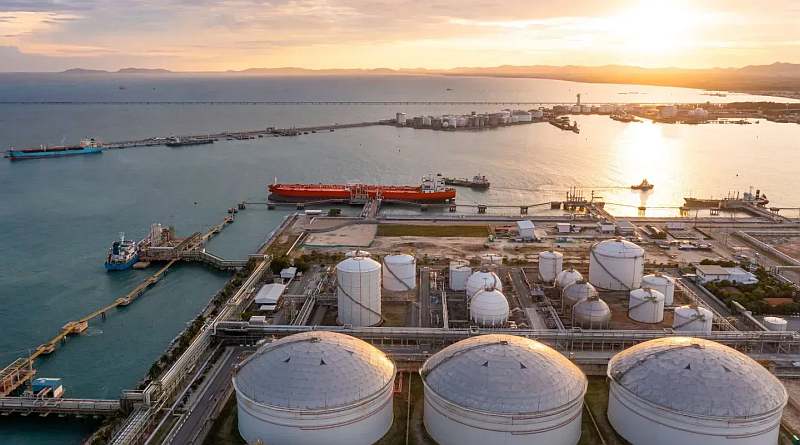
5. The cost of transporting Russian oil from Black Sea ports has risen to a historic high.
– Freight rates have been rising for seven consecutive weeks due to increased shipping risks, higher insurance costs, and a reduced available tanker fleet.
– According to the Price Index Center, from August 31 to September 6, the cost of transporting Russian oil by Aframax tankers from Novorossiysk to Western India rose by 2.7% to $23.2 per barrel. On the route to Northern China, the rate increased by 3.1% to $25.7 per barrel. Transportation to Turkey became 2.2% more expensive — up to $12.8 per barrel.
– After increased drone attacks in the Black Sea, part of the commercial and tanker fleet began to avoid Novorossiysk, reducing the available number of vessels and raising the cost of delivering Russian oil.
– In early September, transporting Urals from Novorossiysk to India cost $18–20 million per trip. Transportation from the Baltic is also becoming more expensive. Aframax freight to Eastern India increased by 3.7% over the week to $17.2 per barrel.
– At the same time, there are no free spot positions for Urals shipment from Russia’s northwestern ports in September. Rising transportation costs reduce the financial benefit of Russian oil exports and make it increasingly dependent on high global oil prices.
– While the more expensive Brent compensates for part of the logistical costs, the ongoing tanker shortage creates additional pressure on Russian exporters.
6. Iran has requested jet drones “Gerań” from Russia for use in war against the US and Israel.
– This refers to the new “Gerań” model — a modernized version of the Iranian Shahed. The jet drone reaches speeds of up to 600 km/h, carries a warhead of up to 90 kg, and has a range of about 1000 km. It is also equipped with thermal cameras, AI guidance systems, and electronic warfare protection.
– According to Yuriy Ignat, Ukrainian forces intercept about 60% of such drones, while for older models the rate is 90-95%. Due to their high speed, jet “Gerańs” are harder to shoot down, yet they still cost Russia less than cruise missiles.
– Whether Moscow has agreed to supply them is unknown.
7. The EU could not agree on the extension of sanctions against Russia, which expire on Tuesday.
– EU ambassadors did not reach unanimity at the meeting on September 14 and must convene again later that day. The discussion concerns the asset freeze regime for about 3,000 Russian citizens and companies. Unanimous consent from all EU countries is required for its extension.
– Slovakia demands the removal of Alisher Usmanov and Mikhail Fridman from the sanctions list. France proposed a compromise — to remove only Usmanov.
– EU countries also did not agree on the duration of the sanctions extension — the traditional six months or 12 months.
– If no agreement is reached by Tuesday, the sanctions regime will cease to apply.
