
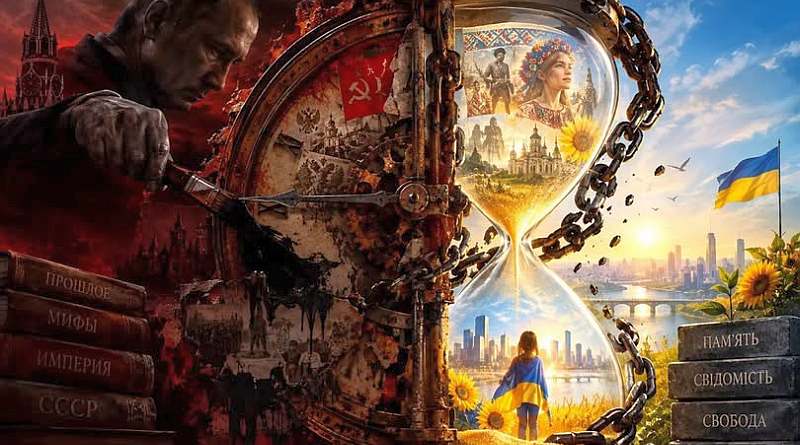
Multidimensional warfare is a modern research framework for describing confrontation that occurs simultaneously in all available environments (domains). Researchers use English categories such as full-spectrum warfare, 360-degrees warfare, or multi-domain operations. Unlike the concept of “hybrid warfare,” which mainly emphasizes the combination of diverse means, this model considers a single system of interconnected domains in which one strategic goal can be achieved through synchronized impact in dozens of different planes, and action in one domain creates cascading effects in others.
The previous version of the “seven levels of war” model was published in October 2025. However, it requires reevaluation because different dimensions and domains of confrontation do not have hierarchical connections but are interpenetrating.
The “seven levels of war” should not be understood as seven floors stacked one on top of the other. They do not form a hierarchy and do not require a mandatory transition from the first to the seventh.
The old formula was: if a problem cannot be solved at a certain level, one must rise to the next level.
The updated formula is different: if a problem has no solution in one dimension, it is necessary to change the configuration of interdependencies between several dimensions.
1. The war for subjectivity and the model of the future
In 2025–2026, there were fundamental changes in the understanding of different domains of confrontation. Countering disinformation or foreign information influences (FIMI), as well as the formulation of “hybrid warfare,” have taken a backseat, giving way to discussions about the cognitive domain.
I wrote about this back in the summer of 2021 as the concept of the “sixth battlefield” (Sixth battlefield). However, for several years, my thesis that the fight against disinformation proved to be an ineffective tool of war was firmly rejected by colleagues, and donor budgets continued to be spent on “studying Russian narratives” and “media literacy.”
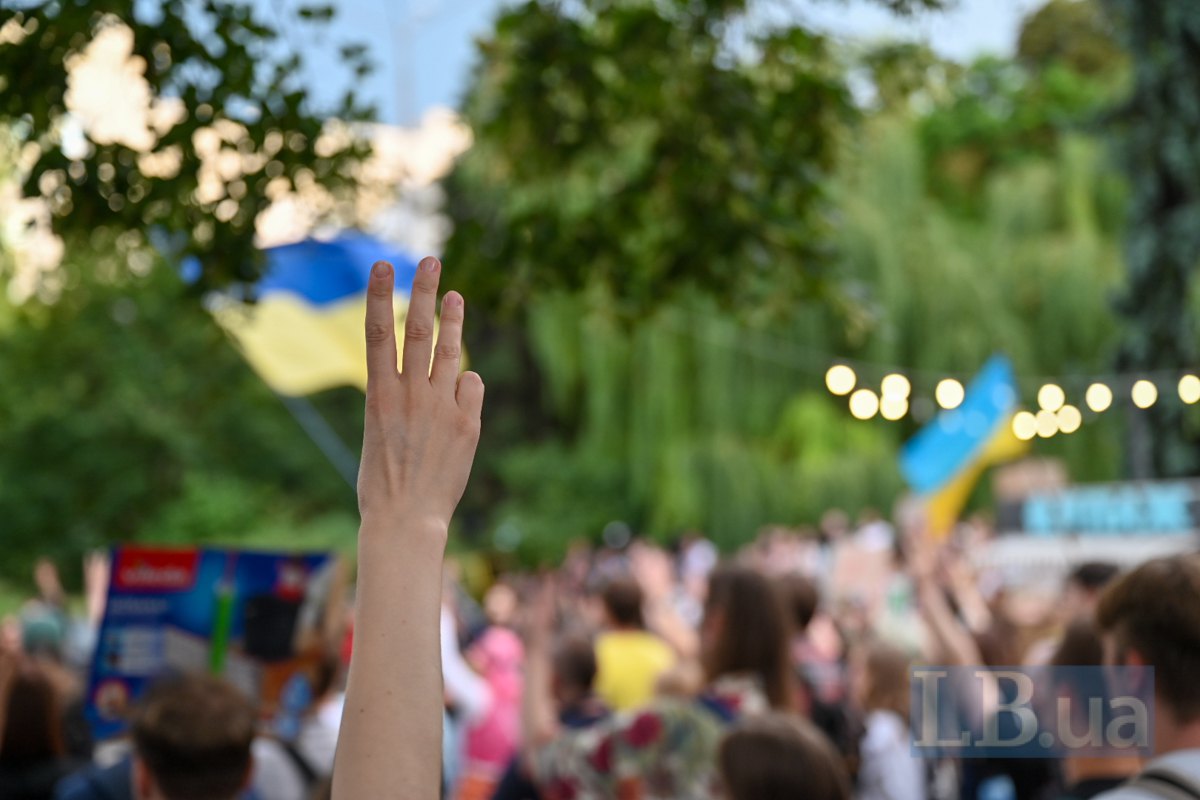
In 2025, the Ministry of Youth and Sports of Ukraine launched efforts to establish Ukrainian identity by engaging experts from civil society. The ministry was able to set the direction of the discussion. Now, the newly established “Mnozhyna” foundation held a competition among Ukrainian NGOs under a special grant program “Identity” and is distributing funds to those who recently solidified the direction of “fighting misinformation” in Ukraine but, sensing the new trend, quickly switched to the “sixth battlefield.”
However, today it is not enough to answer the questions “who are we?” and “how does the enemy exploit our weaknesses?” Despite the war, we continue to work on the question of “what kind of political community we want to be and who has the right to determine our future?”
This is the focus of discussions among those “with placards” fighting for the right to determine Ukraine’s political landscape, and their opponents who protest against “external control by international experts” and the infallibility of “integrity monopolists.” This struggle for subjectivity takes place against the backdrop of pressure from Moscow and Washington over the format of political agreements surrounding a ceasefire and imposing an external definition of Ukraine’s future: through the renunciation of its own territories, neutrality, limitations of foreign policy choices, the nature of statehood, and possible peace conditions.
Public readiness to discuss the cessation of hostilities is not synonymous with a readiness to accept Russian or American constructs of peace. This underscores the importance of separating territorial compromise, ceasefire, and loss of subjectivity.
At the same time, identity can no longer be treated as a homogeneous and automatically positive resource. Within the Ukrainian political nation, disputes about the fair distribution of the war burden, the state-citizen relationship, veterans, emigration and return of citizens, the post-war political system, and the acceptable cost of peace are ongoing and will grow.
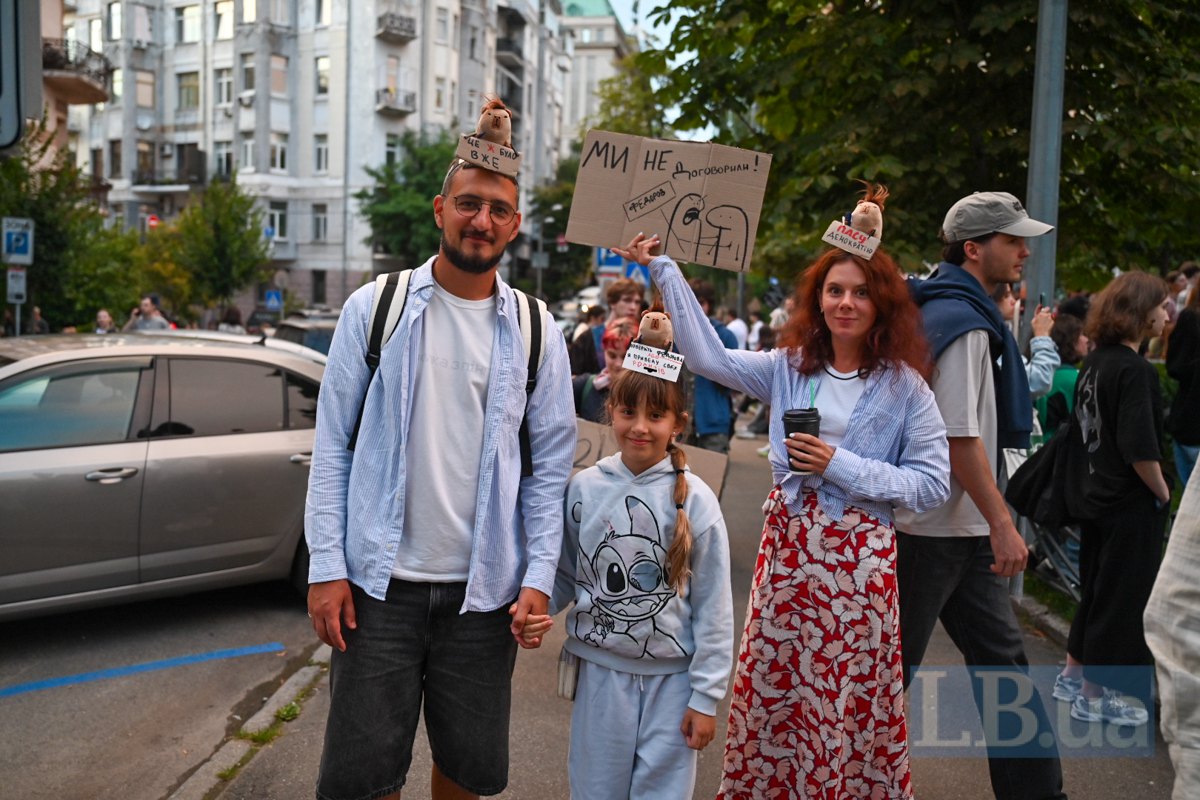
Ukrainian identity cannot be viewed as a formed monolith. It does not exclusively concern national or ethnic characteristics, and it certainly is not reduced to the denial of Russia or the struggle against it.
The next six months are likely to intensify the competition among different models of “post-war Ukraine.” Initially, peace and negotiation proposals will increasingly test the boundaries of what is acceptable to society. Later, the electoral process will challenge our ability to secure our future not only in war but in peace as well.
2. Eliminating the Existential Threat and the Political Outcome of the War with Russia
The second level of confrontation remains the most obvious, as Russia (along with the USA and China) is a natural adversary of Ukrainian sovereignty. However, the military and political outcomes of the war are not the same. War and negotiations have stopped being mutually exclusive states.
Previous publications of the “Seven Levels of War” model also did not equate the start of negotiations with the end of the war, and while control of territories remains important, it does not automatically determine the final strategic outcome. We are fighting for a post-war existence format in which Russia’s existential threat is absent. Otherwise, the struggle for territories will be meaningless.
It is becoming increasingly clear that the format of victory at this level (in both kinetic and cognitive domains) largely depends on the situation at other levels. Only through a comprehensive understanding can victory, defeat, acceptable conditions for ending the war, freezing the conflict, or transitioning the conflict into another form be defined.
In the next six months, the coexistence of combat and negotiation tracks is most likely. Ceasefire will not mean the automatic end of the conflict. And the electoral process that will begin once silence falls on the front line may expose Ukraine to even greater challenges.
3. Competition of Security Orders
Former US Director of National Intelligence Avril Haines presented the American intelligence forecast in March 2021, Global Trends 2040, which among other scenarios for the development of humanity includes the Separate Silos scenario. By 2026, signs indicate that this scenario is being realized globally.
For example, discussions about the potential invasion of the Baltic states by the Russian army have been ongoing for many months. At the same time, European and American experts express skepticism about whether NATO member states would invoke Article 5 of the North Atlantic Treaty in such a situation. This indicates that the organization, created for one purpose only—to resist military aggression from the East—may not fulfil its key function.
Tulsi Gabbard, who replaced Avril Haines as the US Director of National Intelligence, dismantled the unit of analysts who prepared Global Trends 2040. A month after this decision, the US administration announced a new National Security Strategy, naming the Western Hemisphere as its sphere of interests. Presenting the strategy, Donald Trump declared that “Europe is undergoing civilizational erasure.”
All subsequent actions by Washington indicated that the concept of a “unified West” no longer exists. If Europe wants to survive, it will have to embark on an autonomous security course. Currently, this is reflected in the form of a “Coalition of the Willing.”
The Shanghai Cooperation Organization (SCO) summit held in the last days of August 2026, although it did not showcase groundbreaking strategic documents (for instance, Putin unsuccessfully advocated for the creation of a joint bank based on the SCO), once again demonstrated the non-Western world’s interest in keeping a hidden defiance towards the USA and Europe.
This level of confrontation is a competition between security orders and coalition networks (silos) united by the principle of security cooperation. Security cooperation impacts technological affinity and economic interaction, which should “feed” technology and security.
In the next six months, there will be further growth in European responsibility, the development of ad hoc coalitions, and ongoing negotiations regarding the distribution of costs and risks between the USA and Europe.
Ukraine has no other options but to integrate maximally into the European security system to become a structural interest of partners, not a tool of the political cycle in individual capitals. The “Freya” missile defense system project and the Drone Deals network essentially represent this vector of development.
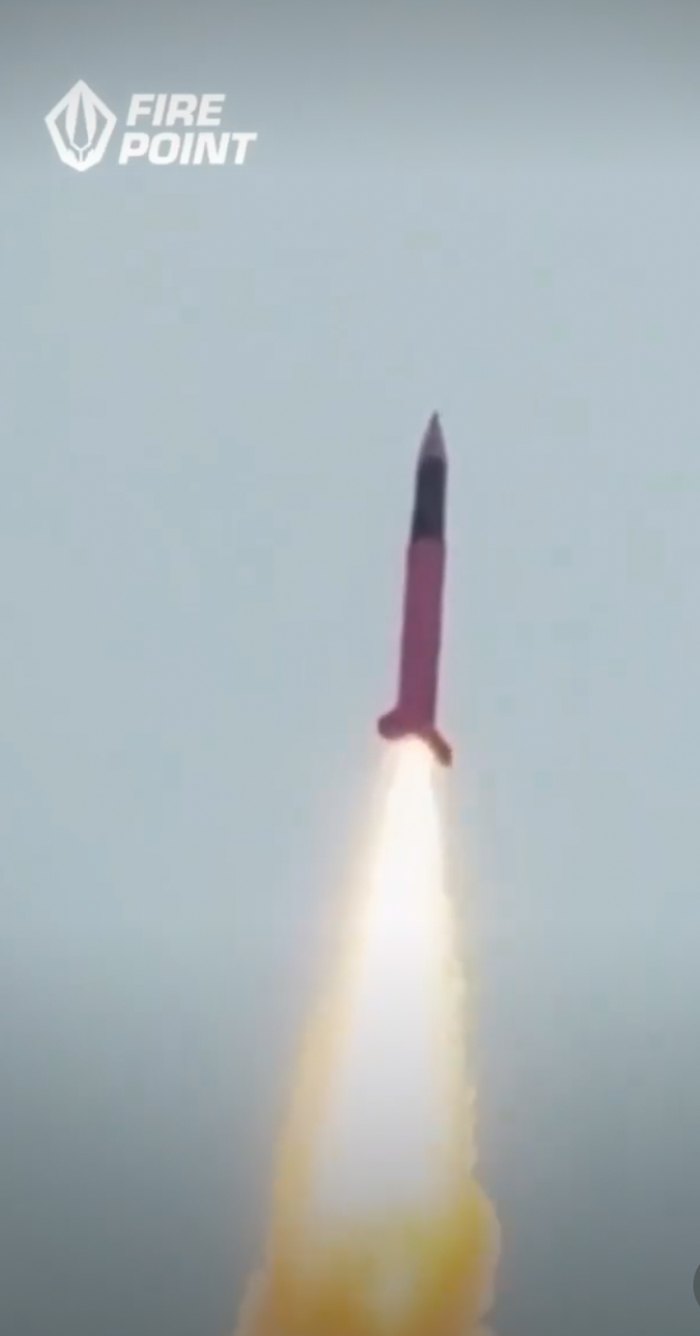
The key question is in which “world” (separate silo) Russia will remain. If it continues to be a raw material, geopolitical, and economic appendage of China, then the confrontation between worlds on the territory of Ukraine will stretch into the next centuries.
4. Time-war: the collapse of the old and competition for a new world order
The most difficult level to understand and configure, situated at the center of gravity of the “seven levels of war,” is the realization that the technological transition taking place before our eyes results in both a new technological era and a future shock simultaneously.
By the fall of 2026, it became more apparent that disorder and reordering occur simultaneously. The old order no longer functions in its former form, but there is not yet a new stable order.
Time-war is a concept considered in Western military thought, philosophy, and chronopolitics, focusing on time, speed, tempo, and narrative. In a technological and tactical sense, it is a struggle for dominance in decision-making speed. At the operational-tactical level, this can manifest as outpacing the enemy’s OODA loop (Observe, Orient, Decide, Act) cycle. The use of artificial intelligence and cyber technologies allows battle management to accelerate to a degree where a human is physically unable to respond in time.
Whoever controls time and anticipates the course of events forces the enemy to “live in the past”: constantly catching up and reacting. The paradigm of “countering disinformation and foreign information influences” has consistently placed us in a position of catching up and deprived us of the ability to fight at the level of time-war. The same will occur if the cognitive domain is viewed in the context of “cognitive security” or “cognitive defense” — categories with questionable legitimacy.
This formula has proven its effectiveness since the evolutionary confrontation between Cro-Magnons and Neanderthals. The ability to adapt, technological advantages in weaponry, and higher birth rates gave Cro-Magnons an edge, and Neanderthals disappeared about 40,000 years ago, either dissolving into the sapiens population or becoming extinct due to a lack of resources.
The winner will be the one who can move more intensely along the axis of past-future time while also being able to operate with an understanding of the past and shaping the expected future.
For example, in Poland, key political actors are creating a situation where they try to use historical leverage in current political interests. This can lead to the past dictating the agenda of the present, depriving operators of the ability to manage their interests for the future. It is crucial for political order operators not to get lost on the time axis.
Chronowar includes a war for control over history, memory, and perception. From the Russian side, it is an attempt to impose its imperial version of the past and deprive society of faith in its own agency, inducing a state close to “cancelling the future.”
However, in a broader sense, it is also a choice between rigidity, a desire to maintain the status quo, and a willingness to change and the ability to control future formation.
This level can also include one explanation of the philosophical incompatibility of the paradigms of Oleksandr Syrsky and Mykhailo Fedorov: “your drones buzz and disturb our fighters’ advance.”
A large number of global elite members see their well-being in preserving the rules and status quo that have developed over the twentieth century, facing another part of the global elite determined to radically change this order.
Since Ukraine had no status quo in the past, it is only interested in the future. However, much of the European paradigm, which is Ukraine’s choice at the civilizational level, sees its benefit precisely in preserving the status quo and business-as-usual. This divide is one of the most dangerous in the European cluster, which Ukraine has no alternative to.
Those who show a willingness to operate with uncertainty on their own will also be able to influence the tools of chronowar, accelerating or slowing down the pace of change. In this logic, Ukraine must stop positioning itself as a defender of the previous status quo, which could be considered a rules-based order. Its strategic task is to become a co-creator of the next order, where European security and agency will be one of the system’s principles, impossible without Ukraine.
5. Competitive Interdependence of the USA and China
The authors of the Global Trends 2040 forecast described one scenario — Competitive Coexistence, which is implemented simultaneously with Separate Silos. “Competitive coexistence” between the USA and China is expressed in the competition for leadership in the next technological setup, but this confrontation does not reach armed conflict.
The USA and China compete for technology, markets, infrastructure, political influence, standards, and security environment while remaining interdependent and capable of pragmatic bargaining. Confrontation, bargaining, and interdependence coexist.
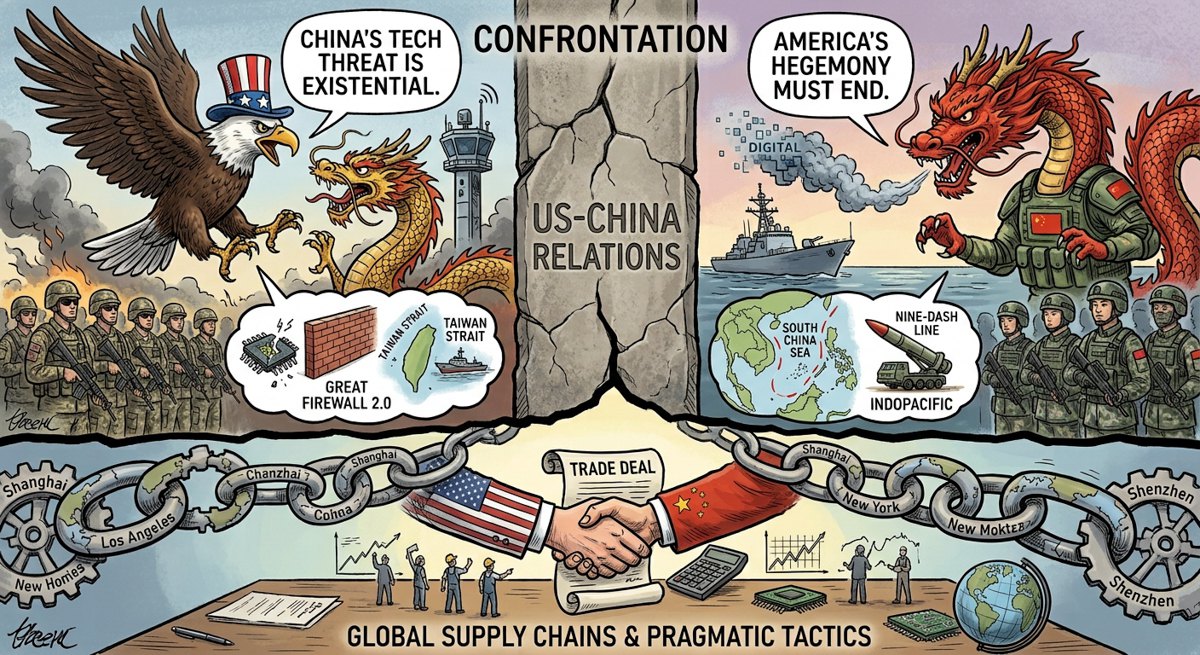
A lot will depend on Europe’s position and agency. One should also consider the role of India, the Gulf states, and other middle powers. They are not simply choosing between Washington and Beijing, but are trying to use the competition between great powers to expand their own freedom of action.
In the next six months, one should expect a fluctuation between confrontation and agreements. Technology, artificial intelligence, Taiwan, critical minerals, and control over strategic chains will remain zones of competition, while trade will simultaneously remain a field of conflict and a stabilizer. For Ukraine, the desirable position is one in which it does not become the object of a grand agreement, but creates its own strategic value for the USA, Europe, and other centers of power.
6. Struggle for space and traffic
The previous name of this level “geopolitics vs. geo-economics” and the formula “world of borders vs. world of roads” were heuristically productive, but the word “versus” turned out to be erroneous. Since it is not the tools that are in opposition, but the subjects who use these tools.
Geo-economics is increasingly becoming a way to implement geopolitics. And geopolitics formats the world to be as convenient as possible for geo-economics.
Xi Jinping took office as head of the PRC on March 14, 2013, and within six months announced the “One Belt, One Road” initiative (Belt and Road Initiative / BRI), which became the geo-economic basis for the traffic of Chinese goods and technologies.
In 2026, issues like critical minerals, supply chains, energy, payment systems, sanctions, technological standards, and trade function as tools of geopolitical struggle. Conversely, the situation in the Strait of Hormuz and the blocking of oil traffic is a vivid illustration of how geo-economics dictates the possibilities for geopolitical bombing.
“Borders” and “roads” are not in opposition—they have merged into a single system of struggle for control over space and flows. The desirable change for Ukraine is the gradual transformation from a recipient of external resources into an important hub of European economic, transport, energy, technological, and human networks.
7. Ontowar: competition of platforms for defining legitimate reality
Ontological war is an evolutionary confrontation between political and civilizational platforms for establishing the basic categories through which societies define political subjects, truth, legitimacy, norms, and the permissible future.
The result of ontowar is determined not only by the spread of a narrative or way of thinking but also by the ability to create one’s own categories and turn them into norms for managing institutions and practices in society. This means building one’s own natural structure of political and international reality. To give things and phenomena their names, and then, through methods of cognitive confrontation, to prove the inevitability of such a perception of reality.
Cognitive warfare may attempt to change what people think about a certain event or phenomenon. Ontological conflict arises at a higher level: what is an event in the first place? Who defines reality and its parameters? Can a country be a sovereign state or is it an “artificial entity”? Is an international border a fundamental norm or a historical accident?
Cognitive warfare fights for what people think about reality; ontological warfare—over the categories through which reality becomes politically comprehensible. The cognitive domain deals with how to perceive being. Ontological warfare defines what being is.
NATO structures in their reports offer explanations that the toolkit of cognitive warfare aims to destruct the OODA loop of military commanders, to sabotage their ability to manage their forces and resources, and to demoralize and disorient society.
Ontological warfare creates a categorical space that doesn’t even allow the process of creating an OODA loop regarding a certain adversary to begin, paralyzing the very structure of being.
For instance, European experts vehemently speak about the necessity of working in the cognitive domain due to risks and threats to the democracy of European countries. They also publicly acknowledge that neither Europe, nor the European Union, nor national entities have, are developing, or even discussing their own strategy regarding Russia as a source of threats.
Russia does not destroy their OODA loop. Russia has created an ontological space where there is no OODA loop directed at it.
Speaking at a discussion panel of the think tank “Ukrainian Prism,” cognitive warfare expert Tanna Crewson said that Europe should perceive Russia as an incurable disease, the course of which can be managed with modern treatment methods. This position is the clearest reflection of the ontological paralysis of European thinking.
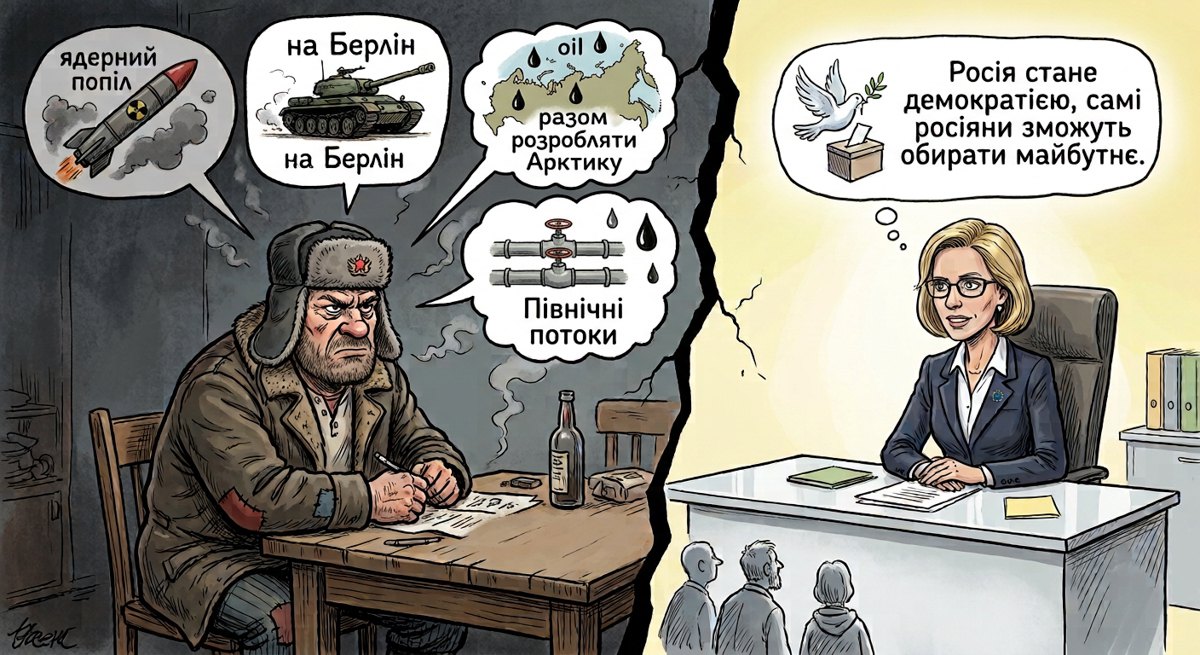
Russian thinkers can afford to speak about Europe in any categories they choose: from “to wipe into nuclear ash” and “to reach Berlin” to “to restore the Nord Streams” and “to jointly develop the Arctic shelf“.
At the same time, the categorical apparatus of Europeans is limited to “faith in a democratic Russia, whose beautiful future will be chosen by the Russians themselves“. The same Russians who are currently discussing wiping Europe into nuclear ash.
Thus, ontological warfare creates a general structural framework for chronowar. It defines what the past was like and formats the future: what world is considered normal, possible, and desirable. Ontological warfare takes place not only over the interpretation of the past and present. It is a struggle for the right to make a certain future “normal”. To achieve this, one must constantly build and improve their ontological platform by creating strategic documents and policies that describe categories and norms, and then through institutions to form everyday practices.
It can be the other way around: the existing order of things is reinforced by people’s spontaneous everyday practices. After which these practices become institutionalized and form categories, norms, and rules that support the ontological platform. If a certain practice exists for a long time and is supported by force and institutions, it may begin to be perceived as natural.
Ontological war is a struggle over which world will be considered normal and natural. Strategic victory at this level doesn’t occur when everyone repeats your theses. It happens when your basic hypotheses about the world no longer need explanation and become default assumptions.
If the principle “states cannot change the borders of other states by force” is perceived as an obvious prerequisite of international politics, this is an ontological advantage of one model of order. If the principle “great powers have natural spheres of influence within which the sovereignty of smaller states is limited” is normalized, this is a different ontological platform.
It is precisely the competition between such basic assumptions that is the subject of the seventh level of war. It determines who is recognized as a subject, how truth is defined, who has the right to act, which rules are considered natural, and what order can be imagined and accepted.
Cover illustration: GPT chat
