
Today, many are focused on the fate of the new Minister of Defense of Ukraine. This interest is entirely justified, understandable, and natural. In wartime, the position of the Minister of Defense cannot be left vacant, not even for a short time.
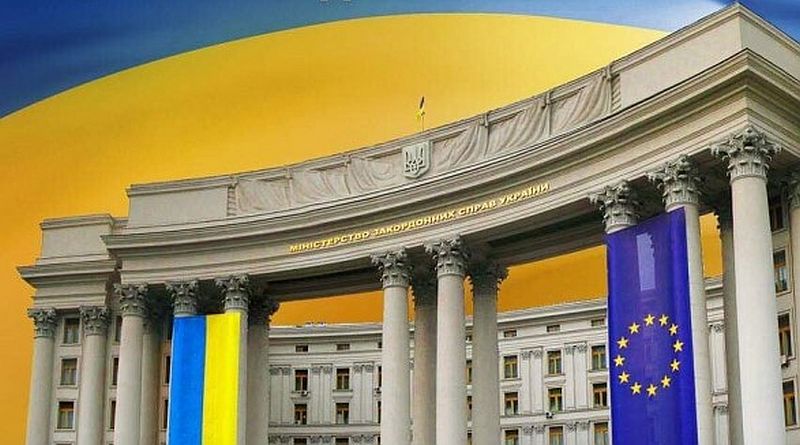
But it is equally harmful to leave another key position vacant, namely that of the Minister of Foreign Affairs of Ukraine. However, this is the phenomenon we are witnessing today. Two portfolios under the constitutional and main quota of the Head of State have turned out to be empty. And how long they will remain so is an open question.
Meanwhile, the situation in the foreign policy department is no less important than in the Ministry of Defense. Ukrainian diplomats today are just as much warriors as our military. They simply fight on a different front—the front of consolidating the international coalition supporting Ukraine, obtaining weapons for the Ukrainian military, air defense systems, finding partners for promising developments, strengthening sanctions pressure against Russia, promoting Ukraine to the European Union, NATO, finding new allies and creating negotiating frameworks to end the war.
Like the line of combat confrontation, this front knows no pauses. International politics does not stop for a day, not even for a moment. Meetings, negotiations, decisions, new coalitions, and communication developments occur daily. That is why the Ministry of Foreign Affairs cannot operate in a waiting mode without a full-fledged head.
Whoever leads Ukrainian diplomacy, the demands on the new minister must be entirely clear today.
First of all, returning subjectivity to the Ministry of Foreign Affairs itself. It is the MFA that must be the center for forming the state’s foreign policy. Diplomats should determine its professional agenda, propose solutions, open new opportunities, and take responsibility for their implementation. Ukrainian diplomacy cannot remain merely an executor of someone else’s political decisions, no matter how high they come from. The head of the MFA must be a responsible and initiative leader who, in wartime, will strengthen rather than merely accompany the diplomatic efforts of the Head of State.
Secondly, restoring trust in relations with our closest neighbors. The legacy of the last year has been extremely challenging. Poland and Hungary have increasingly become examples of crises that directly impact Ukrainian national interests rather than successful partnerships. The Czech Republic, Slovakia, Bulgaria. We have already lost too many people, territories, and time. We cannot afford to lose allies or trust. Relations with neighboring countries will significantly determine the success of Ukraine’s European and Euro-Atlantic integration. This must not be forgotten.
Thirdly, accelerating Ukraine’s entry into the European Union. The Minister of Foreign Affairs cannot be an unnoticed shadow on this track. On the contrary, they must be an honest communicator between Kyiv and Brussels and the capitals of EU member states. All expectations, recommendations, and demands of our European partners must be heard not only in the MFA but in every Ukrainian ministry, every central authority, and on all the hills of Kyiv. Membership in the European Union does not begin in Brussels. It begins in Ukraine—with reforms, the rule of law, anti-corruption efforts, and strengthening democratic institutions. The task of the head of the MFA is not to soften or dilute our partners’ demands, not to act as the ‘devil’s advocate,’ but to ensure their understanding and implementation within the state.
Fourth, NATO. Despite the war and the complex international situation, this topic should not move to the background. Especially in light of the positive outcomes of the Alliance’s Summit in Ankara and the decision to deepen NATO’s interaction with Ukraine and provide $140 billion in support for our state. On the contrary, Ukrainian diplomacy must work even more actively to keep Ukraine’s membership issue among the Alliance’s priorities. Ukraine must not only ask for support but also shape its future role as one of the guarantors of European security.
Fifth, the Global South. China, India, Brazil, South Africa, and other influential states in this region remain areas where Ukrainian diplomacy has not yet achieved the results the state anticipated. This primarily concerns Beijing. Today, the logic of international politics is no longer that China is seeking a path to the major capitals of the world, but that the major capitals of the world are seeking a path to Beijing. Ukraine must also be part of this process. The less international support remains with Russia, the sooner a just peace will approach.
The Minister of Foreign Affairs of the new Government will have a difficult but unique opportunity. This is a chance not to explain the mistakes of the past but to correct them. A chance to return Ukrainian diplomacy to a rising trajectory. A chance to make foreign policy deliver results again in the best interests of the Ukrainian state.
Because diplomacy today is not an addition to the war. Diplomacy today is Ukraine’s second front. And success on this front depends no less than the successes of our warriors on the battlefield.
