

Recently, I read news about how many drones Ukraine can produce and what its prospects are abroad. They’re talking about potential billions.
But.
Remember, about a year ago, when the issue was raised that export needs to be opened, and it was said then that this window of opportunity would be short. Well, a year or a year and a half, and then others will take this place, because making drones isn’t like rockets; we managed, others will too.
Well, that time has passed.
Those who are currently attending exhibitions report that the market has already adapted without us. Take, for instance, the exhibition in France. Yes, there was FP, and a number of other Ukrainian manufacturers, but if you walk around the stands, you see the dominance of European manufacturers. There are strike drones, interceptors, scouts, and NRC… And big business is happening there, with million to billion-dollar contracts being signed, budgets being developed, and the market moving on. Different countries are ordering drones worth hundreds of millions of dollars from other countries. France from Poland, Japan from Germany, and so on.
As one interlocutor told me: “The smartest were those manufacturers who opened their branches abroad, overcoming the pressure from the authorities.”
Do those European drones work according to their price and specs? Not really. There’s a lot of criticism of the solutions that Europeans are currently selling. But the multimillion-dollar train has left, and these resources will be worked out over time.
Moreover, a difference in approach has emerged. Ukrainian drones and drones for Europe may differ in functionality. Ukraine is more adapted to mass and cheap drones, which combine characteristics needed on the modern battlefield and are reliant on an experienced pilot.
Europe takes a different path. They don’t have thousands of experienced pilots, they lack the experience and dozens of training schools, both civilian and military. Therefore, Europe is more interested in comprehensive solutions, automation of impact/counteraction functions, because they understand that they can’t physically prepare so many pilots in a short time. Therefore, for them, a more expensive drone, where the human is less involved, is normal.
This, by the way, is not only the European way; it’s a global path. Like in Qatar, when they came there to market our “toys,” such great interceptors, it turned out that no one there could operate them, and building schools and testing pilots took six months to a year. Therefore, Arabs said straight: either automate or control remotely, otherwise we don’t need your product. As we know, they ended up working remotely. But this gave a push for the automation of the system, which is also under development here.
Similar solutions are being created in global drone use concepts, for which drones are being prepared. We somehow think our drones are the pinnacle of wartime products. The fact that our drones are suitable only for our battlefield and our specifics while Europe needed slightly different drones and it was necessary to work with this market right away, study their needs, capture it, and shape its directions and rules – we ignored this.
So when there are now bold statements that we will go on export and drones will be our Ukrainian gold (or oil), I would not be so sure. For this to happen, it was necessary a year ago to start liberalizing drone exports. And all this time, we tightened the screws and made the process as controlled by the authorities as possible. And, unfortunately, this gave the corresponding result. Although some Ukrainian companies will indeed become known on the market. But there could have been many more.
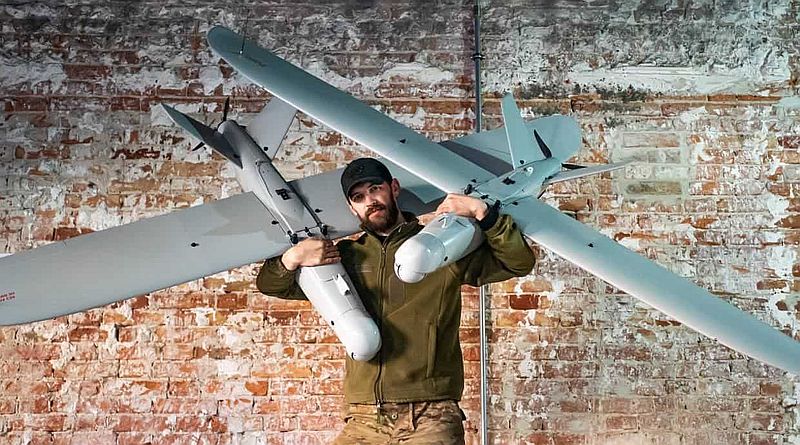
On the cover: “Leleka-100” drones of the Ukrainian military. March, 2023. Ukraine. Photo: “Come Back Alive”
