
Olesya Zhihalyuk, BBC News Ukraine
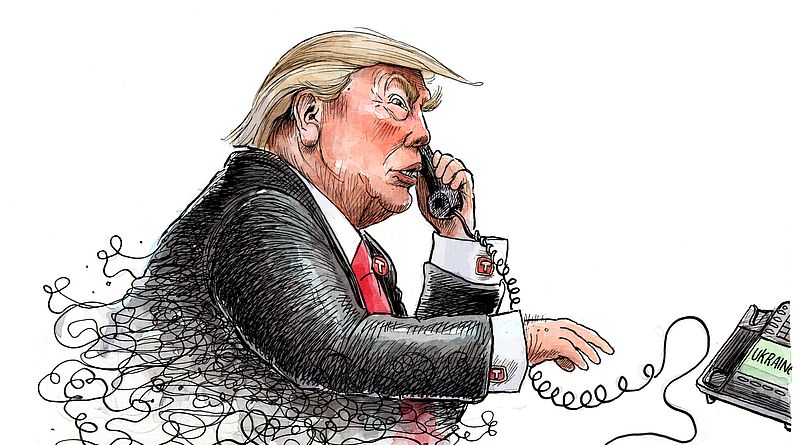
US President Donald Trump, unwittingly, might have changed the course of the war in Ukraine, believes Telegraph commentator Bill Browder.
In his opinion, after Washington stopped strictly controlling the use of military aid, Kyiv gained more freedom to hit targets on Russian territory.
However, CNN and Foreign Policy urge caution in drawing conclusions.
Indeed, Ukrainian strikes are putting increasing pressure on the Kremlin, but this does not necessarily mean Putin is ready to stop the war.
Freedom of Action Instead of Restrictions
Bill Browder calls Trump’s policy the main paradox of recent months.
During his election campaign, he promised to end the war in 24 hours. This did not happen. However, as the Telegraph commentator writes, the decisions of the new administration could have changed the very logic of waging war.
According to Browder, the Joe Biden administration, which provided Ukraine with over $66 billion in military aid, simultaneously established strict rules for its usage. The US feared direct escalation with Russia and insisted that Kyiv not use American weapons to hit targets on Russian territory.
As a result, Russian troops could amass forces near the Ukrainian border without significant hindrance, while Ukraine was forced to wait for the start of an offensive before striking back.
Browder is convinced: the West should not weaken support for Ukraine but instead should increase it.
In particular, to increase the supply of weapons and air defense systems, transfer about $300 billion of frozen Russian state assets to Ukraine, and impose secondary sanctions on countries that continue to help Russia profit from oil.
The Kremlin Is Not Ready to Retreat
CNN agrees: Ukraine’s long-range strike campaign has started to produce noticeable results.
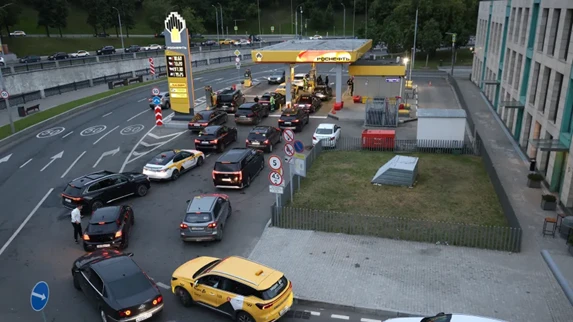
The channel describes a scene recently unusual for Russia: queues at gas stations in Moscow and other cities, fuel shortages, and in occupied Crimea, the temporary suspension of its sale to the population.
Even Vladimir Putin could no longer ignore the issue.
“You know perfectly well that the problems for drivers and businesses persist… Unfortunately, queues at fuel stations remain for now,” he stated during a meeting with government officials.
The Russian president also announced that the authorities are considering a complete ban on the export of diesel fuel and have already created a special task force to address the fuel crisis.
Meanwhile, at the G7 summit, European Commission President Ursula von der Leyen stated that events are increasingly favoring Ukraine, and now is the time to double support for Kyiv.
However, CNN emphasizes that it is still too early to talk about the quick end of the war.
Russia has suffered massive losses, officially claims four Ukrainian regions, and has built internal propaganda around the notion of inevitable victory for years. Under such circumstances, any agreement that cannot be presented to Russians as a success poses serious political risks for the Kremlin.
This is why, journalists believe, even large-scale strikes on Russian oil infrastructure do not mean that Putin is ready to end the war.
A Cornered Kremlin May Become Even More Dangerous
Foreign Policy focuses on this risk.
The publication writes that Russia is increasingly facing problems on several fronts at once.
According to British intelligence, the number of Russian military casualties is approaching half a million, and the total losses have already exceeded one million people. To replenish the army, the authorities are forced to offer record payments to new contract soldiers.
At the same time, Ukrainian drones continue to attack the Russian oil infrastructure. As Reuters notes, this has already reduced Russia’s refining capacity by about 700,000 barrels per day.
The state of the Russian economy is also worsening. The head of the Central Bank of the Russian Federation, Elvira Nabiullina, warned of high inflation, labor shortages, and increasingly difficult economic conditions.
Thomas Nilsson, head of Sweden’s military intelligence, believes that the Russian economy may face either a prolonged downturn or a deep crisis.
Dissatisfaction, according to the publication, is also growing among Russian businesses. The Financial Times quotes one entrepreneur: “Everyone is angry. Everyone understands this is a disaster.”
Another source cited by the Guardian speaks of “a growing realization that absolutely senseless and self-destructive decisions are being made.”
However, it is here, the authors of Foreign Policy believe, that the main danger lies.
They compare Vladimir Putin to a drowning man who, trying to save himself, might pull others down with him.
In their opinion, the more difficult the situation becomes for the Kremlin, the more it leans not toward compromise, but toward expanding cyberattacks, sabotage, and other hybrid actions against the West.
The publication reminds us that every time Putin felt increased pressure, Moscow responded with threats of new escalation.
Thus, the coming months may become not only more challenging for Russia but also more dangerous for the whole of Europe.
Illustration: Adam Zyglis
