

On June 22, 2026, UK Prime Minister Keir Starmer officially announced his resignation as leader of the Labour Party and head of the government. This decision marked the end of his two-year tenure in power, which began with a triumphant victory in the 2024 elections but quickly led the government into a deadlock.
According to analyses by leading British publications such as The Guardian and the Financial Times, Starmer’s resignation was the result of a deep domestic political and economic crisis in the foggy Albion.
Starmer’s cabinet failed to deliver the promised economic growth and alleviate the cost-of-living crisis. Market nervousness due to uncertainty led to a rise in the yield of 10-year UK government bonds to 5.1% — a level close to the 2008 peak.
The last straw was the victory of the influential former Mayor of Greater Manchester, Andy Burnham, in the by-election in Makerfield. This gave the party opposition a powerful leader and prompted pressure from the cabinet to demand Starmer’s departure to save Labour’s position in the face of the growing threat from right-wing forces like Nigel Farage.
Tensions were heightened by sharp disputes over army funding, which recently cost Starmer his defense minister, as well as contentious personnel decisions, such as the attempt to appoint the scandal-ridden Peter Mandelson as ambassador to the USA.
Now regarding the future power alignment. The most likely successor to Starmer appears to be Andy Burnham, whose “coronation” seems almost inevitable after his potential rivals, including Wes Streeting, expressed their support for him. Burnham represents the party’s “soft left” wing, focusing on returning state control over public utilities and social equality.
In foreign policy matters, Burnham is known as a staunch Atlanticist. His stance towards Russia and the conflict in Ukraine is tough. Burnham has openly stated that “the war in Ukraine is the front line for each of us on the European continent.”
As Mayor of Manchester, he co-founded the international network UNBROKEN Cities Network — together with the mayors of Lviv and Liverpool — to support Ukrainian cities.
It seems that as Prime Minister, Burnham would maintain the UK’s defense commitments to NATO, although he will have to seek a complex balance between arms procurement and funding the domestic social sphere.
For the Kremlin, Starmer’s departure will yield no geopolitical dividends. There is a strong bipartisan consensus in the British establishment regarding opposition to Russia, and a change in leadership will not affect it.
Moscow has already tried to exploit internal leaks from Downing Street concerning Starmer’s plans to fight Burnham to claim a “struggle for survival” within the British elites.
However, Burnham will continue to provide military assistance to Kyiv and strengthen European security. In a situation where Donald Trump’s administration in the USA takes a more transactional and skeptical stance towards NATO, London under Burnham may assume an even more active coordinating role in Europe, remaining an uncompromising opponent for Moscow.
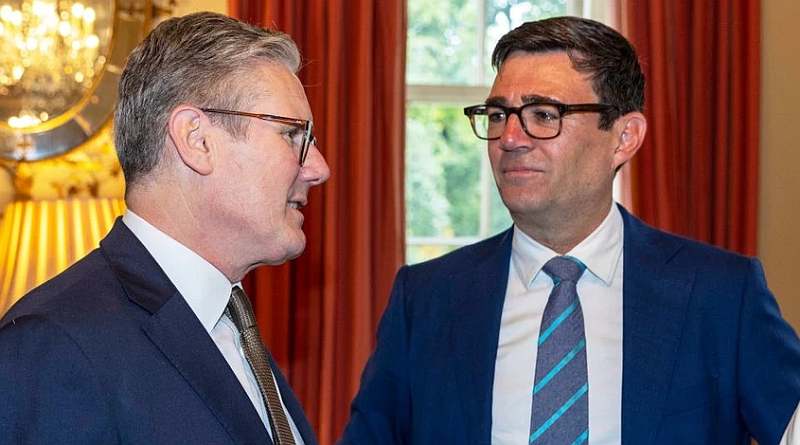
In the picture: Keir Starmer and Andy Burnham. Andy Burnham, former Mayor of Manchester, is considered the main contender for the position of leader of the Labour Party and Prime Minister.
