
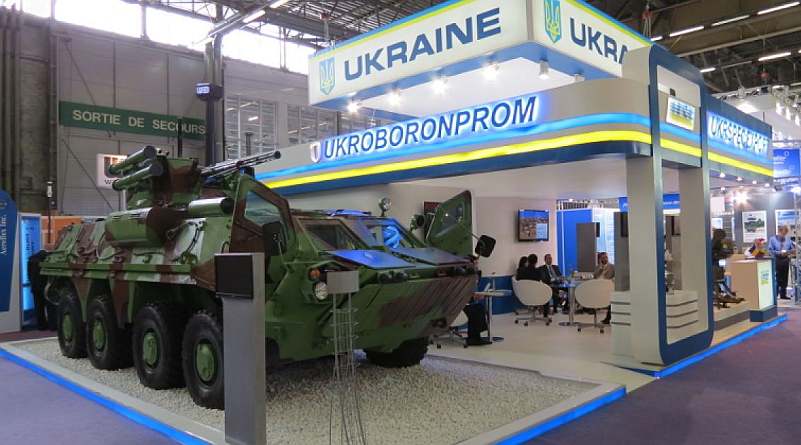

The question of exporting surplus (I emphasize) weaponry seemed to emerge at the end of 2023, it was on the agenda in 2024, ripened and overripe in 2025, fermented, and exploded in 2026.
Initially, the reluctance of the President’s Office to open exports was explained by the idea that “the people would not understand.” Then it became clear—and now it is quite transparent—that the problem is not with the people, who are not nearly as foolish as portrayed, but directly with the head of state.
The President of Ukraine seems to genuinely believe that it is somewhere in the 1960s, that we have an iron curtain, and that neither the internet, flash drives, nor capitalism have yet been invented. But none of this is true. Money is liquid. Power and influence are air. If we don’t sell the drone, others will. Germans, Americans, anyone. They are not at war, they have better scientific schools, developed institutions, and engineers (as of now) do not have problems with booking and aren’t going on assaults. They lag behind us now because for us, technology and application are matters of survival, not business. But they are catching up.
Ultimately, a hypothetical Arab country does not need the most technologically advanced drone that can work under dense REB and equally dense air defense. It needs a drone it can buy. And if there’s demand, supply will arise. That’s 100%. It’s an axiom.
Everyone, the president included, should acknowledge that not long ago we started with a simple Chinese Mavic, which we certainly did not invent. And yes, we’ve gone far, but not in silence and not alone. We collaborate with the world. We upload tons of videos. The world sees what we do and imitates us. And the world is larger than us. Whether we like it or not.
So the currently failed export and the president’s threats to imprison someone for building factories abroad is no longer even funny. It’s just dumb. We are right now missing the opportunity to bind entire regions to us for years and decades. Moreover, we are effectively pushing away and driving out those who propel our defense industry forward. And all this for the illusion that control is possible.
This is untrue. The truth is that we are losing a historical chance. And no threats will help.
History does not like threats.

Budanov gave several interviews regarding arms exports. The main thesis is that we should strive to sell finished products with good added value, not licenses or configuring processes. It makes sense, in principle.
All these “Danish models” and other countries like Norway, Canada, and the Netherlands, which plan to invest up to 6 billion in our arms production, clearly show several things.
RF bombings do not achieve the goal of paralyzing our military-industrial complex; otherwise, we would be asking for machines, lines, and relocation, not working capital. The plan for 2026 is to accumulate up to 35 billion in the military-industrial complex.
Our “Stugna,” “Neptune,” “Bohdana” howitzers, long- and medium-range drones are generally okay; no need to reinvent the wheel. “Flamingo” hits the workshop from 1000 km away, hits the corner of the border post in the EW zone where the antennas are — that’s enough.
It’s clear that as long as critical weapons haven’t saturated the armed forces, we shouldn’t sell. But if, for example, the fleet is driven deep, a damaged submarine is shuffled between piers, and a BDK is finished off in Sevastopol — marine drones can and should be exported. Ukraine is the first country in history to knock out an enemy fleet without having its own. This is the best marketing pitch on the global market, no exhibitions in Abu Dhabi can show this.
If something hasn’t passed the war exam (early drone frequencies are suppressed, EW stopped working) — Africa and Asia like Myanmar are golden opportunities. This is the land of the lost Lemuria technologies, send it there. Our drones written off due to Russian EW are wunderwaffe for them. They don’t have such suppression systems, so our outdated hardware is absolute high-tech for local conflicts. No money? We can accept raw materials for the military-industrial complex, rare earth metals, or mercenaries. Prigozhin was blown up by Putin in a plane, but his business lives on.
Obviously, we shouldn’t relocate experts and engineers abroad under the guise of branches, and then be surprised: “oh, people are leaving.” There are many places in the world with better climate and finances than Ukraine. It’s worth acknowledging and keeping people here with mortgage programs.
If an engineer knows that after 5 years of designing and perfecting missiles at a factory in Poltava, the state will fully cover his apartment, — he won’t move to work in a warehouse in Poland. Loyalty of minds is bought with comfort: compensate the first installment, provide car certificates, top-level medical insurance. You can think of anything.
The signal to business is clear — open in Ukraine, and you get the green light from the state. Taxes, added value, jobs for people. Why do we have unemployment during a survival war, hello?
In principle, many, after a successful war for independence, have bet on miltech. Israel is an example: it started by hijacking ships in Cherbourg, and now it sells atmospheric missile defense systems to the European Union. Three generations have passed from makeshift guns made from plumbing pipes to this level.
There is a chance to stop being petitioners and become contractors. The defense industry is our new “IT sector,” our agriculture, and our main insurance for the future. All this Western aid through “Danish models” now is just seed capital. Our task is to turn this capital into a conveyor that will feed the country for the coming decades.
In the cover photo: illustrative image by Ukroboronprom
