
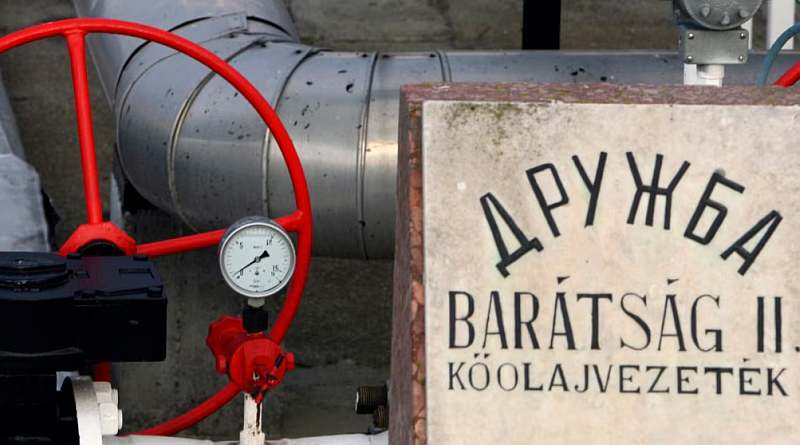

Moscow’s geopolitical behavior in Central Asia has finally transformed into a policy of open dictation and economic sabotage. Another confirmation of this approach is the situation with the export of Kazakh oil to Germany. Astana seeks to diversify markets and strengthen economic ties with the EU, but Russia opposes this and uses the “pipeline” as a tool of suppression. It is a clear demonstration that any economic agreements can be instantly overturned by the Kremlin to maintain political control and exert direct pressure on a sovereign state.
The situation around the “Druzhba” oil pipeline has exposed Kazakhstan’s critical vulnerability. High-quality Kazakh oil, intended for refineries in Schwedt, has become a hostage to Putin’s ambitions. In reality, as long as the main volumes of hydrocarbon exports pass through Russian territory, Astana remains in direct and dangerous dependence on Moscow’s whims. Russia is completely indifferent to Kazakhstan’s losses. For the Kremlin, it is much more important to use the “Druzhba” infrastructure as a leverage over Europe, which is trying to free itself from energy dependence on the aggressor.
Meanwhile, Kazakhstan’s own financial losses, forming colossal amounts of lost profits, and, more importantly, the systematic loss of its reputation as a reliable supplier in the global market, are secondary factors for the Kremlin and are simply disregarded.
Lately, the information space has been filled with “unofficial signals” and rumors about possible restrictions or “technical difficulties” of transit. These insinuations form a primitive but dangerous tool of blackmail. Moscow’s goal is clear: to keep Astana in a state of constant tension and fear for its budget, forcing it to adjust its foreign policy course to suit the neighbor’s interests.
Against this backdrop, the official rhetoric of “strategic partnership” looks like mockery. Russia has once again confirmed its absolute unreliability. A partner who can cut off the tap at any second for political gain is not an ally; it is a threat to national security.
Therefore, it is vital for Kazakhstan to develop independent routes for transporting oil and gas. The situation with “Druzhba” and regular “repairs” at the Caspian Pipeline Consortium (CPC) only confirms: building routes bypassing Russia through the Caspian should have been done yesterday.
The development of the Trans-Caspian Route (TMTM) and the expansion of cooperation with Azerbaijan, Turkey, and Georgia are not just an economic alternative but a matter of state preservation. Kazakhstan must as quickly as possible break the energy umbilical cord linking it to the Russian transit system, invest in a tanker fleet and port infrastructure on the Caspian, and build direct political alliances with consumers in the EU, bypassing Moscow’s mediation.
Moscow can no longer claim the role of a stable transit hub. Its actions are treacherous, and its methods clearly destructive. For Kazakhstan, it is time to fully realize: energy and political independence from Russia is the only path to preserving sovereignty. “Breaking away from Moscow” must become irreversible before Russian energy blackmail completely destroys the economic potential of the region. Independent routes for Central Asian countries are not a whim but an insurance policy against Moscow’s imperial madness.
