
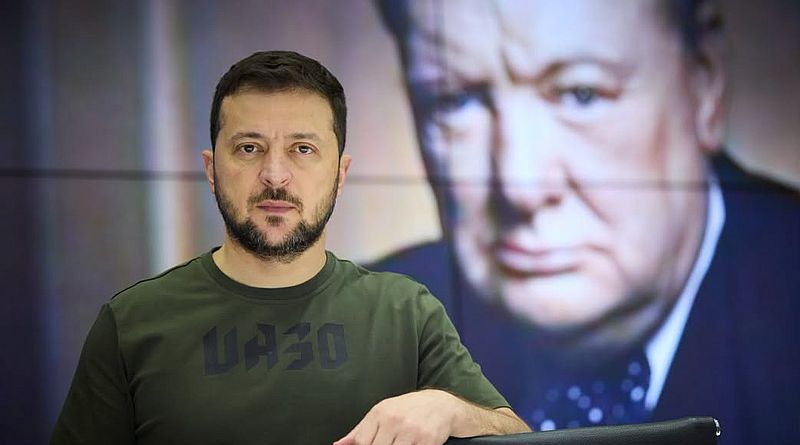

In mid-May 1945, Winston Churchill was at the peak of his fame: a victor in a terrible war, an unyielding national leader, a strong and powerful politician, who was not broken even by the worst monster in human history – Hitler. Churchill’s approval rating was about 83%. In other words, voters simply adored him.
And to quickly turn this fickle love of the nation into new terms in power, Churchill and his Conservative party decided to hold quick elections, scheduled for July 5, less than two months after the end of World War II.
These were the first post-war elections. The country had lived without elections for the last 10 years – and accordingly, without a change of power. Because of the war. Not the time.
But the first post-war elections were lost by the Conservatives – along with Churchill.
And they lost overwhelmingly. More than 100 votes were lost in Parliament: 393 against 210 seats. That was an undeniable, though unexpected, fiasco.
So how did it happen? Why?
After all, the party leader – the Savior of the Nation – was sincerely adored, and the election campaign was built around his personality and image as a National Leader. The campaign slogans were mainly: “Let him finish what he started.”
But the majority of voters did not vote for it.
Among the reasons for such a resounding electoral humiliation are, for example, that Churchill’s party was not supported by the military.
Moreover, Churchill was associated with the war – and all the troubles it brings. It was also said that a military leader is not what is needed for post-war reconstruction.
And Churchill himself once blurted out, “I’m bored without war.”
In addition, competitors (the Labour party) crafted their election campaign much better and more clearly, embedding the main expectations of war-weary citizens – essentially offering a clear program of reforms: in the economy, tackling unemployment, rebuilding, and the healthcare system.
And the Conservatives did not offer any particular action program, instead actively pedaling the greatness of the Greatest Leader of contemporary times.
By the way, the vote count was delayed for as long as three weeks because the voting soldiers were still on the fronts, far from polling stations, and mainly voted by mail. The British Army at that time consisted of about 3 million people (up to 6 million, according to other estimates, along with colonial troops). Its units were located not only in Europe, but also in Asia and Africa.
And by the time the elections were held – the war against Japan was still going on, incidentally.
In general, 10 years of rule is too much for any democracy. Power should change regularly so that “clans” do not arise, stable corruption links are not created, and state officials do not have “security about tomorrow.”
All this was consciously or subconsciously understood by the majority of British voters in 1945. But the ruling party did not understand or did not want to understand it.
The analogies with modern Ukraine – and especially with Ukraine of the future – are too obvious. And above all, this is a story about “ratings.”
The polls conducted during the war will differ greatly and even radically from post-war polls. Especially when the polled voters go to the polling stations for a secret (!) ballot.
And this will not only be due to a similar scenario in the United Kingdom 80+ years ago. Because more or less the same happened in many other countries: leaders of countries that won the war generally are not re-elected for the next term of office.
And this is assuming the country won the war. But if the war ended not exactly with a victory, – here there are generally zero chances.
It should be noted that despite the resoundingly lost elections of 1945, Churchill became Prime Minister again in 1951, mainly because the Labour government that came to power simply could not fulfill its pre-election promises. After which they remembered the “strong leader” who was the opposition leader and was writing memoirs. And the horrors of war somehow gradually began to be forgotten.
Will these historical lessons be learned in Ukraine – who knows.
But I am sure that whoever learns them will gain significant advantages. However, not everyone will be able to learn them, only intelligent, educated, and adequate people.
And hopefully, the advantages of learned lessons can be used in the not-too-distant future.
P.S.: The photo was taken from the official website of President of Ukraine V. Zelensky.
UPD: Some understood this post as a comparison of Ze with Churchill. In fact, this post is about the fact that the leader of a country during wartime almost always loses the election after the war. Even Churchill.
