
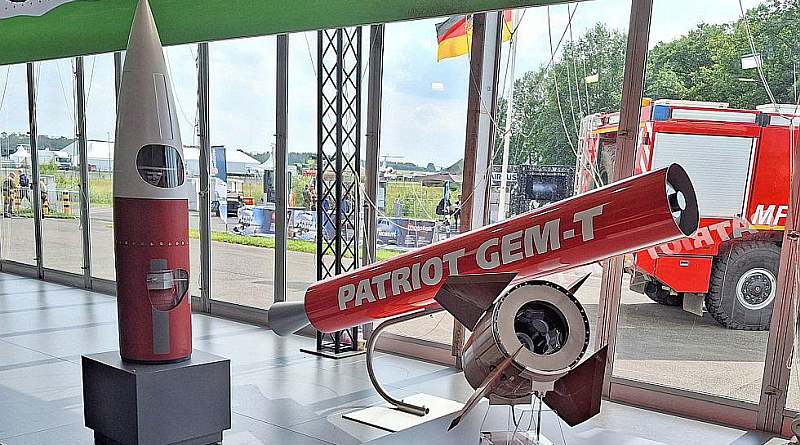
Do you feel that smell? It’s not just fresh press and coffee, it’s the smell of the ambitious “Sky Shield” project (ESSI) transforming from huge stacks of paper into a real modern air defense dome over Europe.
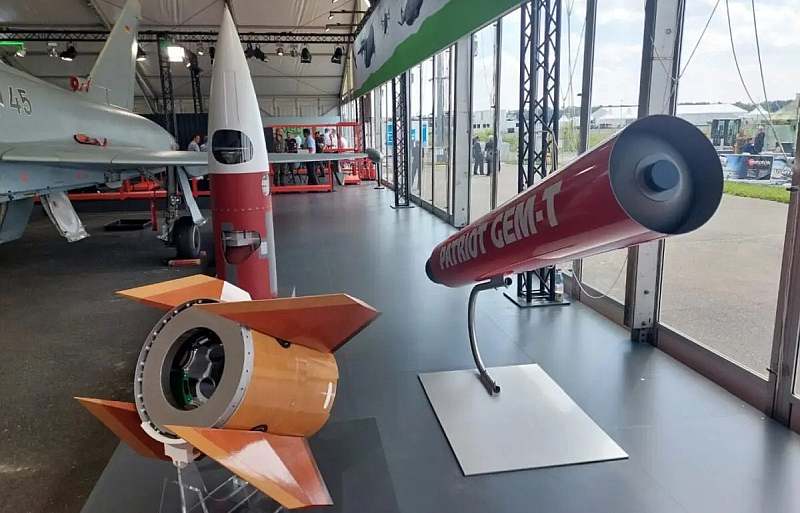
The American company Raytheon (RTX) has just issued an invoice for 3.7 billion dollars. It concerns the production of Patriot GEM-T missiles for Ukraine. Commercial contracts are usually prioritized over intergovernmental ones (FMS) because Ukraine pays with real money, even if it’s from financial aid — it doesn’t matter.
Previously, the plant in Schrobenhausen (Bavaria) was just a large, solid workshop. For decades, they checked the shelf life of missiles, replaced fuel in engines, tinkered with missile brains, and performed maintenance for the Bundeswehr. The measured life of the German rear. But the world has changed. Now it’s a full-fledged production hub COMLOG — a joint venture between Raytheon and the European MBDA. The world’s first full-cycle assembly line for GEM-T missiles outside the United States. They added new testing stands and assembly lines for the seeker heads. These are the brains of the missile, previously made only in the USA. Now the Germans make them too.
The logic of the Pentagon and NATO is simple: transporting missiles weighing nearly a ton across the Atlantic on a C-17 Globemaster is time-consuming, logistically complex, and, frankly, quite inefficient during a major war. Now they will be manufactured in the heart of Europe, just a few hours’ drive from the Alliance’s borders. This is precisely the “supply chain resilience” so loved by Brussels. It is independence from political winds in Arizona or who sits in the Oval Office. Today, the plant’s backlog (order queue) is at least 2,000 missiles: a thousand for NATO countries and a thousand exclusively for Ukraine. Capacity is loaded for years ahead in a 24/7 mode.
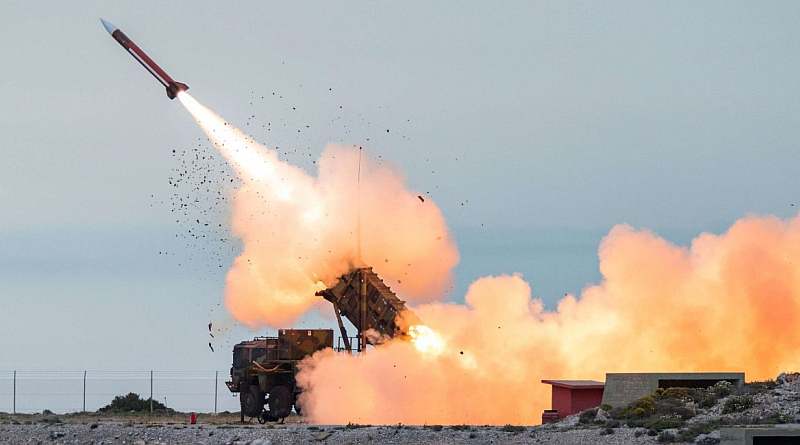
Backbone of the “Sky Shield”
Patriot is a heavy, cumbersome, but incredibly effective backbone of the European air defense. The ESSI plan by 2030 is to deploy a unified network of 35-45 batteries across Europe. The main players are not just in the game; they have invested a lot in it. Germany is rapidly acquiring new versions, Poland is implementing the “Wisla” program with LTAMDS radars that see 360 degrees instead of the old 120-degree sectors. Romania has already put its seven units on combat duty.
Even the traditionally neutral Swiss and Austrians have suddenly awakened. They are already in line for their divisions, although their orders were politely postponed in favor of Ukraine, because we have a front and they have alpine landscapes. The Netherlands, Sweden, Greece, and Spain are adding another 15-18 batteries.
The essence of the IBCS (Integrated Battle Command System) is that borders no longer exist. A Polish radar detects a launch, the data is instantly processed by artificial intelligence, and a missile from a German, Czech, or Swedish battery hits the target. This is a single digital ecosystem. Members of the Euroforces, who currently do not have direct aerial threats, can reinforce the common dome from within, creating a layered defense where each launcher is a node of the global network. In the future, room will be found for ten batteries from Ukraine as well.
For us, this $3.7 billion contract is a ticket to the big league. About 1000 GEM-T missiles. For comparison: this is the total one-and-a-half-year production of all small ballistics of the Russian Federation during their golden times. While we buy 21st-century systemic defense, Moscow tries to improvise. We see how they weld air-to-air R-77 missiles to truck bodies, creating makeshift air defense Frankensteins. When professional equipment is knocked out, makeshift solutions and hope in Russian “avos” come into play. How Moscow strained to laugh at our Western “FrankenSAMs” — what will you say now?
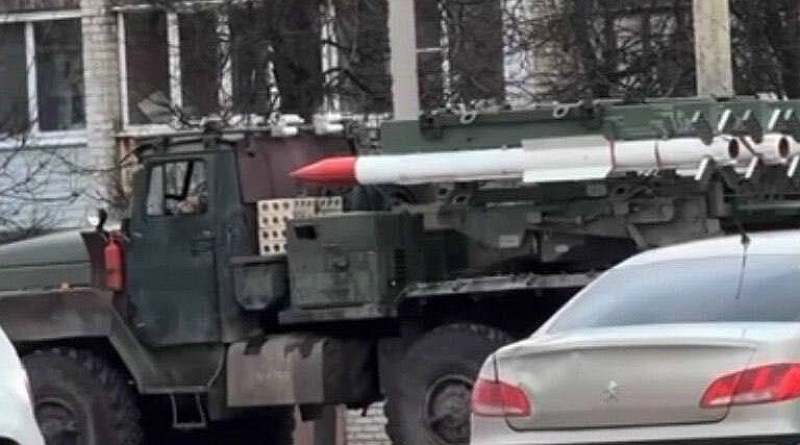
Kharkiv and Mykolaiv send regards to the hundreds of S-300 missiles that the Russians fired desperately and due to ballistic shortages at ground targets. This is the agony of what was once the world’s second army — firing anti-aircraft missiles at residential buildings because they have a shortage of regular missiles.
Workhorse against dictatorial metal
Why specifically GEM-T (Guidance Enhanced Missile)? Because it’s the perfect serial killer for “Iskanders” and their North Korean copies KN-23. It is not the expensive and scarce PAC-3 MSE costing six million, which works on the hit-to-kill principle (metal-on-metal). The GEM-T is a workhorse with a powerful fragmentation charge. It perfectly wipes aviation from the sky at ranges up to 160 km, cruise missiles, and importantly, it takes on tactical short-range ballistics, disrupting rudders or detonating with clouds of tungsten elements.
The cost is reasonable — from 3.5 to 4.5 million each, fully equipped: service, crew training, spare parts. These are direct investments in German industry and American high-tech. Defense stocks are soaring, and the production of air defense systems is becoming the most profitable and stable business of the decade.
Russia’s war against Ukraine has become the best testing ground and advertising platform for Western missile defense in the world. The next stop for localization is Japan. Mitsubishi Heavy Industries plants are already preparing workshops. The global Western defense industry is accelerating a flywheel that the Russians cannot stop with their rusty 1960s machines.
Transition to systematic planning
The verdict is simple and cynical: 1,000 missiles — the ability to maintain a reinforced concrete dome over our cities and critical energy infrastructure for at least a year under the harshest attacks. This is an iron guarantee that the launchers will not be empty decorations. We are transitioning from a format of desperate “survive today” to a systematic locking of the sky. When the rear in the EU produces serious serial batches for us, we gain the ability to intercept almost the entire arsenal of a huge dictatorship.
Russia can mobilize another million mobilized soldiers, but it cannot mobilize microchips and precision machines. Each Russian launch will eventually face a mathematically calibrated response from the Bavarian plant, EU country reserves, and American capabilities.
The world is shrinking. Globalization in defense is the only way to counter the axis, which also exchanges technologies and missiles. However, the combined GDP in the West is several times higher, and in technology, there is not just an advantage but a chasm. Between the assembly line in Schrobenhausen and the shattered workshop in Votkinsk lies an entire era.
