
Summer has begun, and it’s time to soberly assess what exactly Russia plans for this campaign.
The enemy did not complete their spring tasks.
Traditionally, their main goal is to exit from the eastern agglomerations, break through our line of fortresses, and expand the “sanitary zone” in the north to prevent strikes on their border regions.
On the Zaporizhzhia front, the Russians aimed to distract our reserves and get as close as possible to Zaporizhzhia itself, to attack it not only with KABs but also with a barrage of artillery and FPVs.
In the direction of the Dnipro, a “corridor” was to be extended – even without reaching an operational space, but with a constant threat to the key city. The goal was the same – to draw our reserves to where there is no dense development.
Their logic is simple: minimize their losses and maximize ours. After all, pouring iron in an open field, even on prepared positions, is not the same as storming a web of high-rises and basements.
And, of course, they desperately needed large defeats of the Armed Forces of Ukraine – with breakthroughs (like near Selydove), capturing masses of prisoners, and dismantling units of pilots, artillery, and command.
None of this happened exactly as they planned. Therefore, the peak of their efforts inevitably shifts to summer. And the issue here is not only about the occupation of the Donetsk region for television imagery or pressure in hypothetical negotiations. The threat they want to depict is the risk of a rapid advance through Barvinkove across the steppes deep into the country or a breakthrough to the Dnieper. Pressure for capitulation.
Right now, on these directions, tiered zones are being created with anti-tank ditches, barbed wire, minefields, and obstacles. And every month, while the Russians bang their heads against Kostyantynivka, the engineering equipment behind it, as well as behind Sloviansk and Kramatorsk, gradually improves.
Operational situation by directions
North (Sumy and Kharkiv regions): Constant concentration of enemy troops on the other side of the border, measures of strict profile sabotage and reconnaissance groups, terrorizing the border area with artillery and aviation force us to maintain full-fledged combat-ready brigades here.
These forces are critically needed near Pokrovsk, Konstakha, or Dobropillya, but we cannot expose the north. The enemy is binding our reserves at the cost of their infantry’s lives, and for their General Staff, it is an entirely acceptable exchange.
Despite the breakthroughs, they have not been able to create a full-fledged “sanitary zone,” and the border area on their side is also burning.
South (Zaporizhzhia front): Here we have somewhat improved our positions in the area of Stepnohirsk, while the RF could not take Mala Tokmachka and press on the large defense hub in Orikhiv from the side of Novoselivka—in both points successful local counterattacks. Currently, the situation here for the Russians is worse than it was in winter, despite all losses.
East (Chasiv Yar and Kostyantynivka): Our positions in Kostyantynivka are being flanked. Stationary defense is being worn down by air-dropped bombs and numerous artillery strikes, and small groups are infiltrating the city—there’s creeping infiltration. The defense is not collapsing, but the situation has become more complicated.
The enemy has already cut the T0504 road in at least two places. As a logistical artery (rockade), it is dead; the supply of the group now relies on the road from Kramatorsk, dirt roads, and secondary roads that are under fire.
Chasiv Yar itself is wiped to zero; it no longer exists as a city. Our garrison is holding out from the ruins on the western outskirts. This is no longer classic city defense; it doesn’t exist; these are sticky rearguard battles in the basements to wear down their assault regiments as much as possible. Ahead lies a crossroads: either we hold positions (as in Chasiv Yar on the western outskirts), and they get stuck here until impassability, or we fall back to the next defense hub closer to Druzhkivka.
In both these scenarios, the risk of losing the agglomeration in the coming months is minimal.
Russia’s tactics remain unchanged: a sea of cast iron, local advantage in shells, and attempts by small infantry groups to maximize the bridgehead expansion on the western bank of the canal under the umbrella of electronic warfare. By settling on the flanks and bypassing the heights, they leave us with a choice: retreat from positions under fire or risk isolating the garrison.
The tactical objective is the dominant heights around the development.
Essentially, to launch a full-scale assault on the agglomeration, they need to break through the front from the north through the wooded area, from the front through Kostyantynivka and Druzhkivka, and from the south through Dobropillia.
Objectively, this is an extremely difficult task. However, Kostyantynivka is under serious pressure. It will be relentlessly covered by cluster bombs, and sabotage and reconnaissance groups will try to break through there; logistics will be under constant fire. However, Russia lacks real operational-tactical capabilities to capture the city in the coming weeks. They are bogged down in heavy fighting on the approaches.
The Economy of Attrition and Rear Warfare
But war of attrition is not just about controlling plantations; it’s about the mathematics of resources in the rear. We survived a period of harsh electricity rationing (which cost us about 2.4% of GDP).
Air defense is experiencing a shortage of anti-ballistic missiles, and until new capacities in the EU and the USA reach planned levels in a year, we are critically dependent on transfers from partners’ reserves—fortunately, Germany contracted GEM-T through state guarantees.
However, the situation with personnel has somewhat stabilized. The enemy is losing 35,000 people irretrievably, while the Armed Forces have the task of knocking out 50,000.
The main conclusion of the spring: the trend where we were only attriting, and Russia continued a steady creeping advance, has been interrupted.
The dynamics of the Russians’ advancement from December 2025 to May 2026 is 11 times less in terms of territorial control area than a year ago. Some positions are abandoned by the enemy without our recapture because rotation and supply there are physically impossible due to fire control.
How does the enemy adapt its human resources?
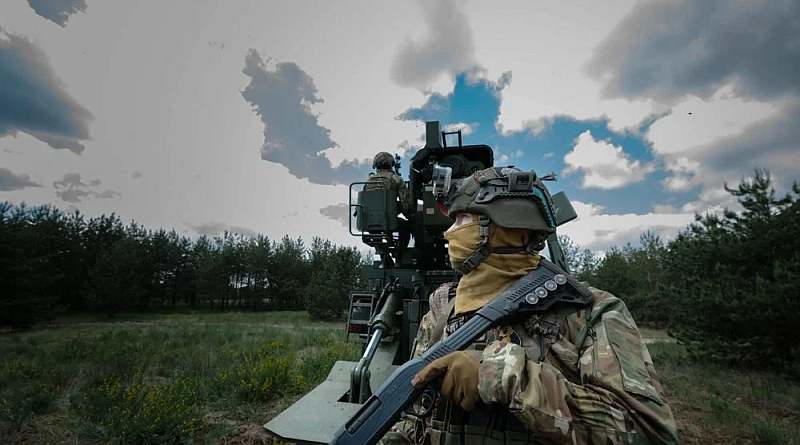
The Russians operate a cynical medical conveyor: severely wounded in the “red zone” are often simply abandoned—they are not evacuated, and healthy soldiers are not risked for them. However, the lightly wounded are strictly filtered at frontline stabilization points. They are hastily patched up, ignoring accompanying illnesses and unremoved stitches, their condition managed with painkillers, and they are literally pushed back into the ranks—in the so-called “cripple battalions.” This is inhumane but allows maintaining fire density at the front and ammo carriers without overloading hospitals in the occupied parts of Donetsk and Luhansk regions.
Regional payments for a contract (from 1.5 to 2+ million rubles) have consistently drawn in marginals and debtors from depressed regions. This system provided them with 20-30 thousand “volunteers” per month. But in recent months, this balance has slowly shifted to negative—the flow of willing individuals is drying up even for large sums. I don’t think the law about debt cancellation will change anything significantly.
Therefore, their General Staff is now operating under zero or even negative balance conditions—the grouping is physically “slimming down” by a few thousand bayonets. This will not lead to an immediate collapse of the front tomorrow, but it means their ability to form operational reserves for new deep breakthroughs is dwindling faster than they can print rubles.
Our response to their rear
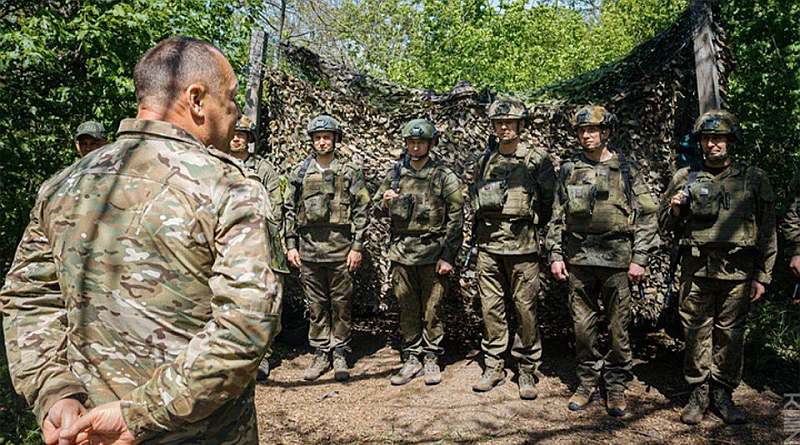
The echeloned defense of the Ukrainian Armed Forces is accompanied by methodical targeting of enemy logistics at a depth of 95-160 km. We strike the port in Berdyansk, knocked out railway ferries in Crimea, target the Volnovakha-Melitopol railway, and fuel trucks on the “Novorossiya” highway.
Yes, after the shock from HIMARS, they learned to disperse ammunition depots and cover them with electronic warfare, but we compensate for this by striking their air defenses and rear columns (burning vehicles near Novoazovsk or Izvaryne are evidence of this). The task of the Armed Forces is to intensify the fuel crisis and bleed their automotive units. The further we push their divisional and army depots, the more vehicle losses occur during the hunt for them, middle strikes, resource exhaustion, and accidents.
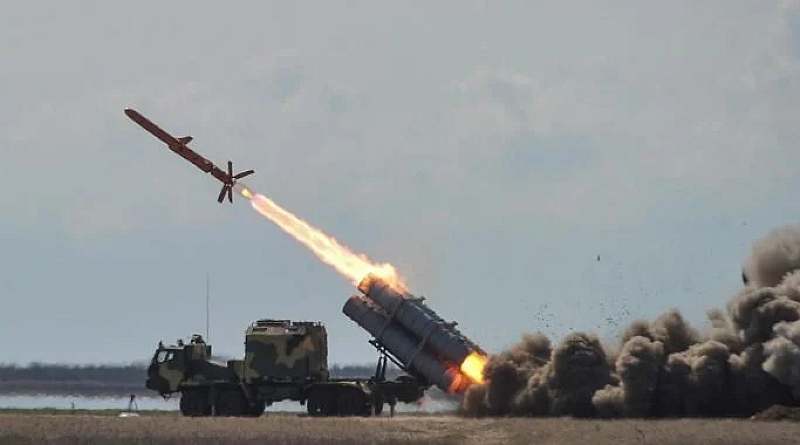
From behind the air defense curtain, we continue to bomb their strongholds with guided bombs, the Su-24s take out the Storm management, while Neptunes and drones target their oil refining and military-industrial complex. At least 30 to 40% of their refining has been hit, and they cannot reach all our “long arms.” Gasoline rationing in Crimea, Donetsk, Luhansk, Kursk, and even St. Petersburg are the first signs – the peak deficit will be in August.
Conclusions
The enemy is not broken. Yes, their advancement is minimal for the entire war. Yes, they suffer massive losses in equipment, and we are targeting their operational and strategic rears. They compensate for the lack of tactical flexibility with iron (KABs), massive assaults on motorcycles and ATVs under the umbrella of trench electronic warfare.
But the Russians have significantly scaled up the production of “Lancets,” are forming new UAV structures, and their FPVs are going to the front by the tens of thousands, which in many areas breaks air parity not in our favor.
What saves us is that our pilots remain far superior technically, and the enemy faces a management crisis due to blocking of Starlink terminals.
The summer campaign is not about quick collapses of fronts or sudden miracles. It is a ruthless, viscous, and bloody reality of industrial confrontation.
The Russians have reached a strategic impasse: they are no longer capable of deep breakthroughs, so they rely on creeping infiltration, burning their mobilization resource over hundreds of meters of scorched earth.
Months of tough defense lay ahead, where the cost of each landing is measured not by territory, but by the ratio of losses.
Our task is to preserve the infantry, prevent the Russians from cutting key supply arteries in the East, and continue to methodically destroy their operational and railway logistics and processing in the rear.
The one who will endure is the one whose system proves more resilient to the constant, monotonous grinding of resources.
Cover photo: 7th Airborne Assault Brigade Rapid Response/81st Separate Airmobile Slobozhansk Brigade
