

In Western analytical centers and the intelligence community, the thesis of the “finalization” of the Cuban question is increasingly being voiced. Amid assumptions about the possible preparation by the U.S. for a military or hybrid operation to dismantle the regime in Havana, there is heightened tension in Latin America. The Cuban dossier is not just a matter of regional security; at stake is the fate of the old geopolitical model in which Russia played the role of “protector of oppressed dictatorships.”
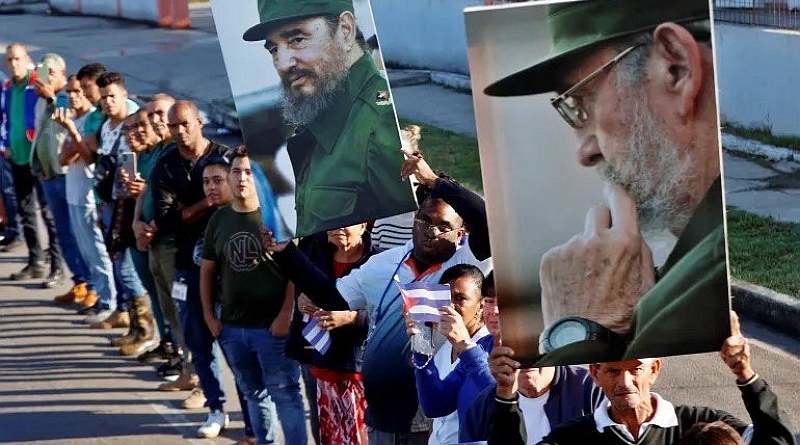
Today’s Cuba is no longer the island of revolutionary romanticism from Fidel Castro’s time. The regime of Miguel Díaz-Canel shows critical fragility. The internal legitimacy of the authorities is exhausted: the youth do not believe in slogans, and the old guard can offer nothing but repression.
Commentators from El País and Diario de Cuba agree: the state security apparatus still functions, but the social fabric of the country is torn. The mass protests of 2021 were just a “first sign.” In the absence of a charismatic leader and a total deficit, any external destabilization could collapse the Cuban Communist Party’s house of cards in a matter of days.
Current Cuba is experiencing an economic peak of difficulties comparable to the “special period” of the 1990s. Inflation, rolling blackouts, and food shortages have become everyday occurrences. However, there is a key difference: whereas Moscow always came to the rescue before, today the situation has changed.
Vladimir Putin has effectively abandoned his long-standing Caribbean ally. Despite loud statements about “strategic partnership,” real Russian aid has been reduced to symbolic gestures.
Western experts unanimously emphasize: the Kremlin simply lacks the resources to maintain an “unsinkable aircraft carrier” in the Caribbean Sea. All financial and logistical capacities are absorbed by the war in Ukraine. Cuba is left alone with sanctions and destroyed infrastructure, making it an ideal target for forced regime change.
The risk of the overthrow of another worn-out dictatorship is distressing and frightening for Putin. For the Russian leader, any fall of an authoritarian regime, whether in Libya, Venezuela, or now in Cuba, is perceived as a personal threat and a “bad precedent.”
For the Kremlin, Cuba is not only a military base but also a symbol of ideological confrontation with the West. A successful U.S. operation, even if it involves supporting an internal uprising, would send a powerful signal to Russian elites: “No one is protected, and Moscow is no longer the guarantor of its satellites’ survival.”
The main conclusion the global community draws from the current crisis is that due to the war against Ukraine, Russia has ceased to be a serious actor in international relations.
Previously, the mere presence of the Russian fleet in Havana’s port could thwart Washington’s plans. Today, however, the remnants of the Russian Navy are tied up in the Black Sea; Russia’s current diplomatic weight in the Latin American field is nearing zero; Moscow’s military doctrine has narrowed to attempts to hold onto captured territories in the Donbas.
If the U.S. indeed decides on the operation, they will do so with the full understanding that the “Russian factor” is no longer a deterrent. Moscow may express “deep concern,” but it cannot send a convoy or significant military force to save Havana, or any satellite for that matter.
A possible operation against the Cuban regime will mark the final point in the history of Russian influence in the Western Hemisphere. For Putin, it is not just a loss of an ally but a clear demonstration that his strategy of a “multipolar world” has been shattered by harsh reality. A power unable to protect its partners inevitably loses even regional prowess status.
