
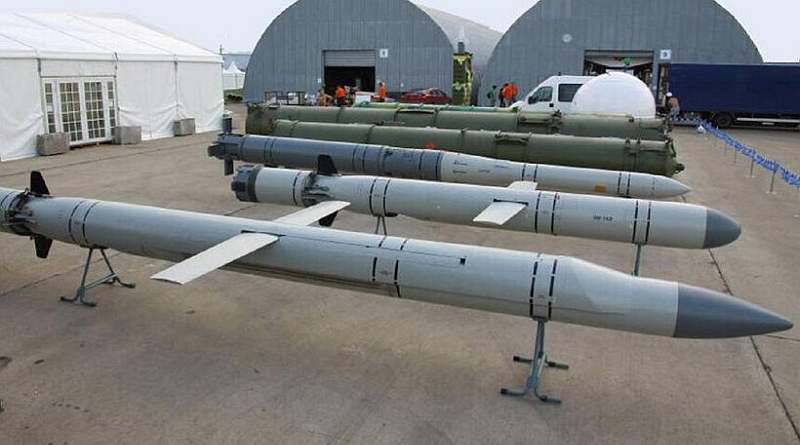
Alexander Kovalenko / Obozrevatel
Before the full-scale invasion of Ukraine, Russia in international arms exhibitions and forums positioned its missiles as having no analogs in the world, highly accurate, and difficult to intercept weapons of tactical and strategic significance. A particular source of pride for the Russian Federation was the X-101 missiles, 3M14 “Kalibr,” and 9M723. However, after 2022, many questions began to arise regarding these “flawed” instruments of terror.
More on this in the material of the joint project by OBOZ.UA and the group “Information Resistance”.
Russia, like the USSR, systematically exaggerated the characteristics of its weapons to maintain competitive positions in the international market against Western counterparts in both offensive tools and equipment. However, exposing these manipulations became possible only when the equipment ended up in the hands of those interested in debunking these lies.
In 2022, when the full-scale invasion of Russian occupation forces began, hundreds of samples of Soviet and Russian equipment entered Ukrainian territory. They were not only destroyed but also captured by the Defense Forces of Ukraine as trophies. The study of “modern” Russian equipment confirmed suspicions that its tactical and technical characteristics (TTC) were exaggerated and did not match the announced capabilities.
In turn, studying enemy missile armament was complicated by the fact that it never fell into our hands intact. Even the X-101, 3M14 “Kalibr,” or 9M723 that did not explode still sustained serious damage after falling, complicating the assessment of their real characteristics.
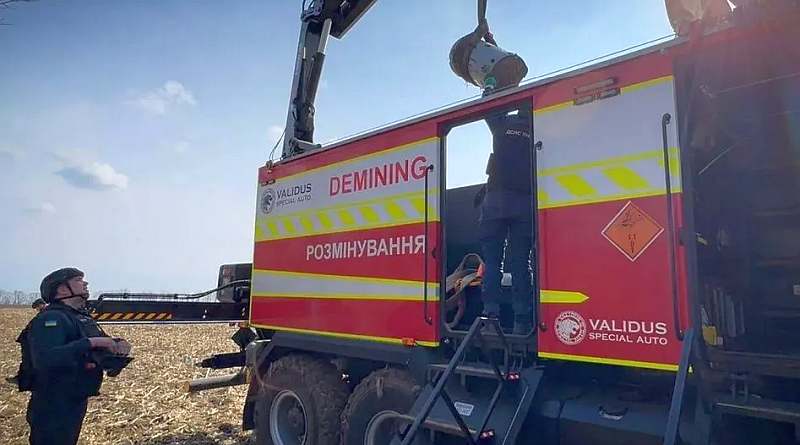
However, over time it became evident that across several parameters (even without detailed examination of undamaged products), these missiles significantly differ from their official TTC.
Russian Missile Empty Bubble
Over more than four years of full-scale war, Russian occupiers have used enough X-101, 3M14 “Kalibr,” and 9M723 missiles against Ukraine to conduct remote studies of their basic characteristics such as accuracy and range.
Since 2022, the Russian Armed Forces have used over 1200 X-101 missiles, more than 800 3M14 “Kalibr” missiles, and over 1200 9M723 missiles.
This quantity is sufficient to draw basic conclusions about the accuracy of each type of these missiles, namely:
X-101 — with a stated circular error probable (CEP) of 10 to 20 meters, the actual deviation from the target exceeds 50 meters, and in some cases 100 meters or more.
An important point is that in 2022 and 2023, the X-101 missiles indeed had high accuracy within a CEP of 20 meters, but this indicator began to deteriorate later, the reasons for which I will provide below.
It is notable that the situation for other Russian missiles is similar — the CEP has been worsening year by year.
3M14 “Kalibr” — the circular error probable of this missile was stated to be up to 10 meters, but now it is and even exceeds 50 meters.
9M723 — ballistic missiles of the Iskander-M complex long remained the most accurate, maintaining a CEP within 5 meters. However, starting in 2023, this indicator began to rapidly decline. Even with adjustment using reconnaissance drones, the deviation can be 50 meters or more.
Currently, the 9M723 is not so much a precise weapon as a missile used against targets difficult to miss considering its current CEP. The enemy is also actively trying to compensate for the decline in the accuracy of these ballistic missiles by using cluster warheads.
Regarding the reasons for the decline in the accuracy of Russian missiles, it’s because the emergency production, using contraband dual-purpose electronic components, reduces not only reliability but also various characteristics. This effect is amplified by the lack of technical control — conducting control and measurement activities.
In any enterprise, the production process is always associated with a deliberate process of control and measurement activities that allow for diagnosing the reliability of all components of the manufactured products. When we talk about missiles, this means technical control of the engine, guidance system, fuel system, and body integrity. This used to allow avoiding (or at least minimizing) defects that could critically affect the characteristics and reliability of the product.
But today, at Russian enterprises, the conduct of control and measurement activities has either been reduced to an emergency mode or canceled completely. As a result, it has increased the number of manufactured products per day, but also lowered their quality.
However, accuracy is not the only problem of Russian missiles. Many questions arise about their declared range.
For example, the specified range of the X-101 missile is 2500-2800 km. Some very bold experts even claim 5500 km.
But here is the question, even if we take the minimum range (2,500), why are the launches of this missile predominantly from such zones:
Caspian Sea – 1,300 km to the center of Ukraine;
Saratov Region – 900 km to the center of Ukraine;
Volgograd Region – 800 km to the center of Ukraine.
At the same time, depending on the launch zone, it can be assumed which part of Ukraine these missiles will fly to.
Thus, for a missile with a flight range of 2,500 – 2,800 km, the actual operational range almost never exceeded 1,500 km.
The situation is no less interesting with sea-based cruise missiles 3M14 “Kalibr”, which continue to be launched from the Black Sea waters. According to available open-source information, the flight range is between 2,000 and 2,600 km.
And the question arises: why doesn’t Russia use the potential of the Caspian Flotilla for strikes on Ukraine, since a launch from the Caspian region would allow missiles with such specifications to cover the distance to Lviv? Or from the Baltic Sea, even with bypassing the Baltic countries and through Belarusian airspace, which Minsk is unlikely to hinder, the distance to the northern regions is less than 1,000 km. Even if a 3M14 “Kalibr” missile launched from the Baltic Sea flies exclusively in Russian airspace, it is less than 1,200 km to Kyiv.
Conclusions
The use of X-101, 3M14 “Kalibr”, 9M723 missiles by the enemy allows for a kind of remote systematization of their capabilities and real characteristics in the fifth year of full-scale war.
It is evident that the missiles have serious accuracy issues – CEP (Circular Error Probable). This may be due to initially built-in manipulative specifications as well as current problems with the supply of quality components that ensure accuracy, lack of control and measurement activities at enterprises, and issues with guidance systems.
However, if CEP is a growing snowball, then the declared range parameters of Russian X-101 and 3M14 “Kalibr” never matched. There is not a single verified fact confirming that the X-101 can cover 2,500 km, let alone 2,800 km. Similarly, for the 3M14 “Kalibr.”
Cover image: “Kalibr” missile. Photo: mind.ua
