
Mona Charen, The Bulwark / Translation by iPress
The politics editor of The Bulwark, Mona Charen, claims that in his second presidential term, Donald Trump is destroying the image of a populist who is supposedly independent from money and special interests. According to her, the ostentatious enrichment of Trump and his family starkly contrasts with the expectations of some voters who once believed in the promise to “drain the swamp” and in the idea that a billionaire cannot be bought. This disappointment may have consequences not only for Republicans in the upcoming midterm elections but also for Americans’ trust in governmental institutions overall. The main thesis of the text is that the myth of the “billionaire-populist” standing above corrupt temptations has lost its persuasiveness.
As predictions of a “blue wave” grow, it is worth remembering that polls sometimes make mistakes, that pollsters have often undercounted Trump voters (though in midterm elections the results were more accurate), that professional forecasters can also err, and Allan Lichtman is only right when he’s lucky. Yet still, if there was ever a politician who more than Trump invited punishment from voters by fundamentally betraying their trust, I don’t recall them.
Trump had some of the most fervent supporters imaginable – more dedicated could only be found with Osama bin Laden, and during the first term, he somewhat delivered what his base wanted. He tightened restrictions on illegal (and legal) immigration, took steps towards building a wall on the southern border, lowered taxes, withdrew the U.S. from the Iran nuclear deal and the Paris Climate Agreement, and insulted and humiliated everyone – from Hillary Clinton to John Lewis.
Did he profit in the process? Of course. Unlike his immediate predecessors, Trump refused to transfer assets to a “blind trust.” He assured the country that his sons kept him away from all Trump Organization affairs. His hotels became favorites for those seeking favor from authorities, both foreign and domestic. The Saudis almost settled in one of them. But compared to the second term, all this seemed fairly modest.
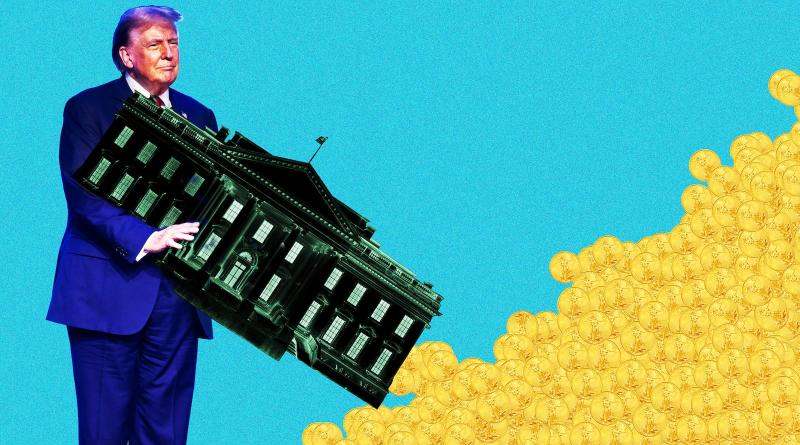
During Trump’s second term, he turned into a caricature plutocrat: gilding the Oval Office, leveling the East Wing of the White House to build his gaudy ballroom, stamping his name on everything in sight, issuing commemorative coins with his face, and amassing wealth for himself and his family on an unprecedented scale in American history. Meanwhile, his voters ended up with higher prices, a chaotic and unsuccessful war with Iran, tariffs that hit farmers particularly hard, and an immigration crackdown that turned away Latino voters and even some podcasters from the “bro” crowd.
Some Trump opponents believe that it is his brutality and vulgarity that attract his base, but I disagree. Obviously, for a part of his supporters, this is true, but most people want to believe they are on the side of good, not evil. That is why the response “what about you?” becomes a typical reaction to any objection. It’s impossible to believe that you are choosing the dark side, so you have to convince yourself that the other side is worse.
Trump entered American politics as an archetypal populist. Much of his appeal was based on a theme well-known in American politics—the fight against corruption. Now it sounds like bitter irony, but millions of Americans who supported Trump believed they were voting for a more honest government and believed in his slogan to “drain the swamp.” For decades, many Americans considered most politicians dishonest. In 2006, almost 60 percent of Americans believed that “corruption is widespread in government.” In 2016, 59 percent of Americans rated the honesty and integrity of Congress members as low or very low (senators were rated the same by half of the respondents).
Again and again, during focus groups conducted by Sarah Longwell, voters said Trump was too rich to be bought. Michael from Arizona, who voted for Trump in 2016 but switched to Biden in 2020, said in 2022: “I thought, okay, he can’t be bought. He has too much money. So you have to give him a chance.” A voter from New Hampshire, who voted for Trump twice, explained in 2024: “He doesn’t need to line his pockets, so he has no hidden motives. He has his own money.” Such thoughts were consistently echoed by voters. If you are convinced that most politicians go into power for money, who better than a billionaire to resist special interest groups?
The myth was reinforced by Trump’s decision to refuse his presidential salary during his first term. Jim from Texas, who voted for Trump in 2016 and 2020, said in February 2022: “I don’t know if anyone else would have endured [such attacks and criticism] and then also given up their salary… This man worked for us for free and endured all these hits all the time.” In August 2024, Carol, another voter from Michigan who supported Trump twice, expressed with admiration: “He didn’t get paid for it, and it impressed me. Why… is he doing it? He doesn’t get paid for it. Obviously, he is truly passionate about what he does.” The same was said by Greg from Georgia, who stated in June 2024: “He didn’t need it. He was a billionaire. A successful businessman. He didn’t need to do this.”
Trump’s second term turned into a prolonged dismantling of his populist image – as thorough as the demolition of the East Wing. Some voters still remember his promise not to take a salary, but now they recall it with irony. Just this month, Janelle from Ohio, who voted for Trump in 2024 but now disapproves of his work, said: “I know he doesn’t take a salary. Well, thank you, I guess. But… I thought you couldn’t make money off the presidency at all, and now he’s much richer than when he started.” Shauna, another voter from Michigan who is now dissatisfied with him, expressed a similar view: calling the salary refusal a “trick” and noting that he is making significantly more from the presidency than the law allows. Corey said bitterly: “His fortune has increased by several billion dollars, and I can confidently say that my fortune hasn’t grown since he came to power.”
Trump took advantage of the existing voter cynicism about politicians and deepened it even further. A Gallup poll released in early September showed that now 89 percent of Americans believe that corruption is “widespread in the government.” This is a higher figure than in all other OECD countries and 16 percentage points more than two years ago.
The immediate consequence of voter disillusionment is likely to be a crushing defeat for Republican candidates in about five weeks. But the long-term damage to the civic culture of the country is incalculable. People who do not trust each other cannot govern effectively. They cannot solve problems. Would even a sincere attempt to reform ethics rules, like what the US saw after Watergate, be able to gain support in such a suspicious and disillusioned country? It’s unclear. But one thing is certain: the myth of the billionaire-populist is dead. Definitively.
Commentary by iPress: In the 2026 United States Senate elections from the state of Texas, the Democratic Party candidate is James Talarico. At the end of September, most of the released polls showed James Talarico leading by 1-6 percentage points over the Republican candidate, the current Attorney General of the state, Ken Paxton. For Texas, which is traditionally a Republican state (Democrats have not won a Senate election here since 1988), such figures are sensational.
Illustration: Eric Faison/The Daily Beast
