
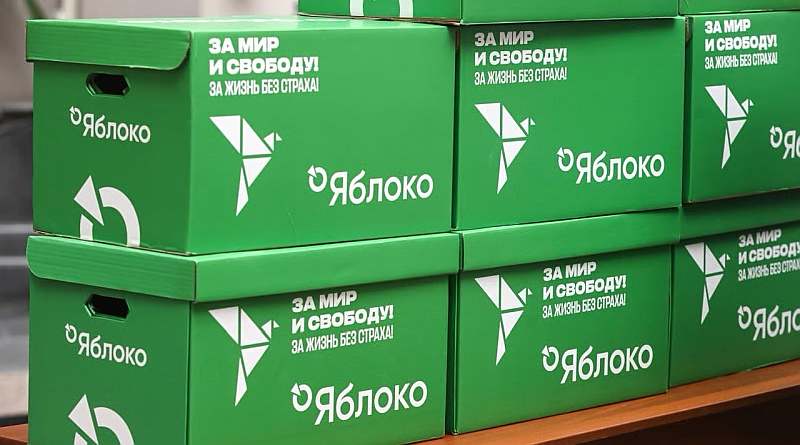

The State Duma election campaign encountered a factor that completely reshaped the usual dynamics of the Kremlin’s intrapolitical bloc. The publication of new data by the Public Opinion Foundation, led by Alexander Oslon, effectively recorded a twofold increase in Yabloko’s ratings.
The sociological survey results from the past week showed that the level of support for this political force reached 4% of respondents.
This figure is comparable to the numbers for A Just Russia, which also garnered 4%, and is approaching the results of New People, which dropped from 8% to 5% over the same period. Since the Foundation’s sociology is traditionally coordinated with the Presidential Administration, the release of such sensitive figures represents an official signal of the uncontrollable growth of the opposition’s electoral potential.
An analysis of the rating dynamics in major cities reveals the reasons for the court’s decision to bar the party from the electoral race.
Experts note that the nationwide potential of Yabloko was estimated at 9–10%, while in Moscow and major urban agglomerations, support already stands at about 10%. The transfer of votes from New People was only a secondary manifestation of a deeper process. The party has become the main center of attraction for voters with pacifist and protest sentiments, the combined volume of which significantly exceeds the initial sociological indicators.
According to sociologists from the company ExtremeScan, if the party had not been removed from the elections, it could have received 18–20% of the votes, primarily due to the anti-war electorate!
When initially deciding on registering the candidates’ list, Kremlin strategists were fully aware of the likelihood of overcoming the five-percent threshold. The basic calculation was based on the high disapproval rating of the union and the possibility of forming a broad anti-Yabloko coalition. Some expert community representatives believed that the party’s admission was an attempt to practically assess the real share of supporters of a peaceful resolution in Russian society. However, amid an active campaigning campaign, the constructed methodological model of a managed party system proved incapable of containing the anti-war narrative.
The subsequent removal of the union from the elections only emphasized the existing demand for conflict resolution and negotiations. The official stance on continuing the “SVO” publicly contradicted the ideology of civil peace, disrupting the planned electoral process.
Although political technologists close to the authorities do not see the presence of an alternative position as a direct threat to United Russia’s victory, there prevailed a desire for complete “internal homogeneity.” Transforming the elections into a military plebiscite eliminates the existence of an autonomous parliamentary group capable of disrupting the scripted course of meetings.
According to sociological surveys among capital-based political scientists, the majority of specialists spoke in favor of reinstating Yabloko in the race. Representatives of the expert community are convinced that institutional consolidation of the pacifist flank is necessary to preserve civil harmony, as a full-fledged political dialogue is always more effective than administrative restrictions.
