

Information regarding current Russian losses due to sanctions as of 10.04.2026.
1. A reduction in cash flows has been recorded in the Russian economy.
– The Central Bank reported a noticeable decrease in the volume of payments passing through its payment system, indicating a general slowdown in economic activity.
– In the first quarter of 2026, the volume of incoming payments was on average 5% lower than in the fourth quarter of 2025. Such a deep decline was previously observed only in July of the previous year and during the pandemic.
– Annually, the situation looks even worse. Compared to the first quarter of 2025, the volume of incoming payments decreased by 11.4%, and considering accumulated inflation, the real decline is estimated at approximately 17%. The largest reduction was recorded in industries related to external demand.
– However, the weakness of the economy is not limited to the raw materials sector. Even excluding extraction and oil refining, payment inflows decreased by 2.8% in March and by 1% for the quarter.
2. Russia’s pension system has faced the largest deficit in its history.
– The Pension and Social Insurance Fund, which pays pensions to approximately 40 million citizens, ended 2025 with a significant financial “hole.”
– By the end of the year, the fund’s expenses exceeded income by 1.239 trillion rubles. This is 3.4 times more than the previous year when the deficit was 369 billion rubles, and more than double the previous record figures — 543.7 billion rubles in 2015 and 593 billion in 2023.
– The fund’s own revenues, formed from mandatory insurance contributions from employers from employees’ salaries, grew by 12.7% and reached 12.412 trillion rubles.
– However, even this growth covered only about 70% of total expenses, which amounted to 17.596 trillion rubles and included pensions, social benefits, and administrative expenses of the system.
– The main part of the shortfall was supposed to be covered by the federal budget. However, due to declining oil and gas revenues, the budget transfer amount was sharply reduced — by about 40%, from 5.479 trillion to 3.186 trillion rubles. As a result, the fund had to cover the deficit from its own reserves.
– At the beginning of the year, there were 1.936 trillion rubles left in accounts, and about 1.218 trillion was used throughout the year, nearly two-thirds of the accumulated funds. Such a large-scale deficit demonstrates the growing financial problems of Russia’s pension system.
3. Demand for cash is rising in Russia amid regular mobile internet outages.
– According to the Central Bank, in February and March alone, the volume of cash money in circulation increased by approximately 0.5 trillion rubles — 0.2 trillion in February and another 0.3 trillion in March.
– The regulator directly links this trend to disruptions in mobile internet access, forcing the population and businesses to build up cash reserves for current payments.
– In effect, this means a partial return of the economy to cash transactions. When mobile internet and payment services are unstable, cashless payments become risky, and businesses and consumers start to hedge by accumulating paper money.
– In March, the main factor reducing bank liquidity was the increase in cash in circulation. This indicates a gradual weakening of confidence in the stability of the digital payment infrastructure.
– For the banking system, this trend means additional pressure on liquidity and a return to a less efficient monetary model, where a significant portion of transactions is again conducted outside banking channels.
4. The European Union has increased imports of Russian LNG amid energy instability due to the Middle East crisis.
– In the first quarter of 2026, imports from the “Yamal LNG” project increased by 17% — to 5 million tons. EU countries accounted for 97% of all shipments from this project (69 out of 71 deliveries). It is estimated that European buyers spent about €2.88 billion on this gas.
– The demand is explained by a sharp rise in gas prices due to supply disruptions from the Middle East. However, even under these conditions, Brussels does not abandon its strategic course: a complete ban on the import of Russian LNG is to take effect in January 2027, and restrictions on short-term contracts are already in place.
– Despite the temporary increase in revenues from “Yamal LNG,” the situation has negative consequences for Russia in the medium term. The EU is essentially using Russian gas as a temporary crisis solution, while preparing to completely abandon it.
– This means that the current export growth is situational and does not guarantee a stable market. Furthermore, the concentration of deliveries almost exclusively in the European direction makes the project vulnerable: after the ban is introduced, Russia may lose a key buyer and will have to seek new markets, likely with additional discounts and through complex logistical schemes.
5. One of the last major European banks continuing to operate in Russia after the start of the full-scale war against Ukraine has decided to completely wind down its business in the country.
– The Italian banking group UniCredit has refused to sell its Russian subsidiary and opted for a scenario of gradual asset liquidation.
– The reason was the strict policy of the Russian authorities regarding the exit of foreign companies. Due to mandatory discounts and additional payments when selling assets, the foreign owner could receive only about 10% of the bank’s capital, making the deal economically unfeasible. Under such conditions, business liquidation proved to be a less loss-making option for the group.
– According to available information, the bank has already started a large-scale winding down of operations. A sale of available assets is underway, the branch network is being reduced, the regional retail business has been practically closed, and the corporate segment is gradually shutting down. Simultaneously, there is a reduction in personnel.
– The decision to exit is also related to pressure in Europe. An Italian court has ordered the group to leave the Russian market within nine months. Bank management previously acknowledged that it is trying to fully comply with international sanctions and reduce its presence in Russia while avoiding a complete loss of the local unit’s value.
– Before beginning the winding down of operations, the Russian division was valued at approximately 3.8 billion euros. However, due to restrictions on the sale of foreign assets and the need to agree on deals with Russian authorities, most Western companies are effectively deprived of the opportunity to leave the market without significant financial losses.
– This once again demonstrates that the investment environment in Russia for foreign businesses increasingly becomes a trap from which it is difficult to exit without substantial losses.
6. The European Commission plans to demand explanations from Hungary over the potential transfer of EU confidential information to the Russian side.
– The scandal erupted following the publication of recordings of telephone conversations involving Hungarian officials, which, according to European officials, may indicate coordination of actions between Budapest and Moscow.
– In Brussels, it is believed that such contacts pose a potential threat to the security of the European Union and its citizens and may contradict EU interests. Representatives of the European Commission emphasize that the Hungarian government must urgently provide explanations regarding the possible leak of sensitive information. The issue will be raised at the level of EU state leaders.
– The focus is on the actions of the Hungarian government’s leadership and diplomatic department. European institutions consider the situation a serious incident, which could affect trust between EU member states and call into question Budapest’s reliability on security issues.
– The scandal is unfolding ahead of parliamentary elections in Hungary. According to polls, Orban’s ruling party may lose its leading position to the opposition force, further exacerbating the political situation in the country.
– Suspicions of collaboration with the Kremlin could further increase pressure on the government and deepen tensions in Budapest’s relations with its EU partners.
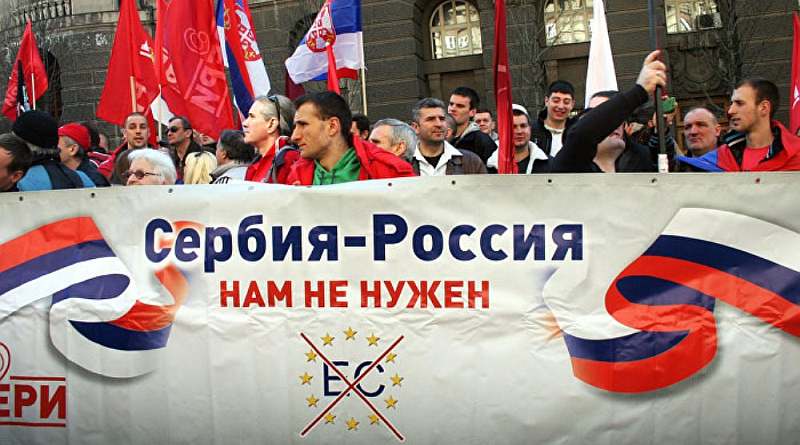
7. Serbia may lose up to 1.5 billion euros in EU funding.
– Serbia faces the potential loss of up to 1.5 billion euros in financial aid from the European Union. The European Commission is considering halting payments due to Belgrade’s retreat from democratic principles and its close ties with Russia.
– Although Serbia is not an EU member, the country has been negotiating accession since 2014 and is eligible for financial support and grants aimed at implementing legal and institutional reforms.
– European Commissioner for Enlargement Marta Kos stated that there is growing concern in Brussels about the situation in the country. This includes legislative initiatives undermining the independence of the judiciary, pressure on protesters, and interference with independent media.
– According to her, the European Commission is currently assessing whether Serbia continues to meet the conditions for receiving financing under EU programs. Kos also emphasized that from a candidate country, greater alignment with the EU’s foreign policy is expected, effectively indicating the need to distance from Moscow, although Russia was not directly mentioned.
8. India continues to actively purchase Russian oil despite sanctions pressure and diplomatic efforts by the US to reduce such supplies.
– In March, imports sharply increased: Indian refineries purchased about 60 million barrels of Russian oil, nearly double the amount in February. Average daily deliveries reached approximately 1.98 million barrels per day — the highest since mid-2023. A significant portion of these volumes was purchased from tankers that had been at sea for a long time and were used as floating storage.
– In March, Indian companies effectively unloaded about a third of such reserves accumulated on the tanker fleet servicing Russian exports. In January and February, the average daily import was just over 1 million barrels, and many market participants expected further reductions in purchases. It was forecasted that one of the few stable buyers of Russian oil would remain the refinery Nayara Energy with a capacity of about 400 thousand barrels per day, controlled by Rosneft and already under EU sanctions.
– However, managers of Indian refineries expect that the US may extend temporary sanctions reliefs that allow such operations.
– Even if this does not happen, reducing purchases seems unlikely due to the limited number of alternative suppliers and attractive discounts on Russian oil.
– At the same time, the sharp increase in March purchases is partly explained by technical factors — the sale of accumulated sea reserves. This indicates that a significant portion of Russian oil had long gone without buyers and was forced to be stored on tankers, increasing exporter costs and complicating supply stability.
– This trade model increasingly relies on one-off large deals and unstable logistics schemes, making the export of Russian oil more vulnerable to sanctions and financial pressure.
