
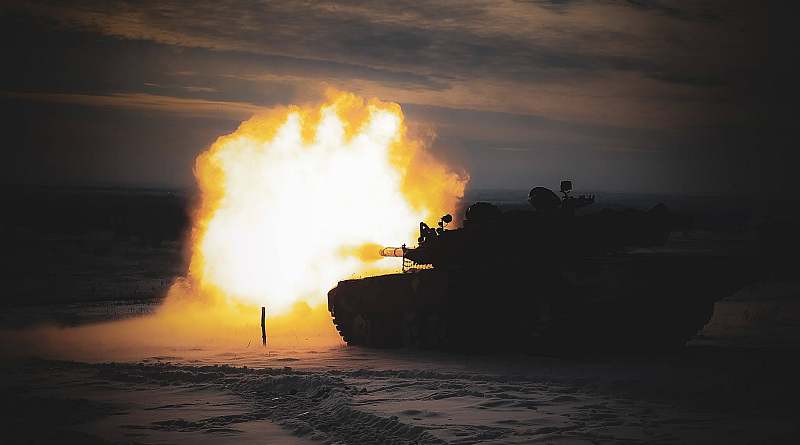
Strategically, Russia is at a dead end in Ukraine. The Russians cannot take us out of the war, nor can they crush our forces by collapsing the rear, taking hundreds of thousands of prisoners, and deeply breaking through the front to dominate for months.
Meanwhile, we are desperately and precisely counterattacking. Near Zaporizhzhia, Pavlivka and Novoyakovlivka have been completely cleared. Right now, we are continuously pressing on the large front of Kamianske — Plavni — Stepove — Lobkove, having taken several positions. There are numerous drone flights, artillery strikes, and constant attacks by small groups. Our task in the sector: at the very least to improve the tactical situation, at most to push Russia back to the borders at the beginning of 2025, erasing an entire year of their monotonous bloody stagnation in this area.
A successful local counteroffensive is also ongoing in the Dobropillia direction. In Bilytske, there are heavy urban battles, with the axis of tension shifting to the city center and adjacent areas. Defense forces have successfully cleared several positions in the central part, and now the epicenter of the contact battles has moved to the local zoo territory. The enemy monotonously presses, trying to entrench in the city from the east.
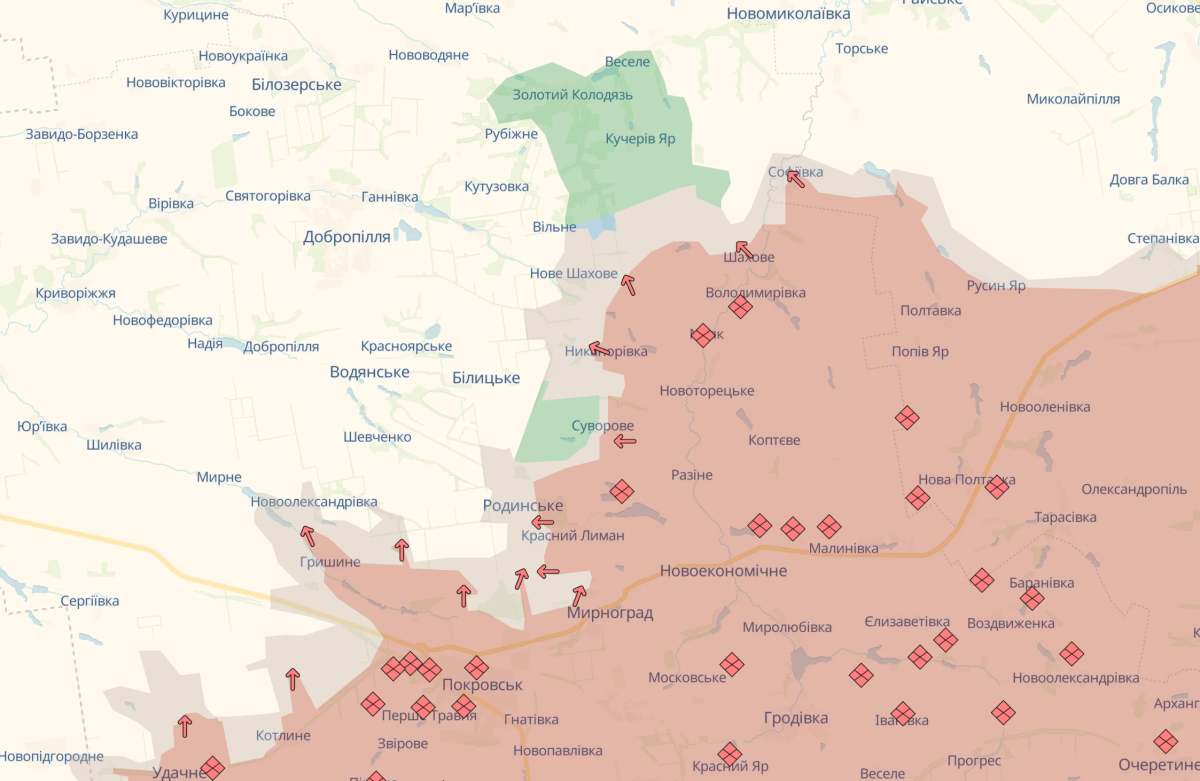
On the southwestern front of the sector, there is a methodical return of territories: the eastern half of New Donbas has been completely cleared of the remnants of Russian infantry that got lost there. Further south, Ukrainian forces managed to retake some positions, leveling control along the railway line. Initiative has also been seized on the northeast flank. On the southern approaches to Kucherevyi Yar, enemy sabotage and reconnaissance groups have been eliminated (local clay mines/quarries have come under our control), and at the same time, the forest belt to the south has been retaken.
Plantations to the east of Vilne have been reclaimed, and Ukrainian infantry has advanced and secured itself in the summer house area to the northeast of New Shakhove.
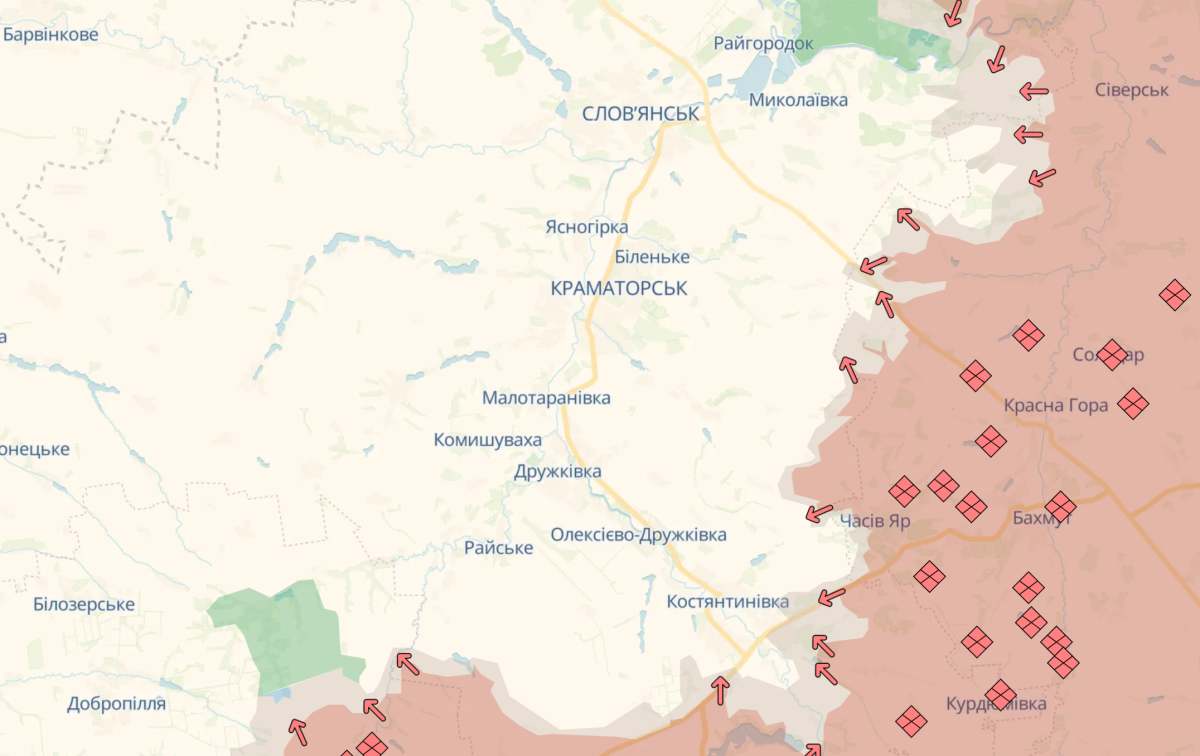
We retain key heights near Chasiv Yar. Talks about assaults on Sumy have somehow been forgotten, and landings under Odesa also do not seem to be happening.
In front of the enemy is the Kramatorsk-Slovyansk-Kostyantynivka agglomeration. It is twice as dense as the agglomeration near Pokrovsk and has been fortified since 2015 (from the Poroshenko line period). Over the decades, it has become covered with trenches, engineering barriers, endless minefields, and concrete pillboxes. Assaulting it head-on would grind down an army corps over the winter with very uncertain prospects. You may tell your deep-rooted people that “all SVO objectives have been achieved,” but will Ukrainian UAVs stop flying and Russian factories stop burning after that?
Let’s consider the worst-case scenario for us. What if they take this agglomeration in the next year and a half (as, let’s say, Pokrovsk—not fully, being forced to endlessly conduct defensive battles for stabilization)? How will this globally impact the Ukrainian Defense Forces? Will the supply of drones to us halt, the increase in fiber optics, the delivery of several million shells from the Czech initiative, the transfer of French and Swedish fighters cease? Will their “Azots” and refineries stop burning? The answer is obvious.
OSINT analysts (such as Perpetua), who meticulously process videos from the front, counted 5,800 visually confirmed Russian soldier deaths on the battlefield in March alone. This is an absolute peak in losses for the entire time of their counting. And these are only those captured by the drone’s lens—excluding those who were blown up by mines, died at the hospital stage, victims of accidents, and diseases. These are horrific numbers. In one month, they lose the equivalent of the entire First Chechen War in fatalities, and this statistic is growing month by month.
For the first time in many months, Ukraine has surpassed the Russian Federation in the number of kamikaze drone launches (deep strikes). Obviously, Russia has a severe shortage of missiles for air defense: we see successful hits on all key oil transshipment terminals, military chemical plants, factories producing fertilizers and explosives. Cruise missiles freely pass over Bryansk—the same ones we previously intercepted by the hundreds. The Russian Federation may try to create their own interceptor drones, but for many months their economy will have to bleed under our strikes.
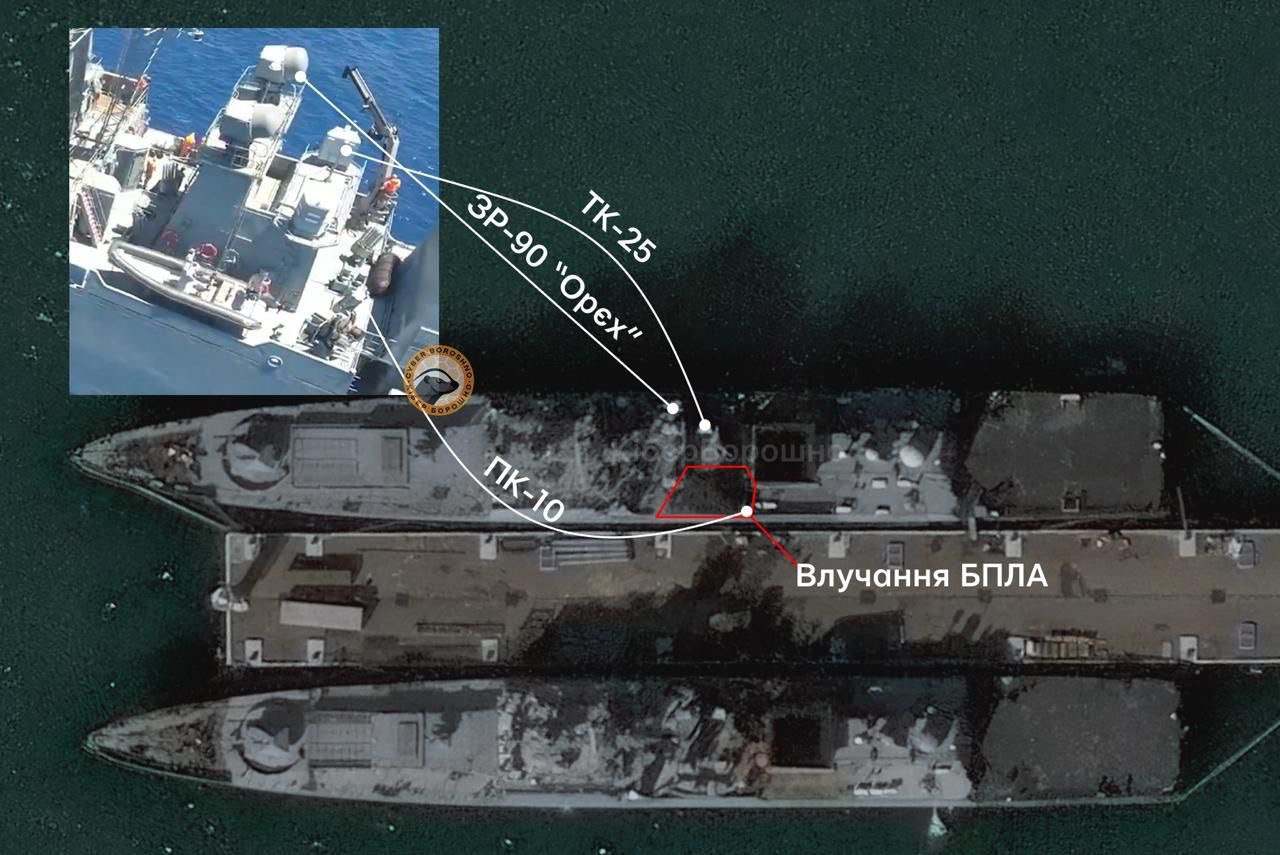
The Russian Black Sea Fleet is completely locked at the base in Novorossiysk, but it is still under attack. In six months, a submarine (still not returned to service), the frigates “Essen” and “Makarov” (which essentially became the flagship after the destruction of “Moscow”) were damaged. Moscow has such a missile shortage that the ship is forced to repel attacks with a standard air defense system – and this is right by the pier at the main base.
How all this affects their morale – in combination with bans on Telegram, blocking YouTube, inflation, and sharp increases in utility tariffs – is clear without words. Z-correspondents weep louder than their spiritual predecessors at Stalin’s funeral.
Meanwhile, in Ukraine – increased mobilization. Naturally, as the number of volunteers decreases, incidents increase: several dozen military officers of the CCC suffered, three died from stab wounds. But we must look at the proportions: this happens against the backdrop of a million-strong army and a 40,000-strong staffing of the CCC itself.
Yes, the spring is tightening, but there is undoubtedly a reserve of strength. The mass protests that Russians hope for do not exist and cannot be – everyone understands that the country must be defended, and those who haven’t updated their data since 2014 are responsible for themselves.
We still have serious levers in our reserve: limited female mobilization in rear structures, unlocking of enterprise employees, lowering the conscription age to 20 years, and massive involvement of foreign mercenaries. Despite the large number of personnel, a military catastrophe will not occur in the coming months. And they strongly expected that we would run out of infantry.
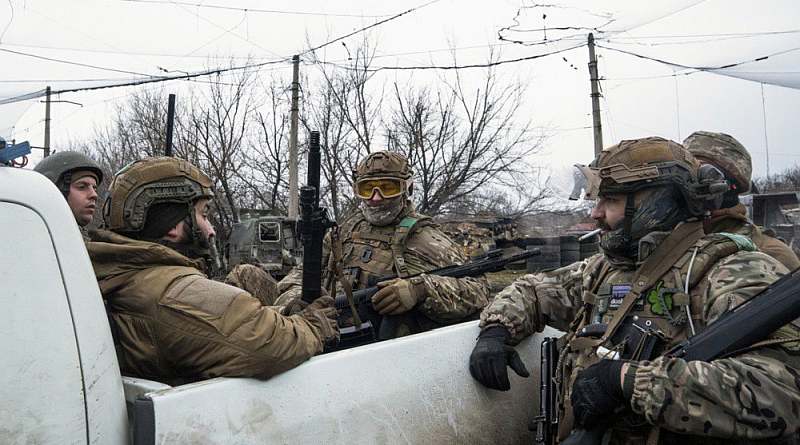
And now let’s look at the Russian economy, where the system has begun to devour itself. They covered the annual budget deficit in just the first two months of the year, and the gap continues to widen. The civilian industry is in a coma: the net loss of the auto giant KAMAZ has soared 11 times, reaching 37 billion rubles, while the company’s debts have increased by 40% (to 220 billion rubles), with loan servicing alone consuming 35.6 billion rubles.
The labor market is in a state of clinical death – the official shortage of workforce has hit 4.8-5 million people, and unemployment has dropped to an abnormal 2.8%. To simply entice a turner, factories are raising salaries by 20-30% per year without any increase in productivity, driving cost inflation sky-high.
The main financial donor of the country, “Gazprom,” after losing the premium European market, has reduced exports from 150 billion to a meager 25-28 billion cubic meters, recording its first net loss in 25 years at 629 billion rubles. Now the corporation’s debt has surpassed an astronomical 6 trillion rubles, and China, twisting their arm, is buying gas through “Power of Siberia” almost twice as cheap as Russians could have sold in the EU, which does not even cover extraction costs.
Amidst all this, official expenditures on “National Defense” have risen to 10.8 trillion rubles (about 6% of GDP). Together with the security forces, the war consumes about 40% of the federal budget. To drive manpower into the trenches, regional payments for signing a contract have soared to 1.5-2 million rubles per head. These “helicopter money” are burning up the economy with hyperinflationary demand.
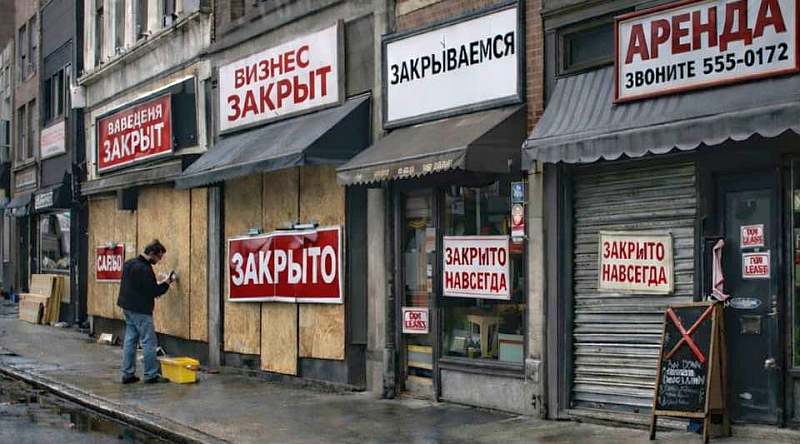
Russia has found itself in a mathematical and strategic trap, an escape from which is not foreseen in their current paradigm. The war of attrition they attempted to impose on us has boomeranged on their own economy.
The cost of each meter of the front has become disproportionate to the state’s capabilities. Burning through 15-30 thousand lives (5,800 deaths confirmed on video) for the sake of advancing in fields and ruins, they are simultaneously burning their industrial potential. Forty percent of the budget goes into the void – on tanks that will burn out in a week and payments to widows. This money does not create added value.
The contraction of the labor market (a deficit of five million people) and the Central Bank’s key rate, which has turned commercial loans into a noose (20-25% per annum for businesses), have paralyzed any civilian growth. Losses for KAMAZ amounting to 37 billion rubles and Gazprom’s astronomical debt of 6 trillion – this is not just a crisis of individual companies but a marker of the collapse of the entire export-oriented raw material model that has fed the RF for the past 20 years.
Even if in the coming years they manage, at the cost of colossal losses and reducing the Kramatorsk agglomeration to dust, to reach the administrative borders of Donbas – what will they gain? An infrastructural desert that needs to be rebuilt for trillions of rubles, which are no longer available. Meanwhile, Ukrainian deep strikes will continue to methodically target their refineries, ports, and chemical industry, and the Western defense industry, only gaining momentum, will provide us with enough precision weapons.
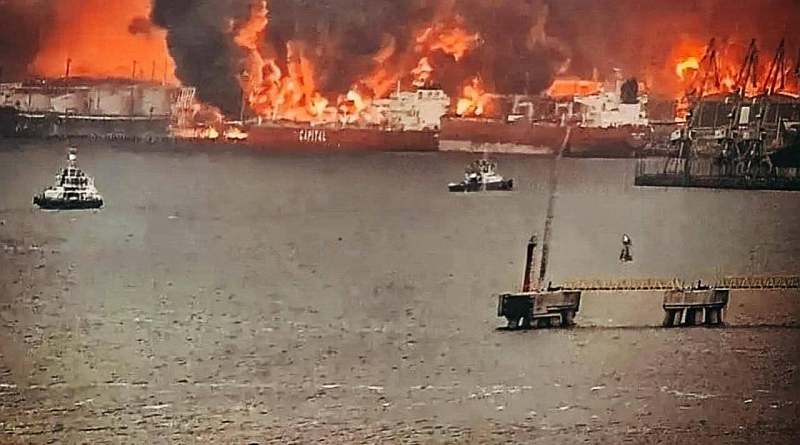
In summary, Ukraine maintains strategic resilience through layered defense, deep strikes, and external EU funding. Meanwhile, the Russian Federation finances this war at the expense of its own future. The skirmishes near Kamianske and battles in the Zoopark District of Bilytske are tactical. Strategically, Russia is trading the foundation of its statehood for square kilometers of scorched earth, without having an exit plan from this spiral. And the mathematics of this process is relentless and harsh.
Cover photo: 22nd Separate Mechanized Brigade
