

Information on the current losses of the Russian Federation due to sanctions as of 02.04.2026.
1. Ukrainian drones attacked the oil refinery in Ufa on the night of April 2, which is part of the “Rosneft” structure, causing a fire on the premises.
– The “Bashneft-Novoil” plant was hit — one of “Rosneft’s” key oil refining assets. The plant produces a wide range of products, including gasoline, diesel fuel, aviation kerosene, and lubricants, with a capacity of about 7.3 million tons of oil per year.
– According to preliminary estimates by relevant monitoring resources, the attack might have targeted a primary oil processing unit, which is critically important for the plant’s operation. Damage to such facilities can impact production processes and temporarily limit product output.
– Nearby “Bashneft-Novoil” are two other large enterprises — “Bashneft-Ufaneftekhim” and “Bashneft-UNPZ,” forming one of the largest oil refining clusters in Russia. This increases the region’s vulnerability to similar attacks and creates risks for the entire production infrastructure.
– This is not the first attack on this industrial hub recently: drone attacks were recorded on March 21 and 22, which also resulted in fires. The series of incidents indicates increasing pressure on the energy infrastructure in Russia’s deep rear.
2. The growth of Russia’s national debt is accelerating.
– By the end of the year, Russia’s national debt increased to 35.1 trillion rubles, and the costs of servicing it reached 3.2 trillion rubles. Overall, the national debt jumped by 21% over the year, while internal debt grew even faster — by 29.1%.
– This trend indicates a growing deficit in current budget revenues to cover state expenditures. Simultaneously, the government attempted to compensate for the lack of funds by raising taxes. The profit tax rate for the federal budget was increased from 3% to 8%, while for regions it remained at 17%. However, this did not yield the expected effect.
– Despite this, formally, the federal budget deficit is kept below the conditional international benchmark of 3% of GDP. By the end of January–February 2026, it was about 1.5% of GDP.
– Meanwhile, rapid debt accumulation and weak revenue response to tax increases indicate growing structural tension in Russian public finances.
3. The deficit of Russia’s federal budget for the first two months of 2026 reached 3.45 trillion rubles, which is about 1.5% of GDP.
– Thus, the annual deficit plan was effectively exhausted in less than two months. Budget revenues show a noticeable deterioration. Total revenues amounted to 4.8 trillion rubles — 10% less than the same period last year.
– A key factor was the sharp drop in oil and gas revenues, which fell by 47%. At the same time, non-oil and gas revenues showed only moderate growth — 4%.
– The share of energy resource revenues in the budget has significantly decreased and currently stands at about 17%, indicating not diversification but the weakening of the main source of treasury replenishment. Despite this, expenses continue to grow — over two months, they increased by 5.8%.
– An additional factor in the financial imbalance has been the active prepayment of government contracts, which accelerates spending and increases pressure on the budget at the beginning of the year.
– The government’s calculation largely relies on expectations of rising energy prices. However, even after the sharp jump, oil prices only partially recovered and approached pre-war levels, not providing the necessary increase in revenues.
– If commodity prices do not demonstrate sustained growth, the authorities will have to seek alternative sources to cover the deficit. Possible options include increased domestic borrowing, which may crowd out the private sector from the capital market, or concealed monetary financing through currency weakening.
– The situation indicates a rapid deterioration in the state of public finances and increasing risks for the economy, where the budget deficit, falling commodity revenues, and rising expenses form an unstable financial model.
4. “Rosneft” sharply reduced its profit by 73%, to 293 billion rubles, by the end of 2025.
– Among the reasons are the decline in oil prices, increased tax burden, strong ruble, and high key rate, which complicates financing. Logistics costs have soared. By March 2026, the cost of tanker freight from the Baltic to India exceeded $20 per barrel — roughly ten times more than at the beginning of 2022.
– Additional pressure is created by insurance risks: some insurers have left the market, while those remaining have significantly increased rates. The lack of a stable international settlement system remains a serious issue.
– As a result, a significant portion of revenues is redistributed in favor of intermediaries — owners of the “shadow fleet” and financial structures that ensure circumvention of restrictions.
– Rising transaction and logistics costs lead to further reduction in the profitability of the oil sector, which increasingly operates under conditions of limited access to markets, finances, and infrastructure.
5. The financial results of Russian companies are sharply deteriorating: in January, their total profit plummeted by almost 30%, according to Rosstat data.
– The overall financial result of enterprises (profit minus loss) amounted to about 2 trillion rubles. This is one of the lowest figures in the past year — businesses earned less only in May 2025.
– The share of profitable companies has noticeably decreased — to 62% compared to 67.1% a year earlier. At the same time, their total profit fell by 16.6% to 3.3 trillion rubles.
– Meanwhile, losses are rapidly growing: companies operating “in the red” increased their losses by 16.1% over the year — to 1.3 trillion rubles. This indicates a strengthening of imbalances in the corporate sector and an expansion of the share of troubled businesses.
– The dynamics point to a systemic deterioration in the financial condition of the Russian economy: profits are shrinking, losses are rising, and the number of steadily operating enterprises is decreasing. This creates additional pressure on investment, employment, and tax revenues.
6. The Russian government is cutting spending on road construction and repair due to the growing budget deficit.
– Funding for road activity measures, covering the construction, repair, and maintenance of federal highways, will be reduced this year by 11 billion rubles — to 432 billion.
– Overall, funding for the six-year road development program, under which more than 2,000 kilometers of federal highways were planned to be built and reconstructed, is being cut by 100 billion rubles — to 9.1 trillion.
– It is estimated that underfunding of road works relative to approved standards will reach 1.85 trillion rubles, creating risks for the implementation of infrastructure projects and the future state of the transport network.
– The reason for the cuts is the deterioration of state finances. By the end of 2025, the federal budget deficit amounted to 5.625 trillion rubles — five times more than the initial plans. At the beginning of 2026, the situation continued to worsen: in January-February, the budget “gap” increased by another 1.5 times year-on-year — to 3.449 trillion rubles.
– The reduction in infrastructure spending indicates a forced reassessment of priorities and increased financial pressure on the Russian economy.
7. The conflict around Iran creates short-term opportunities for Russia to receive additional income from raw material exports.
– However, this effect largely depends on the duration of the conflict and the stability of global markets. The price surge has affected not only oil.
– Aluminum has increased by about 12%, while urea prices have risen by almost three-quarters. The growth in quotations also covers gas, grain, and fertilizers, which temporarily improves Russia’s export revenues.
– The average price of Russian Urals oil reached $93.40 per barrel at the end of the week.
– Simultaneously, tensions in the liquefied gas market intensify competition between Asian and European buyers, which also supports high prices. If high oil prices persist until the end of the year, additional revenues from Russian oil exports could amount to about $40 billion.
– In the event of a rapid resolution of the conflict and a return of prices to previous levels within approximately three months, additional profit may decrease to less than $10 billion.
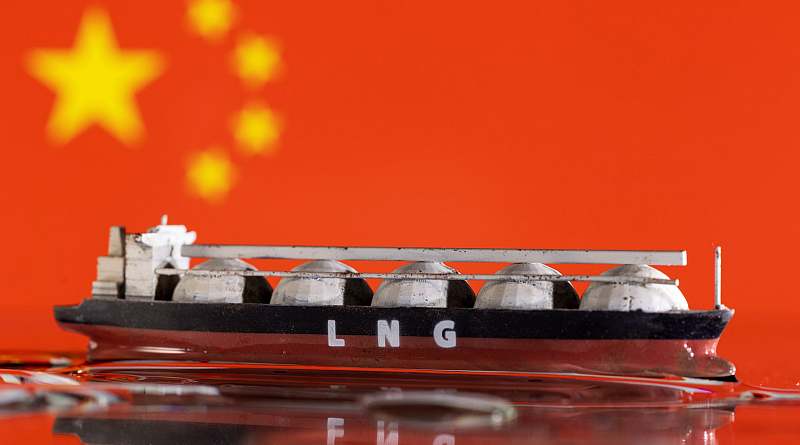
8. China has increased the resale of liquefied natural gas, using cheap long-term contracts with Russia to gain additional profits.
– Beijing is actively profiting from the difference between the low price of Russian gas and the significantly more expensive spot market in Asia. After the escalation of the situation in the Middle East, LNG prices in Asia rose by approximately 85%. One of the key reasons was supply disruptions through the Strait of Hormuz, which handles about 20% of global LNG flows.
– At the same time, China reduced its own imports: in March it amounted to 3.68 million tons, the lowest level since April 2018.
– Stable pipeline supplies from Russia and domestic production allowed China to redirect part of the volumes for resale. In March, up to 10 LNG cargoes were sold — a record monthly figure for the entire observation period.
– Since the beginning of the year, China has resold 1.31 million tons (19 cargoes) compared to 0.82 million tons for the whole year of 2025. The main destinations were South Korea (10 cargoes), Thailand (5), as well as Japan, India, and the Philippines.
– The economics of such operations increasingly demonstrate Russia’s disadvantageous position.
– Russian pipeline gas is supplied to China at about $250 per 1000 cubic meters, while spot prices in Asia have risen to approximately $830 per 1000 cubic meters.
– As a result, the resale margin can exceed the purchase price by three times, and a single standard LNG cargo of about 70 million cubic meters can yield up to $40 million in profit.
– Russia is increasingly solidifying its role as a supplier of cheap resources, while China exploits this dependency to profit on the global gas market.
