
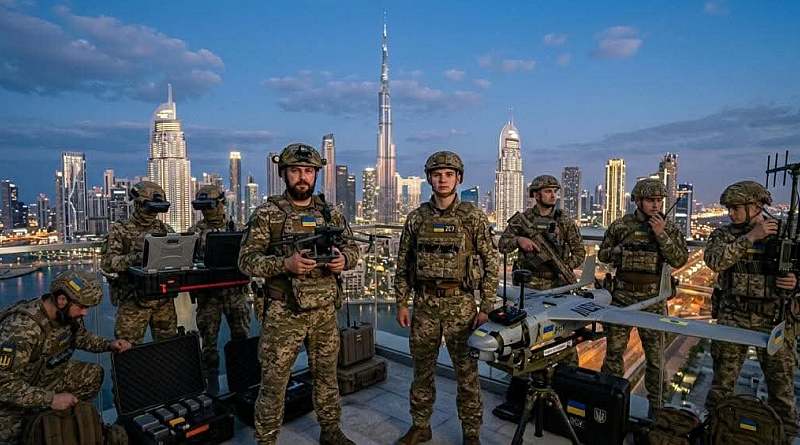
The Gulf countries have turned to Kyiv for help in countering Iranian attacks. It’s a promising offer. It should be utilized comprehensively for the benefit of the state, not just for drone manufacturers. We explain in detail the problems being solved in the Gulf countries by the Ukrainian Armed Forces experts.
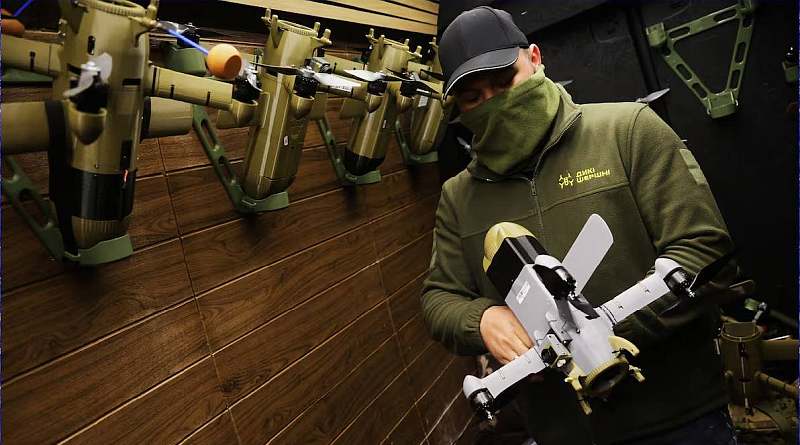
Retired Colonel of the General Staff Oleksandr Surkov spoke to Texty.org.ua about the value of Ukrainian experience for these countries. Surkov led the first specialized missile and UAV counteraction unit in Ukraine.
Ballistic Missiles
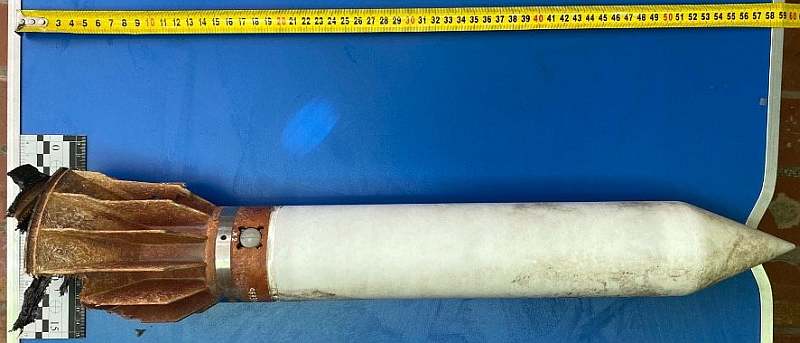
In 2023, as a large amount of research on Russian technology accumulated, unexplained objects began to be found at the sites of drone crashes and ballistic missile strikes by “Iskander” and “Kinzhal”. They resembled small but rough plastic cylinders about 20 cm long.
At first, many took these finds as souvenirs, Colonel Surkov explains. The military studied them and found that these are jamming devices—designed to deceive air defense radars, such as Patriot systems.
In the tail section of a Russian ballistic missile, there are six such devices. When the missile is “illuminated” by an air defense radar station, the cylinders are fired and become false targets.
“Therefore, at the beginning of the use of Patriot systems, a situation arose when the system detected several targets. At that time, it was reported in the press that Ukrainian air defense shot down six enemy missiles. In reality, six air defense missiles could have been fired at one real missile, with one hitting the actual target, while the rest of the anti-aircraft missiles were wasted on decoy targets,” says Oleksandr Surkov.
This information was conveyed to Western partners. Afterwards, the software of the anti-aircraft complexes was adjusted, and the system learned to distinguish between false targets and a real missile.
“Reports from the Middle East that up to eight anti-missiles are sometimes used to intercept one ballistic missile are likely related to such interference systems. It seems that the anti-aircraft systems currently in service in the air defense of the Gulf countries have not yet undergone such modernization, and Ukraine’s experience has not been considered,” concludes Colonel Surkov.
Cruise Missiles
The second noteworthy point, according to a former officer of the Ukrainian General Staff, is cruise missiles. By the end of 2022, Russia had mostly exhausted its old stock of Kh-101 and Kalibr missiles. New batches were launched in a modernized version.
“They have updated guidance systems, jamming systems, and other changes that air defense specialists need to consider,” notes Oleksandr Surkov.
“Shaheds”
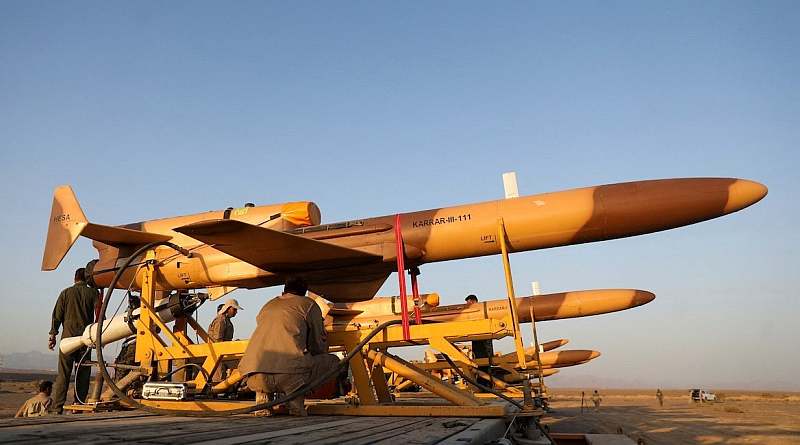
The third is “Shaheds.” Their technical characteristics are well known and have been studied in detail by Ukrainians. According to our expert, the main issue is the tactic of use.
We already know how the enemy structures attacks and changes tactics with the development of communication and guidance systems, including mesh networks (a method of communication where drones “talk” not only with the base but also with each other).
“One of the typical schemes: up to 20 drones are launched at an object. Part of them are shot down by air defenses, but 5–6 can breach the target. They are directed to one point, inflicting serious damage on the object. Such attacks happen infrequently but regularly,” says Oleksandr Surkov.
The officer once again emphasizes that the main interest for specialists from the Middle East is the combat experience accumulated by Ukrainians.
“It is necessary to convey the generalized conclusions about the enemy’s tactics to the people operating air defense systems. Such conclusions cannot be made based on two or three raids. Over four years, Ukrainians have thoroughly studied the specifics of enemy attacks in all three categories: ballistic missiles, cruise missiles, and drones,” adds Surkov.
“Radar Field”
Colonel Surkov says that at the beginning of Russia’s full-scale invasion, Ukrainian air defense only had “large” radars for detecting air targets. Now, our air defense has a full range of detection tools.
“These include both stationary and mobile radars. Many short-range radars of Ukrainian production are emerging. The country’s ‘radar field’ is growing,” notes the reserve officer.
The Ukrainian arsenal of air target engagement systems is also evolving. These include anti-aircraft machine guns, anti-aircraft missile systems, portable anti-aircraft missile systems, all types of drones — from regular to anti-aircraft copters, aircraft-type UAVs, and others.
“The innovation of Ukrainian air defense lies in the formation of a single information and management exchange network. We are four years ahead of everyone in terms of experience,” explains Oleksandr Surkov.

Allies
There are public accusations against the country’s leadership that Kyiv has sent specialists to the Persian Gulf who are needed at home. Colonel Surkov believes such accusations are unfounded.
“We have enough specialists. We shoot down up to 90 percent of targets. This is a phenomenal result, and these figures have not dropped. Not so many people went there (to the Persian Gulf. — Ed.) that it would affect our efficiency,” says the retired Ukrainian officer.
Even if the “landing” in the Gulf is a gesture of goodwill from Kyiv, Ukrainians will gain real allies in the complex region in the form of Arab countries, explains Surkov.
It should be noted that these are wealthy countries with numerous arsenals of modern weapons, including missiles for Patriot systems.
Ukraine’s idea is to sell not individual interceptor drones or other technologies, but the whole complex of services and our expertise in air defense. And to receive not just money, but also political support, permits for purchasing weapons we lack. Additionally, to attract investments from the wealthy countries of the Persian Gulf and a long-term opening of markets for other Ukrainian goods. A completely reasonable approach.
Ours in the Persian Gulf
Ukrainian specialists help local military adapt air defense systems to massive drone attacks, as the defense in many countries of the region is focused primarily on ballistic missiles, but is less effective against a large number of cheap drones.
This involves creating mobile groups, using interceptor drones and other inexpensive means of combating drones. There is information that Ukrainian operators have already participated in the actual interception of Iranian UAVs.
Among our specialists are radar system and surveillance system operators, electronic warfare experts, instructors who train local units.
Iranian Strategies
According to Colonel Surkov, a key feature of Iranian attacks is their massiveness. Iranians can simultaneously launch dozens of kamikaze drones, cruise, and ballistic missiles. This is very similar to the Russian tactics often observed in Ukraine. The massiveness creates serious difficulties for air defense as it overwhelms its capabilities, allowing some drones to reach their targets.
Unlike our situation, Iranians can carry out attacks from multiple directions simultaneously: from their territory, as well as from Yemen, Lebanon, Syria, or Iraq. That is, from countries where pro-Iranian militants operate.
Targeted states, including Israel and Saudi Arabia, are forced to deploy multi-layered defenses over large areas. The simultaneous use of drones, cruise, and ballistic missiles requires the use of different echelons of air and missile defense, which significantly complicates management.
Iranians managed to disrupt part of the American aerial target detection system, reducing the effectiveness of local missile defense. The small size and low radar visibility of the “Shaheds” also complicate their timely detection.
Collective Air Defense
Sometimes “Shaheds” can be shot down by Patriot systems or the Israeli Iron Dome, but in this case, launching an interceptor costs significantly more than the drone itself. This economically exhausts the defense.
The Gulf countries, Israel, and the USA are actively seeking new ways to counter massive attacks. A strategy is being formed that combines different types of systems, each responsible for its class of threats — from drones to ballistic missiles.
Another direction is the integration of radars, satellites, and control centers of various regional countries and the USA for the rapid detection of missile and drone launches.
Within this model, data on air threats can be transmitted between allies almost in real-time. This allows for much earlier detection of launches from the territory of Iran, Yemen, Iraq, or Syria.
A regional system of collective air defense involving the USA, Israel, and Arab states is effectively being formed. Ukraine’s expertise is highly valuable in these truly tectonic shifts.
The cover illustration was generated by artificial intelligence: Ukrainian soldiers among the skyscrapers of Dubai. Recently, the image has been actively circulating on social media in Gulf countries.
