
Olesia Zhihaliuk, BBC News Ukraine
The focus of a new publication by the German WELT is the sense of a shift in Russia’s war against Ukraine.
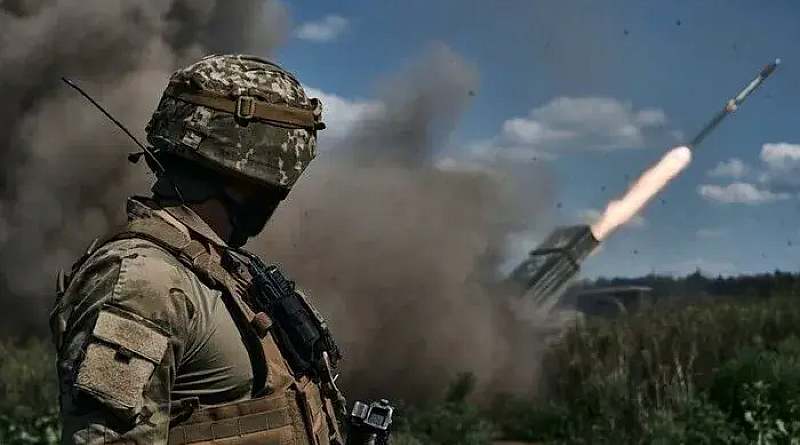
The publication notes a trend: the Russian spring offensive has effectively “run out of steam,” failing to achieve its stated goals.
Meanwhile, Ukraine is boosting its capabilities, especially in the field of drone technologies.
This contrast creates the main sense of the moment. As WELT writes, a turning point in the war for Ukraine no longer seems distant—it looks increasingly like a real scenario that may happen soon, possibly even this year.
The Russian offensive is increasingly losing momentum
Experts suggest that in the coming days or weeks, Russia may attempt to launch a new large-scale offensive. For this purpose, Moscow is transferring part of its strategic reserves to Ukraine—forces that were previously held in other areas.
According to the publication, the Kremlin has supposedly set a deadline—the end of April—to try to capture key Ukrainian positions in the Donetsk region. This includes Druzhkivka, Kostiantynivka, and Pokrovsk, where heavy fighting is underway.
Meanwhile, the Ukrainian side, particularly President Volodymyr Zelensky, considers such plans unrealistic.
“The set deadline is impossible to meet,” he stated.
Western intelligence services also doubt that such a pace of advancement is achievable.
Experts cited by WELT add that under the current dynamics, it may take Russia several years to fully control the Donetsk region.
Even under the most optimistic Russian estimates, this is unlikely to occur before August 2027—and would be accompanied by very heavy losses.
Especially considering the fortified Kramatorsk, which has effectively become a major defensive stronghold.
“The Year of Technological Breakthrough”
One of the main focuses of WELT’s material is the topic of technological changes on the battlefield.
In Kyiv, according to the adviser to the Ukrainian Minister of Defense, Serhiy Sternenko, it is believed that 2026 could be pivotal. As he told the publication, Ukraine has already gained significant technological advantages, primarily in drone technology.
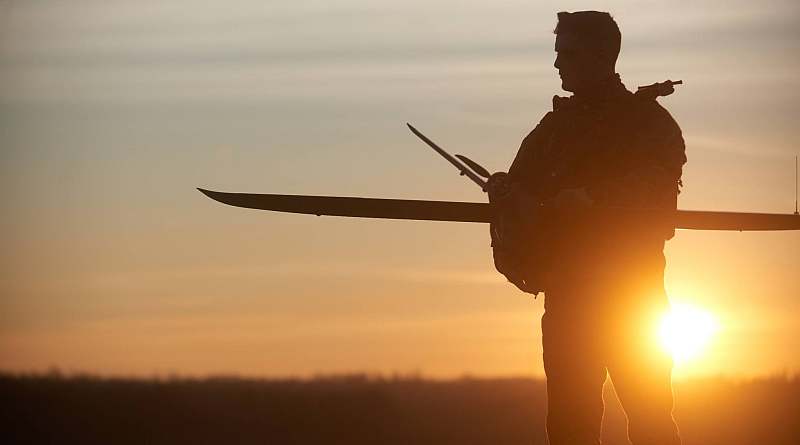
This involves long-range drones capable of hitting targets up to a thousand kilometers away. Sternenko emphasizes that some of these developments are not publicly disclosed, but their effects will become noticeable soon.
Separately, he draws attention to the actions of Russian authorities within the country—strengthening censorship, limiting the internet, and blocking services. In his view, this indicates that the Kremlin feels pressured and fears internal instability.
The war moves deeper into Russia
As WELT underscores, it’s no longer just about battles on the front line.
Previously, drone strikes were isolated incidents, but now Ukraine is making them systematic.
The use of medium-range drones significantly expands the “strike zone”—not only frontline positions but also targets far in the rear are at risk.
This concerns logistics, warehouses, transport hubs, as well as radars, air defense systems, and support facilities.
“In Russia, we can already do whatever we want. Moreover, they are running out of interceptor missiles,” Sterenko told journalists.
WELT reminded that the Institute for the Study of War (ISW) previously noted: Russians probably still do not have sufficiently effective and widely deployed means of defense against drones.
This includes, in particular, mobile fire groups and other relatively simple systems that could cover various facilities.
Because of this, it is difficult for Russians to defend against regular massive attacks by Ukrainian drones on targets across a large area.
Oil, Gas, and Defense
WELT also provides a detailed account of the economic dimension of the war.
According to Ukrainian sources, strikes on Russia’s oil infrastructure have already caused serious disruptions in the export and storage of resources. Damage to terminals and storage facilities reportedly temporarily reduced export capacity by a significant portion.
Drones have also struck facilities in remote regions, including platforms in the Caspian Sea — almost a thousand kilometers from the frontline.
As WELT writes, the defense industry is also under attack: microelectronics manufacturing plants, aviation repair enterprises, metallurgical facilities related to the production of armor steel and artillery components.
“Of course, these attacks do not have an immediate effect but rather over time. But Ukraine strikes in different directions, and this effect only intensifies,” explained Mykhailo Honchar, President of the Center for Global Studies and energy expert, in a comment to journalists.
According to him, strikes on infrastructure affect the entire chain: when export stops and reservoirs are destroyed, it also hits the oil production itself — there is simply nowhere to store it.

WELT also recalls that in 2026 Russia was already forced to cut production.
Honchar adds that the Russians encountered problems with kerosene production: in March it fell by 16.5%, and in April – by 22%.
“After the latest Ukrainian attacks, the losses are likely even greater. If Ukraine continues to act as it has over the past two weeks, Moscow will definitely face serious problems,” the expert emphasized.
In the end, WELT paints a fairly clear picture: Russia is losing the pace of the offensive, while Ukraine is moving to a more active and technological model of warfare.
And the main question now is whether the war is truly approaching that turning point, which was recently spoken of as a distant prospect, but is now increasingly seen as a completely realistic scenario in the near future.
Cover Photo: General Staff of the Armed Forces of Ukraine
