
Anastasiya Zanuda, BBC News Ukraine
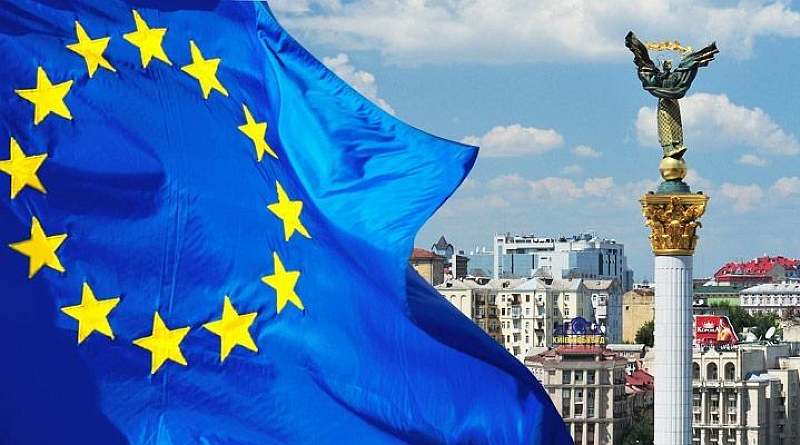
On June 15 in Luxembourg, at an EU Council conference, the first of six negotiation blocks or “clusters” on Ukraine’s path to joining the EU was opened. This cluster is called “Fundamentals.” It is meant to be the foundation on which the rest of the EU accession process will be built.
“EU countries have agreed to open the first negotiation cluster on accession with Ukraine and Moldova,” was the message posted on the official pages of the European Commission on social media.
European Commission President Ursula von der Leyen, before the G7 summit in France, confirmed the opening of negotiations, stating that this “anchors” Ukraine in Europe.
“This is a huge step forward. Ukraine has made significant progress in reforms. It has fulfilled its part, so now we must fulfill ours,” she said.
Ukraine’s Prime Minister Yuliya Svyrydenko reported that she communicated with the EU Commissioner for Enlargement Martha Kos on this day. She wrote that the opening of the first cluster is a clear confirmation that Ukraine “consistently fulfills its commitments and steadily moves towards EU membership.”
“We discussed further joint steps of the Ukrainian government and parliament to fulfill our commitments within the EU accession process,” – reported Svyrydenko on platform X.
According to her, Ukraine plans to open the remaining clusters by mid-July.
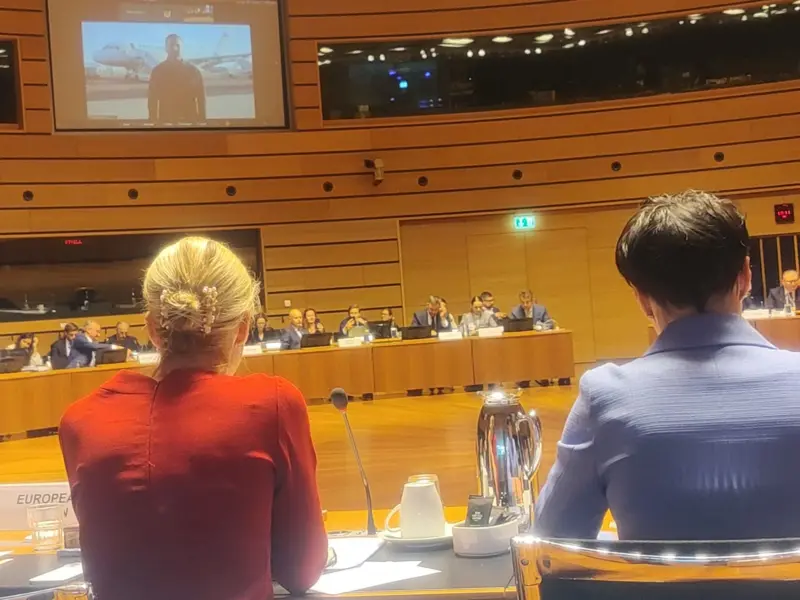
President of Ukraine Volodymyr Zelensky published fragments of his address to the European Union’s Intergovernmental Conference, symbolically recorded in Chisinau on the way to France for the G7 summit.
“What is happening today – the opening of the first cluster in the negotiations on Ukraine and Moldova’s accession – is a clear signal that Europe’s progress cannot be stopped,” he stated.
What are “clusters” and what do they entail? Why open them? And how are they “closed”?
Step one, fundamental, and largest
Clusters for EU accession are six thematic blocks that unite 33 negotiation chapters. They determine how a candidate country adapts its legislation to European standards in each of these areas.
“Opening” specific clusters means a transition from political declarations to meticulous technical implementation and monitoring of the real fulfillment of EU accession conditions, and it involves not only changing legislation or adopting new “on paper” but also verifying how it works in practice.
The name of the first cluster speaks for itself: “Основи” – Fundamentals.
During the expansion of the EU, it is given special attention, negotiations on it start first and end last. According to EU rules, no other cluster is considered successfully completed until there is substantial progress in the “Fundamentals.”
“This cluster covers, in particular, the rule of law and fundamental rights, the functioning of democratic institutions, public administration reform, and economic criteria,” states the EU Council’s message.
The first cluster includes the following negotiation chapters:
Chapter 23 – Judiciary and fundamental rights
Chapter 24 – Justice, freedom, and security
Chapter 5 – Public procurement
Chapter 18 – Statistics
Chapter 32 – Financial control
Notably, the content of the first cluster involves exactly those reforms where Ukraine’s progress is consistently questioned.
Within this cluster, the EU will assess, in particular, the long-suffering judicial reform and progress in the fight against corruption, where as recently as a year ago, European partners observed significant “rollback” of reforms.
EU Commissioner for Enlargement Marta Kos, during her visit to Kyiv on June 8, called the opening of the first cluster the “biggest step” in Ukraine’s accession process to the EU.
At the same time, she emphasized that the next phase depends on the further implementation of reforms.
“Enlargement is not about setting dates, but about reforms. The coming months will be decisive, and Ukraine needs to consistently implement reforms,” stated the EU representative.
The appointment of an intergovernmental conference to open the first negotiation cluster became possible after Ukraine met Hungary’s conditions, and its new leadership stopped blocking the process of opening negotiation clusters.
“Mega Monday”
President of Ukraine Volodymyr Zelensky welcomed the EU’s decision to open the first cluster but noted that Kyiv is ready to open all six.
“At least on our side, there will be no delays. And it is very important for partners to also feel the full significance of this process,” stated President Zelensky on June 12, when the official decision to set a meeting to open the first cluster was announced.
It seems it might quite possibly happen, at least before the meeting dedicated to opening the first cluster for Ukraine. Marta Kos stated that she expects the remaining five negotiation clusters to be opened already in July.
On the same day with Ukraine, the first cluster for EU membership was also opened with Moldova, as the countries are currently undergoing the negotiation process as a pair. In a post on X, EU Commissioner for Enlargement Kos called it a “Mega Monday for the enlargement process.”
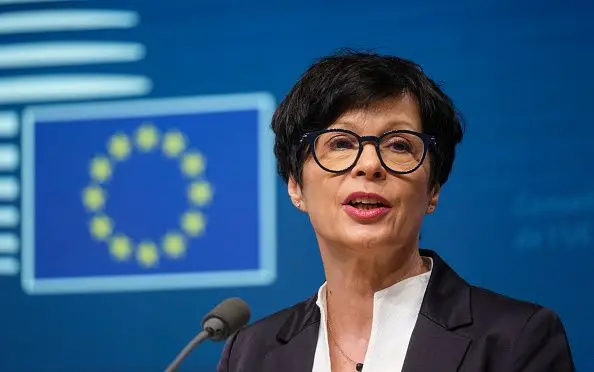
“We will have the first biggest step for Ukraine and Moldova after they gained candidate status in 2023. So finally, we will be able to open the first cluster for both countries. Why? Because they have fulfilled their obligations, and indeed it is time for us to do so,” said Kos before the meetings in Luxembourg.
If both countries continue, in turn, to fulfill their part of the obligations, “then in July we will open all the remaining five clusters,” said the Commissioner.
However, some observers predict that by then the common path of Ukraine and Moldova towards the EU might diverge.
The reason given for this is Moldova’s significantly faster implementation of the reforms required for EU membership.
For Ukraine, another opportunity might open, which is currently referred to in Brussels as “accelerated gradual integration.” Its main principles were outlined in a letter to EU leaders in May of this year by German Chancellor Friedrich Merz.
Despite the fact that his idea was criticized by many in Kyiv, it seems that Merz’s proposals might form the basis of what Brussels and other European capitals can offer Kyiv in the future, namely: the possibility to gradually join the EU’s policies, institutions, and mechanisms, effectively doing what only countries that had already completed negotiations and were awaiting final official recognition of their membership could do previously.
On the other hand, it seems that the option of so-called “reverse membership,” where Ukraine quickly becomes an EU member and then “in reverse order” fulfills the conditions and implements reforms, has been taken off the table, despite earlier support from both Enlargement Commissioner Kos and European Commission President Ursula von der Leyen.
What is in the remaining clusters?
The second cluster is called “Internal Market.”
It covers legislative areas that define the free movement of goods and capital, freedom of movement for workers, the right to establish businesses, corporate law, protection of intellectual property and consumer rights, as well as the health sector.
All these areas—from non-market tariffs on utilities to controversial dismissals and appointments in state companies—are quite problematic in Ukraine.
The third cluster is dedicated to “Competitiveness & Inclusive Growth.”
It includes issues of taxation, economic and monetary policies, social policy and employment, industrial policy and entrepreneurship—the entire complex of what is called the business climate, to which there are also many questions in Ukraine.
The fourth cluster is “Green Agenda & Sustainable Connectivity.”
Despite the fact that the name of this cluster sounds somewhat “untimely” for Ukrainians, the so-called “green transition” is one of the central policies of the EU and is already affecting Ukraine – for example, the environmental requirements for Ukrainian metallurgists if they want to supply their products to the European Union, which have already led to significant production problems.
This cluster is also dedicated to energy, transport policy, environmental protection, and climate change.
Fifth Cluster – “Resources, Agriculture & Cohesion Policy” (Resources, Agriculture & Cohesion).
The issues here have been somewhat highlighted by the actions of Polish farmers, who during the full-scale Russian invasion of Ukraine, blocked roads and borders, protesting against the “influx” of Ukrainian grain into the EU, which led to restrictions on Ukrainian agricultural exports.
This cluster focuses on agriculture, food safety, veterinary and phytosanitary control, fishing, and regional cohesion policy (and funding for relevant projects through EU funds).
Sixth and final cluster – External Relations.
It regulates external economic relations, i.e., trade, the EU’s common foreign and security policy, as well as humanitarian aid and development.
Therefore, not only the first cluster but all subsequent ones present a very serious challenge for the Ukrainian authorities. Their opening will indicate, as direct participants in the negotiations say, that from the EU side “everything is serious.” And their “closing,” or completion, will demonstrate how serious Kyiv is about EU membership.
