
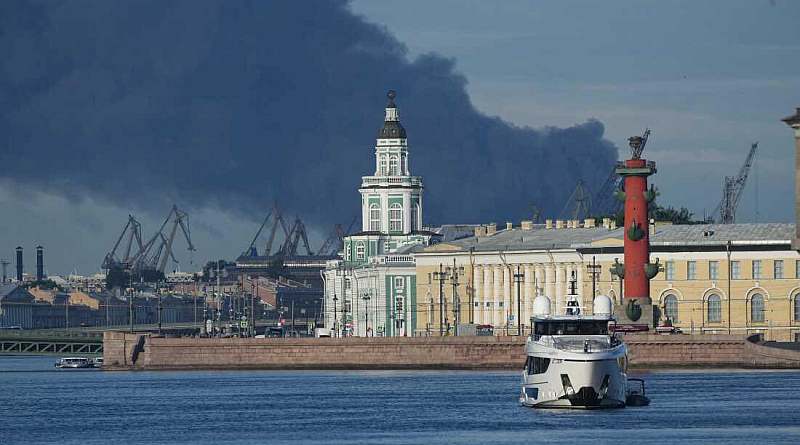
Attacks on the Leningrad region are aimed at achieving several goals. Among the key ones — to convey to the Kremlin that it won’t be possible to hold parades, sailboat races, and invite Taliban delegations as if nothing is happening.
No, outside there will be explosions, oil rains, and investors will be familiarizing themselves with the prospects of a “flourishing” economy and watching as fat workshops fly into the air and fuel or nitrate exports are banned. Want to know what’s going to happen with the investments? Let me tell you.
But it is equally important to prevent the transfer of additional air defense to Crimea and the Azov region and to weaken the enemy’s capabilities in the Baltic.
Isolation of the Theater of War and Air Defense Overload
We are currently delivering numerous strikes on logistics, railway traction substations, trains, and trucks. This is not yet the isolation of the theater of war, but a full blockade. 20 liters of fuel per person per week and restrictions on the sale of grains, sugar, etc. are a clear sign.
At Chongar, the Defense Forces struck a bridge — it turns out that 200-kilogram warheads can dismantle overpasses and create huge holes in the road surface, who would have thought. Yes, pontoons were set up there, but this will slow down the transfer, and taking a detour increases the risk of being hit by short-range UAVs from the right bank of the Dnipro.
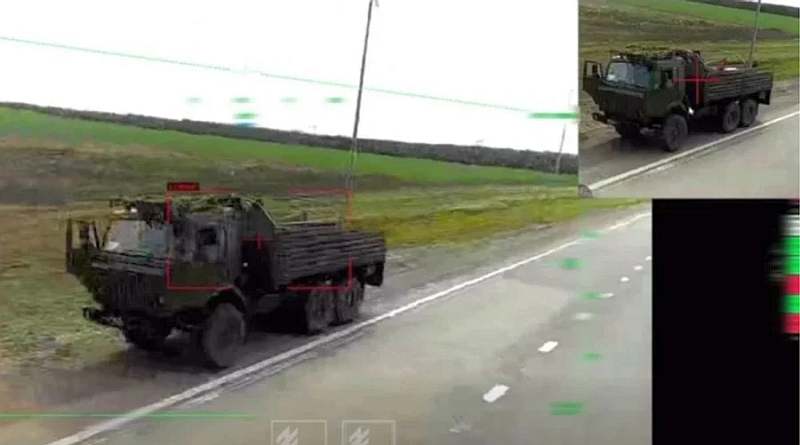
The entire “Novorossiya” route is littered with burnt tankers and trucks, hit not only by mid-range strikes with serious warheads but also by FPV from motherships and “hornets”.
ГУР, СБУ, and SBS were not in vain causing disruption in Crimea, Azov Region, and the Black Sea coast — there’s no better leverage than the cash cows of the Russian budget near Novorossiysk, Tuapse, and St. Petersburg, where a major economic forum is taking place.
The Governor of Leningrad Oblast stated that 141 drones were downed just on the morning of June 6. Even if they traditionally tripled the number, it indicates the launch of a massive swarm. St. Petersburg and the region have the second most dense air defense dome in Russia after Moscow. To break it, we switched from the tactic of single-incident birds to massive saturation of targeting channels. When 30–40 targets approach from different vectors at very low altitudes simultaneously, the radars and operators get overwhelmed, and the deficiency of delivery systems to the air defense units hasn’t disappeared.
The result is panic among the authorities. The Governor of St. Petersburg, Beglov, for the first time urged residents not to leave their homes, and the city is aggressively jamming mobile internet to disrupt the navigation of our UAVs.
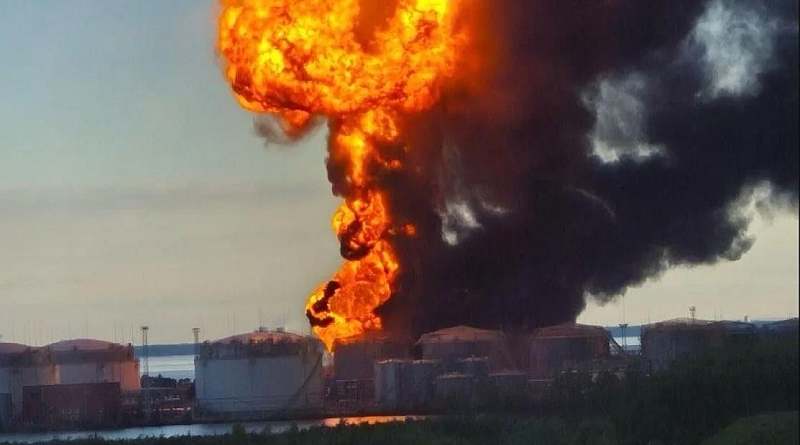
Well, it’s costly. And if there’s a desire to overturn the board and threaten Europe so that millions of shells and drones don’t reach Ukraine, we are clearly showing what will happen to the Baltic fleet — the same as with the Black Sea fleet, which regularly suffers in Novorossiysk right at the piers.
Prime targets of the Baltic node
Drones struck the Research Institute of Marine Thermal Equipment (Lomonosov city). This is the brain. The leading Russian enterprise specializing in long-range thermal torpedoes and energy systems for underwater weaponry. The Baltic is a bottleneck: mines, nets, and anti-ship missiles from Sweden, Denmark, Finland, and Poland will ensure complete blockade. Submarines will be the sole means to inflict harm on NATO fleets. Hence, I think, there were hits — planning underwater operations in the region might be as easy as the landing near Odessa, with unknown friendly drones continuously flying.
Additionally, laboratories, climate chambers, stands for hydrodynamic tests, and thermal torpedo engines — that’s the dessert.
15th Arsenal of the Russian Navy (Bolshaya Izhora) is a warehouse. A giant fortified ammunition storage base for the Baltic fleet, established back in the 1930s. Part of the infrastructure there is underground. The fire has spread over 1.5 square kilometers, burning for the second day, and it’s clearly visible in satellite images. Judging by the fact that one corner is burning, open areas are affected.
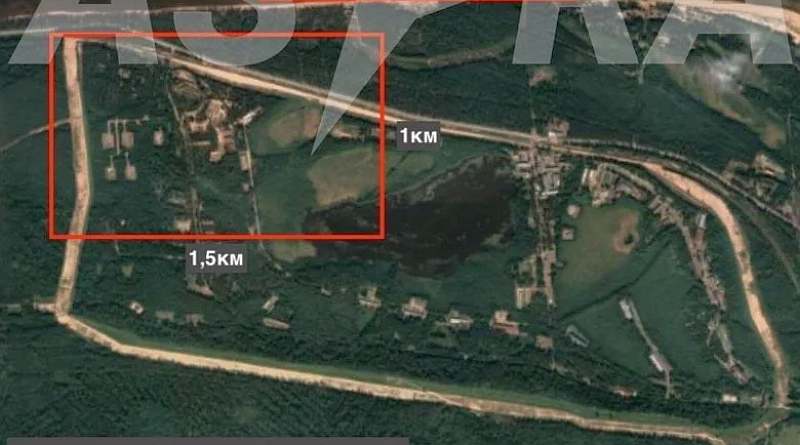
At the 15th arsenal, mine-torpedo armaments are not only stored, but also repaired and disposed of. In open areas and light hangars, thousands of transport containers, stacks of wooden crates, empty hulls, oils, decommissioned junk, and munitions awaiting disassembly or delivery are stored.
The fires damaged and destroyed loading ramps, preparation workshops, cranes, railway lines inside the base, and transport containers. I am confident that several thousand tons of munitions have been rendered inoperative: shells, mines, depth charges. Even if the most expensive torpedo or “Caliber” remained intact underground, transporting them, charging them, and preparing them for firing at a base where secondary detonation is ongoing and everything is filled with fiery debris is physically impossible. The arsenal has been paralyzed as a tactical unit.
The 7082nd Technical Mine-Torpedo Base (Military Unit 81263) is a specific combat unit (1st category base) responsible for storing and promptly issuing mine-torpedo armaments to the fleet.
Within the perimeter are hundreds of storage facilities. Locals habitually refer to this area as the 15th arsenal. In fact, one railway branch in this forest leads to disposal workshops (15th arsenal), while another, 500 meters away, ends at warehouses with ready-made missiles and torpedoes (7082nd base). They share logistics, roads, and security systems.
Underground bunkers are difficult to penetrate, but everything stored in above-ground hangars was prepared for shipment. This means, in part, these are missiles and torpedoes that have already undergone scheduled maintenance and were awaiting loading onto ships in Kronstadt.
By destroying these hangars at the 7082nd base, we have physically severed the supply chain. The ships of the Baltic Fleet may be operational, submarines may go to sea, but for now, they simply have nothing to fire— the arsenal has been paralyzed. The production cycle of a thermal torpedo or “Caliber” involves electronics, engines, and months of work by the military-industrial complex. And these five thousand tons of detonation will cost the Russian budget a significant amount, even if a large portion of what detonates are ordinary shells.
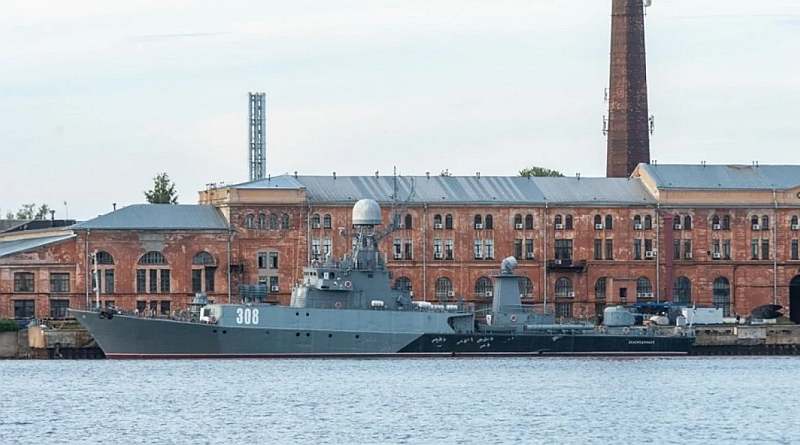
Kronstadt Shipyard — the only place in the Baltic where they can quickly patch up large ships. Besides the corvette “Boykiy”, which burned out in the dock, hits were recorded in the energy supply workshops and mechanical workshops of the plant.
The plant encountered problems with electricity and the compressor stations that pump air and water for the docks. So, the repair of other vessels (and there are several units there now) either stopped or significantly slowed down.
If we reduce this Baltic tour to dry figures, the empire received a hefty bill of direct losses in just a few nights. The oil terminal in the Coal Harbor — that’s $15–20 million to restore accounting units and find sanctioned electronics. The burned-out radio-electronic head of the corvette “Boykiy” will cost another $40–50 million. But the most expensive jackpot was hit in the forests of Velikaya Izhora: the ostentatious modernization of arsenals by Shoigu worth $20–30 million burned down, and five thousand tons of mine-torpedo ammunition detonated.
We are forcing the Russian General Staff to make the worst decisions: either letting Petersburg burn right in front of foreigners who came to SPIEF, disrupting the Baltic Fleet with raids, or baring the front, removing scarce air defense systems from Crimea and Tokmak to cover the deep rear while we strike power substations near Gvardiyskoye or knock out locomotives near Oktyabrskoye.
