
Met with Gert-Jan Koopman, Director General of the Directorate-General for Enlargement of the European Commission.
We had a frank and substantive conversation about the content and recommendations of this year’s European Commission Report on Ukraine’s progress towards EU membership.
Special attention was given to the rule of law, reform of the State Bureau of Investigation and the Prosecutor’s Office, independence of the Constitutional Court, strengthening of democratic institutions, and rights of the opposition.
The European Commission Report is an important objective indicator not only of our progress but also of the problems in fulfilling our European integration commitments. Its conclusions should become the basis for further work by the Ukrainian parliament and government.
I am convinced that it is extremely important today to unite the efforts of the authorities and the opposition for the sake of Ukraine’s European future.
Now is the moment of truth. Not words and promises, but reforms will determine the speed of our movement towards the EU.
 |
 |
 |
* * *
I thank Commissioner Marta Kos and the entire team of the European Commission for their consistent support of Ukraine, objective assessment of progress made, and clear guidelines for further reforms.
For Ukraine, this report is a kind of European integration success card. It evaluates our progress not by political promises but by concrete actions, fulfilled commitments, and achieved results.
This is exactly how the process of European integration should take place: based on merit, real changes in the state, and compliance with European standards.
Ukraine continues its path to the EU amidst unprecedented Russian aggression. This has been made possible primarily due to the courage of our defenders, the resilience of Ukrainian society, the work of businesses, communities, parliamentarians, officials, and everyone who works daily for the European future of the state.
At the same time, we cannot turn a blind eye to real issues in the rule of law and democracy, which remain unresolved and carry over from one annual report of the European Commission to the next.
This primarily concerns the proper formation and guarantee of the independence of the Constitutional Court, completion of judicial reform, reform of the prosecution and the State Bureau of Investigation, and ensuring the independence of anti-corruption institutions. Equally important are the protection of parliamentary opposition rights, political pluralism, and media freedom.
These are not issues that can be postponed until after the war. They are the foundation of European democracy and trust in Ukraine.
Importantly, for the first time, the Report on Ukraine’s progress towards EU membership included issues of personal sanctions against Ukrainian citizens and the obligation of the authorities to comply with the provisions of the European Convention on Human Rights. Unlawful actions by the authorities against Ukrainian citizens are now included in the list of challenges our state faces on the path to European integration.
I want to remind you: Negotiation Cluster 1 — “Foundations” — opens first and closes last. Progress in the rule of law, democracy, and fundamental freedoms will determine the overall speed of Ukraine’s progression towards EU membership.
Therefore, the European Commission’s report should become the basis of a concrete action plan for the government and the Verkhovna Rada in the coming months — with clear priorities, responsible executors, timelines, and measurable results.
We urgently need to take measures to meet the criteria necessary for closing interim indicators in the “Foundations” section. Without this, we cannot close any negotiation chapter. The war should not be an obstacle to democratic reforms, the rule of law, justice, and the fight against corruption.
Simultaneously, Parliament and the Government must expedite the fulfillment of indicators within all negotiation chapters.
The European Commission’s roadmap discusses the possibility for Ukraine to close 7 chapters in 2027.
But Ukraine must once again surprise the European bureaucracy. It’s time to activate the European integration turbo mode!
We in “European Solidarity” are ready for constructive cooperation to fulfill the obligations of European integration. However, such cooperation must be based on respect for parliamentarism, political pluralism, and the rights of all democratic forces.
Ukraine does not have the right to waste precious time due to a lack of political will to carry out necessary reforms. Our soldiers, with their courage, have opened a historical window of opportunity for Ukraine. Our duty is to turn this opportunity into an irreversible result.
A date by itself will not bring Ukraine closer to membership in the European Union. Reforms, trust, and strong democratic institutions will achieve this.
Our goal remains unchanged — full membership of Ukraine in the EU. And we must walk this path not only quickly but also with dignity, preserving the freedom and democracy for which we are fighting.

* * *
Our goal is Ukraine’s membership in the European Union. Thus the Ukrainian government must accelerate the necessary reforms.

* * *
The price Ukraine pays every day is increasing. Since the start of November, in just four days, we have lost nearly 100 people. The day before yesterday in Komyshuvakha, 40 people died in a school during the distribution of humanitarian aid. Kyiv lives as a frontline city: alerts for 18 hours, people 18-20 hours a day without light, water, and sanitation.
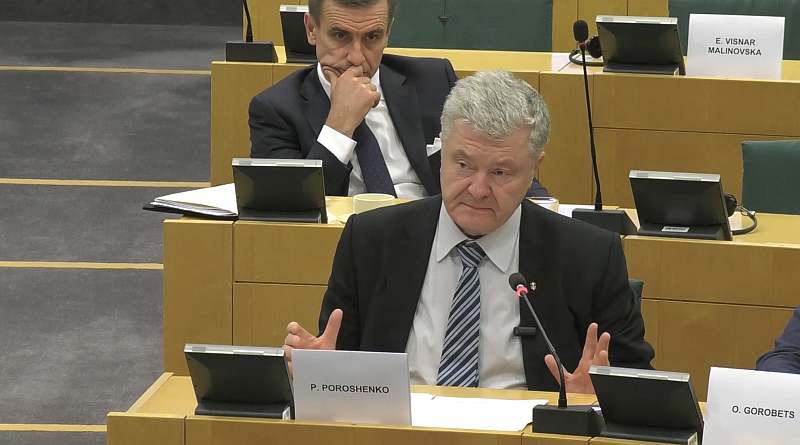
This is how I began my speech in the European Parliament in Brussels.
We all need to understand that this is not happening somewhere far away. This is happening in Europe. Meanwhile, our Armed Forces have disrupted Putin’s plan to capture Donbas. We are liberating more land than the enemy is capturing.
No people would want peace more than Ukrainians. But peace must be fought for. And this can be done as follows:
- Strengthen the AFU. The Ukrainian army is fighting for Europe. By strengthening it, we increase the cost of aggression for Putin.
- Systematically weaken Russia. Putin will not stop as long as he believes he can sustain military production.
- Make time work for Ukraine. Putin bets on exhaustion and fatigue from Ukraine, which actually means fatigue from Europe itself. We must act decisively.
- Justice and accountability. There will be no lasting peace without justice. The special tribunal on the crime of aggression must be fully operational.
- Consolidated diplomatic pressure. Nothing about Ukraine without Ukraine, nothing about Europe without Europe. This principle was introduced by us back in 2014, and it should begin and end each of our diplomatic meetings around the world: from Beijing to Washington.
- Strengthening sanctions against the aggressor, not against our own citizens. The European Commission’s report directly calls internal sanctions in Ukraine unacceptable, unconstitutional, and extrajudicial. Sanctions against Russia should be strengthened every month. Every instance when Western or Asian components are found in Russian drones must be thoroughly investigated.
- The irreversibility of EU accession. We are not the best students in the class because 30% of the obligations are still pending in the government. As the opposition, we vote for all European integration laws because it is work for Ukraine.
Peace requires diplomacy. Diplomacy requires strength. And lasting peace requires a strong Ukraine, a united Europe, and a reliable transatlantic partnership.
* * *
Friendly and candid conversation with the EU Commissioner for Economy and Productivity Valdis Dombrovskis.
Emphasized the importance of stable, long-term, and predictable European financial support for Ukraine and urged the European Commission to facilitate a positive decision by European leaders regarding a financing plan for additional needs of Ukraine amounting to 70 billion euros.
Valdis Dombrovskis informed that the European Union has today allocated another 4.36 billion euros to Ukraine under the Ukraine Support Loan.
I expressed hope that by the extraordinary EU summit in November, preliminary principled agreement among member states on additional financing for Ukraine for 2027 will be reached. It is critically important for us to receive these resources timely to support defense capability, economic, and budgetary stability.
We discussed mechanisms of war-risk insurance for Ukrainian companies, without which it is difficult to rely on large-scale private investment, production recovery, and full business operation.
We candidly talked about the effectiveness of parliament’s work, reforms, and the state of fulfilling Ukraine’s commitments, particularly the conditions for receiving European financial assistance.
Grateful to Valdis Dombrovskis for the substantive dialogue, personal involvement, and consistent support for Ukraine.
 |
 |
 |
* * *
Spent two busy and important days for Ukraine in Brussels.
| Yesterday, the European Commission presented a report on the expansion of the Union.
Three main tasks need focus now. Strengthening Ukraine’s defense capabilities. Resolving the issue of Ukraine’s financing by our partners. Striving for the acceleration of our membership in the European Union. We worked on this — and have already achieved some success. Firstly, agreements were made on further steps for coordination between the Ukrainian government, the President’s Office, and the parliament. This will help us eliminate the delay in dialogue with partners caused by the government’s inaction, which could have impacted financing and euro-integration processes. |
Secondly, on November 28, an EU summit at the level of heads of states and governments is to be held, where several important issues will be considered. Particularly, the issue of allocating an additional 45 billion, which Ukraine will have a chance to receive next year. Also, a project for medium-term budget planning will be submitted for consideration, in which the allocation of an additional 100 billion euros from 2028 to 2034 will be secured. This money will allow us to ensure Ukraine’s financing, cover the budget deficit, and direct part towards recovery.
This is being done in coordination with the position of the International Monetary Fund and our partners from the United Kingdom, Japan, and Canada. I am convinced that, side by side with our friends, we will be able to ensure effective financing.
Thirdly, we discussed the issue of insuring the Ukrainian economy against war risks caused by Russia’s missile strikes. We talked about the possibility of co-financing, particularly using frozen Russian assets.
Europe shows that it is on our side. Now it is important not to waste time: fulfill all necessary conditions, strengthen cooperation with partners, and do everything to ensure Ukraine receives weapons, funding, and a clear prospect of EU membership.
* * *
In Brussels, besides participating in the European Parliament meeting, I met with true friends of Ukraine — Director-General of the European Commission’s Directorate-General for Enlargement and Eastern Neighborhood Gert Jan Koopman, Commissioner for Enlargement Marta Kos, and Commissioner for Economy and Productivity Valdis Dombrovskis. Two intense days — and we already have the first results.
Due to the government’s inaction in dialogue with partners, a delay emerged, which could have affected both financing and euro-integration. But Europe clearly shows: it is on Ukraine’s side. Our task is not to waste time, fulfill all conditions, and work even more closely with partners. So that Ukraine has weapons, has financing, and becomes an EU member as soon as possible.


