
Timothy Snyder / Translation by iPress
The renowned American historian and publicist Timothy Snyder examines three October events—restrictions on Starlink for Ukraine, blocking of digital platforms for citizen mobilization in the USA, and hindering the promotion of a documentary about Elon Musk—as manifestations of a single tendency: excessive concentration of private technological power. Techno-fascists have gained the ability to influence war, elections, and freedom of speech while avoiding responsibility for the consequences of their decisions. Snyder sees the solution in democratic control: antitrust policy, taxing the ultra-rich, regulating media platforms, and, above all, active use of citizens’ rights to vote, speak, and defend freedom.
The freedom to speak. The freedom to vote. The freedom to live. This month, these basic freedoms were openly violated by irresponsible and self-absorbed tech billionaires.
For nearly five years, Ukrainians have been risking their lives and dying, defending their basic freedoms and the sovereignty of their state. In doing so, they are also defending our freedoms from a political model—oligarchic fascism, whose global center is in Russia. As the Trump administration openly turned toward the Russian aggressor, Elon Musk decided to deprive Ukraine of access to the system it needed for its own defense. Although Ukraine uses Starlink under contract and the service is paid for, the system was still blocked at certain speeds for about ten days—from October 14 to 24. As a result, it was more difficult for Ukraine to defend against massive Russian drone and missile attacks, which accompanied Trump’s flirting with Moscow. Among many other avoidable deaths was the death of six people killed in Kharkiv on October 19, including an infant in a stroller in the park of Nova Vodolaha in Kharkiv.
In the United States, elections have been held for two hundred and fifty years. Earlier this month, Americans united in a large-scale demonstration in support of this right. On October 17, they gathered at approximately three thousand locations in all fifty states to encourage early voting and celebrate their right to vote. Millions of people joined the largest such event in U.S. history, organized by several civic organizations united in the No Kings coalition. Around 1:30 PM that day, Meta suspended the Instagram account of the No Kings Coalition. The page disappeared, and administrators were denied access, so the coalition could not make posts during the height of the event it organized to support democracy. After ninety minutes of public protests, the page became visible again, but administrators were unable to access the account for another four hours. The platform used to mobilize support for Americans’ right to vote was effectively shut down by a private company—without reason or at least without any plausible explanation that Meta could provide.
For two and a half thousand years, free speech advocates have reiterated a very simple and convincing argument: to ensure that the rich and powerful can face criticism, which is necessary for maintaining a decent and just society, it is essential to protect the security and well-being of those who express their opinions. This is the origin and essence of freedom of expression. Currently, Elon Musk is perhaps the richest and most influential person in the world; thus, he likely deserves the most criticism if the rest of us want a chance at a decent life. One means of such criticism is the documentary Musk. As its creators rightly noted and as the founders of the United States understood, criticism of a powerful oligarch based on facts is not just a protected right of expression, but a necessary condition for democracy. Considering that Musk was engaged in actions at that time that were causing Ukrainians to die, it can also be added: such criticism is necessary for life itself. Given that his actions assisted another global oligarch in waging a criminal war, it’s hard not to see the outlines of a global oligarchy.
So, predictably, several large internet platforms refused to host materials about the documentary film Musk before its premiere. On the eve of the nationwide release on October 16, TikTok blocked an account promoting it and did not restore it over the entire following weekend, effectively limiting the film’s promotion during the first wide-release weekend. A share of TikTok is owned by Musk’s friend Larry Ellison, who in the film offers Musk billions of dollars to help him buy Twitter. A few days later, Musk invested a billion dollars in Ellison’s huge entertainment conglomerate. The film convincingly argues that the purpose of such media monopolies is to suppress freedom and control the political sphere. These events only more convincingly confirm this conclusion. It is worth noting: these two oligarchs helped each other just when Musk was helping Putin.
All this happened simultaneously. While the creators of the film Musk couldn’t advertise their work, Musk was helping Putin’s shells kill Ukrainians, and at the same moment American organizers were deprived of access to the Meta platform they used to protect democracy.
Men in power profess irresponsibility. In each case, the wealthy and powerful denied that they did anything, could have done anything, or that anything could possibly be their fault. Even Putin, who is waging the biggest war since 1945, claims that Ukrainians forced him to do this by the mere fact of their existence. The more openly Trump becomes an ally of Putin, the more insistently he claims that Zelensky forced him into this because he did not capitulate. When Musk allowed Putin to strike Ukraine, effectively taking control of US foreign policy, both Trump and Musk mumbled something to the effect that perhaps the other had done something. When TikTok limited the audience for the film, which could have helped make sense of this whole picture, its representatives claimed they were simply adhering to some mysterious standards they could not explain. Meta went even further and blamed its own AI. Huge power combined with such blatant irresponsibility is incompatible with any freedom – including the right to live, speak, and vote.
Private individuals have been allowed to wield power in such a way that they can deprive others of the right to speak, democracy, and even life. Another insidious layer has been added to their power – the privilege of irresponsibility: they make decisions affecting millions of people and then shrug their shoulders, claiming they are powerless, that someone else did it, that protocol dictates it, or that it was all decided by an automated system. They use their immense, irresponsible power not for any public good, but because their feelings were hurt; because a friend asked for a favor; because they enjoy having full control and feel uncomfortable when something happens that they themselves did not want. Musk obviously dislikes that Ukrainians are defending themselves: in his opinion, they should surrender to the stronger party. In recent days and weeks, he has also clearly shown that he doesn’t like elections because their results don’t always please him. At the same time, he implies that there is some huge invisible network of power behind all this, provoking him.
The more powerful these people become, the more they lean toward a cult of irresponsibility, making us guilty for taking away our right to speak, vote, and live. These are the predictable reflexes of tyrants, now executable with unprecedented speed and on an unprecedented scale. What our bro-oligarchs, or cyber-barons, or techno-fascists consider defense of their vulnerable feelings, means for everyone else the construction of a political system where no one has the right to speak, no one has the right to democracy, no one has the right to live. Because if people have these rights, things happen that affect the feelings of the rich and powerful, or their rich and powerful friends, or simply cause them discomfort.
One of the two most important bro-oligarchs, Musk himself, is now the main financier of the Republican Party. To date, he has donated almost half a billion dollars to Republican candidates in the midterm elections. Meanwhile, Putin – another vulnerable multibillionaire – also helps the Republicans, attacking Democrats on social media, which Russia does in every election, starting from 2016.
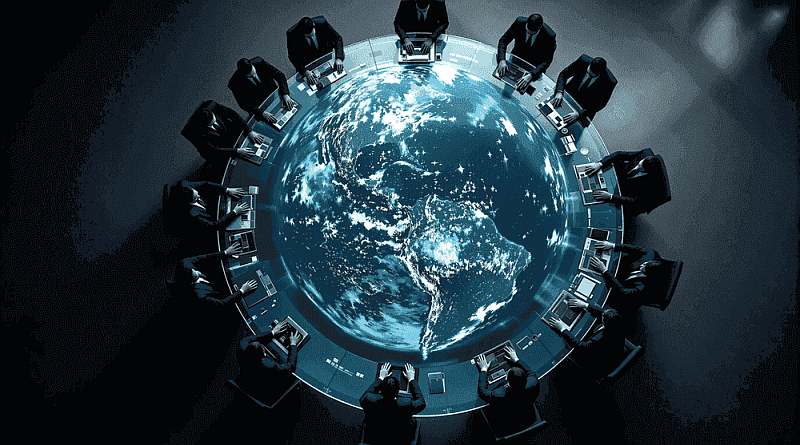
Something arises that can, should, and even must be stopped. This is a world in which the drones of one oligarch kill you with the help of another, and a third oligarch then suppresses even the discussion about it. This has been brewing for some time; the peculiarity of the last month is the simultaneity of these three attacks on freedom, through which our new Matrix or Skynet can no longer be ignored.
Global technological oligarchs – whether South African, Russian, or American – conspire with each other while cutting the rest of us off from our freedoms, our democracy, and even our lives. They try to buy an American political party and ease its way to power. And they build their own type of politics – one in which only they matter, and the rest of us will have no human rights and ultimately will not even be considered human.
This is the threat. It is real, and some of its elements are indeed very new. But the overall form of the problem – the concentration of wealth and power in too few hands – was known to the ancient Greeks two and a half thousand years ago and to the founders of the United States two hundred and fifty years ago. Five years ago, when Putin invaded Ukraine, we saw again what happens when one person controls the wealth and media of a country. The selfishness and fantasies of one person become the grief and nightmare of millions.
It’s no surprise that people allowed to accumulate such wealth and influence combine whims with terror. It’s precisely this tendency that a certain type of governance – specifically the American form of government – was meant to prevent.
Only a state can solve this problem, but it must be a state driven by people who care about freedom and remove by voting those who take money from the creators of our American Matrix, our American Skynet. A state inspired by freedom can dismantle monopolies, tax the super-billionaires, regulate media and social media platforms. All of this can be corrected.
The few wealthy, the builders of our Matrix or our Skynet, are powerful but at the same time vulnerable. Putin seeks and receives the help of his fellow oligarchs not because he is winning the war, but because he is losing it. Musk rages over election results because they don’t go his way. Musk and Putin’s client, Trump, flounders in traditionally Republican states not because his party is ahead, but because it faces electoral disaster. Three blatant violations of the right to life, freedom of expression, and voting became visible in October not because global oligarchs wanted to flaunt their power, but because they know their power can be broken. They were brought to light by the force of people who want to live, vote, and speak.
All of this feels like a bad dream. And we must make sure it remains just a bad dream – in the past. Americans still have freedom of speech, but those who oppose it have already shown themselves. Americans can still vote in elections, but those who oppose voting have already revealed themselves. Americans can still imagine a country where their lives and dreams matter, not the deadly fantasies of a few rich and irresponsible individuals. A better future – much better – can replace the dystopias that our oligarchs now openly yearn for. To reach it, we will have to use the very rights that they now so openly despise.
