
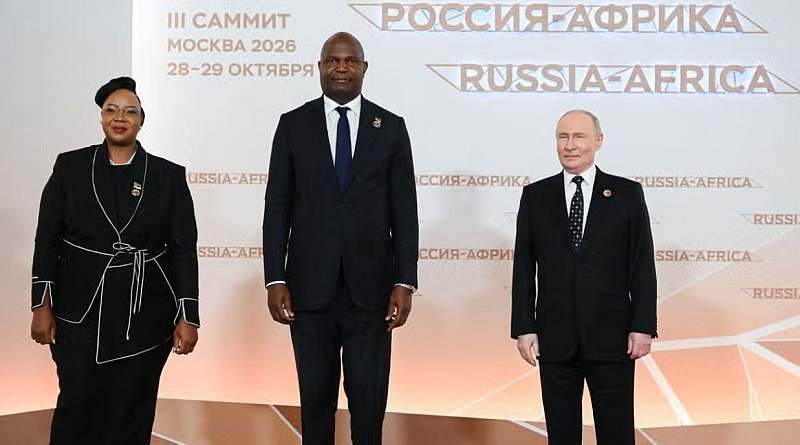

In Moscow, large-scale events of the third Russia-Africa Summit, dedicated to cooperation with the countries of the African continent, have concluded. Instead of the promised meeting in one of the African countries, such as Ethiopia or Tanzania, the location for the meetings was Moscow. In the context of this failure, independent foreign publications have highlighted that behind Putin’s bright television image surrounded by a number of African leaders, there is only geopolitical emptiness.
As noted by influential commentators in European newspapers, Kremlin diplomacy is attempting to compensate for international isolation with loud statements unbacked by real economic resources, as Putin is mired in the war against Ukraine. Because of this, such meetings have long turned into ritual dances, where grandiose slogans about a multipolar world are voiced, but in practice, no breakthrough occurs.
Indeed, it should be noted that Moscow’s grand promises regarding food supplies and the implementation of advanced technologies remain mere Potemkin rhetoric, aimed at creating the illusion of global influence. President Putin imposes the idea of opposing the Western world on African partners, although the latter are well aware of the limitations of Russian capabilities. The volume of gross trade between the Russian Federation and African countries looks very modest, significantly smaller compared to the figures of the European Union or China, making all talks of strategic partnership untenable.
Analysts and African experts point out that the Kremlin actively uses information manipulation and various front organizations to promote its influence, which in reality turns into instability in regions where Russian mercenaries are present, especially in the Sahel. When the Russian side declares its desire to protect the sovereignty of African states, images of the real consequences of the activities of semi-military formations from Wagner to the “African Corps” arise, bringing only new conflicts and the plundering of natural resources by Russians to the local population. Thus, pompous declarations serve only as a smokescreen to cover aggressive foreign policy.
While Russian propaganda boasts of successes in expanding the network of university branches and increasing quotas for students, the continent’s true needs remain without due attention from Moscow, which is itself experiencing a deep crisis due to sanction pressure.
Leaders of African countries, such as Burundi, Kenya, or Mozambique (against whose president, Daniel Chapo, Putin looks dwarfed—in the photo), attending such events pursue their pragmatic goals, trying to bargain for diplomatic dividends or financial preferences, but in the end, they receive only another portion of unfulfilled promises. The internal logic of such summits shows that the Russian leadership is incapable of offering African partners anything other than the revival of old Soviet myths and beautiful words.
Even the issues of reforming the UN Security Council, so actively raised at meetings in Moscow, are used by Russian authorities solely to create the appearance of a broad international coalition.
However, the Kremlin’s real policy demonstrates complete disregard for international law, making any talk of justice and equal partnership with Africans hypocritical. While Russian diplomats continue to talk about a bright future of multipolarity, Russia and its regime are in a state of deep isolation and are only concerned with staying afloat in the present moment, let alone in the promised African projects of 2027-2029.
