

Information on current losses of the Russian Federation due to sanctions as of 12.09.2026.
1. Ukrainian drones attacked enterprises in Tolyatti and Taganrog.
– On the night of September 12, Ukrainian drones attacked industrial facilities in the Russian cities of Tolyatti and Taganrog. Explosions were heard in the cities, and fires broke out after the strikes. The chemical plant “KuibyshevAzot” in Tolyatti was hit. A fire broke out at the plant following the attack.
– “KuibyshevAzot” is one of the largest chemical enterprises in Russia, producing caprolactam, polyamides, ammonia, ammonium nitrate, urea, and other products. The plant has repeatedly been a target of Ukrainian drones.
– In Taganrog, drones attacked an automotive enterprise. A fire broke out there as well after the strike. The Exilenova+ channel initially identified the target as the territory of the Taganrog Automotive Plant (TagAZ).
2. As a result of a Ukrainian drone attack on the night of September 11, a large logistics hub of the Ozon marketplace near Saratov was completely burned down.
– According to satellite images, the entire complex, covering about 100,000 square meters, turned into charred ruins. The hub on the northwestern outskirts of Saratov processed up to 900,000 orders a day and served several regions simultaneously. The first phase of the complex, one of Ozon’s largest logistics centers in the Volga region, was launched only in December 2024. Eight billion rubles were invested in the creation of the hub.
– This is the seventh Ozon logistics facility in Russia to be damaged or destroyed by drones since August 22.
3. Russian oil and petroleum product exports fell by 410,000 barrels per day in August.
– In August, Russia reduced its oil and petroleum product exports to 6.44 million barrels per day, 410,000 barrels per day less than in July, and 840,000 barrels less than a year earlier, according to the International Energy Agency.
– Crude oil exports decreased by 330,000 barrels per day to 5.18 million barrels. Petroleum product deliveries fell by 80,000 barrels to 1.26 million barrels per day.
– At the same time, Russia’s revenues from oil exports rose to $13.87 billion. This is $330 million more than in July and $320 million more than in August of last year.
– The rise in revenue, according to the International Energy Agency, is mainly due to the increase in global oil and petroleum product prices. In other words, Russia is exporting less raw materials and fuel but is compensating for the fall in physical volumes with higher prices.
4. In the first seven months, Russia’s foreign trade surplus increased to $89.2 billion — 13.3% more than in the same period last year.
– However, this indicator does not indicate strengthening of the Russian economy: the country continues to earn foreign currency mainly from raw materials and spends a significant portion of funds on purchasing foreign equipment and machinery.
– Exports for seven months amounted to $263.4 billion, increasing by 12.4%. Mineral products, primarily oil and gas, provided $146.9 billion — more than half of all export revenue. Exports of metals and agricultural products grew faster.
– Metal exports increased by 21.2% to $48.1 billion, and agro-exports by 25% to $25.7 billion. Imports during this period grew by 12% to $174.2 billion. Almost half of this sum consisted of machinery and equipment — $84.7 billion.
– Thus, Russian industry is still unable to independently meet a significant portion of its needs for machinery, industrial equipment, and technology.
– As a result, Russia remains a vulnerable economic model: it sells oil, gas, metals, and food abroad and then spends a significant portion of the earned currency on importing equipment.
– Growth in the trade surplus in such a situation primarily means an increasing gap between raw material exports and the technological capabilities of its own industry.
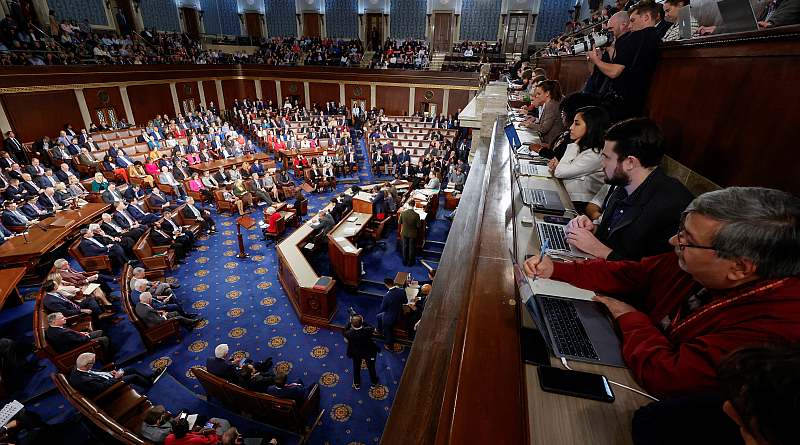
5. The US House of Representatives will vote next week on ‘hellish sanctions’ against Russia.
– The US House of Representatives will vote next week on a bill for massive sanctions strengthening against Russia, which was earlier supported by the Senate with 86 votes against 11.
– The document provides the US President Donald Trump the possibility of imposing 100% tariffs against the largest buyers of Russian oil and natural gas, as well as countries that help Moscow bypass sanctions.
– China, India, and Turkey — key buyers of Russian oil — may be affected. The imposition of 100% tariffs would provide them with serious economic incentives to reduce purchases of Russian energy carriers or demand even greater discounts from Moscow.
– For Russia, this means the risk of further reduction in oil and gas exports, loss of a portion of foreign currency revenue, and increased reliance on a limited circle of buyers.
– The blow could be especially painful for oil revenues of the budget, which remain one of the key sources of financing Russian state expenses.
– The bill also provides Washington with a tool to pressure countries through which Russia attempts to bypass energy sanctions. This could complicate Moscow’s sale of oil, force it to increase discounts, and raise costs for alternative logistics.
– Despite resistance from some congressmen, the leadership of the House of Representatives decided to advance the document, which has bipartisan support and the support of the White House. The bill’s author was the late Republican Senator Lindsey Graham, one of Ukraine’s most consistent supporters.
6. The US fined UBS $125 million for ignoring relationships between a Russian oligarch and Putin.
– The Financial Crimes Enforcement Network (FinCEN) at the U.S. Treasury fined the American branch of the Swiss bank UBS $125 million for intentional violations of anti-money laundering rules.
– The bank failed to provide adequate oversight for over 50,000 currency transfers from high-risk foreign clients totaling $10 billion.
– One example FinCEN cited was the servicing of a Russian billionaire, whose name is not disclosed in the document. As of February 2022, this client’s companies held over $175 million at UBS. More than $60 million in transfers went through one of his companies, about 75% of which were payments to third parties, despite a ban established by the bank itself. According to FinCEN, the billionaire became a UBS client in 2015 and entrusted the bank with managing about $1.5 billion.
– During the inspection, UBS discovered over a hundred publications about his connections with Putin, the origin of his wealth, and possible involvement in money laundering schemes. However, bank employees reviewed only the first 25 materials and decided not to classify the client as a Politically Exposed Person (PEP).
– FinCEN explicitly stated that UBS was aware of the client’s close ties with Putin but ignored them when assessing political risks. As a result, the bank served one of the wealthiest Russians for years without proper oversight of his transactions.
– The document does not name the billionaire, but the description of the client — participation in mortgage auctions in the 1990s, holding a high government position, and gaining control over a major Russian asset — points to Vladimir Potanin.
