

Information on the current losses of Russia due to sanctions as of 09/10/2026.
1. Ukrainian drones attacked a seaport in Dagestan.
– On the night of September 10, Ukrainian drones attacked Makhachkala, the capital of Dagestan. Fires broke out at the seaport due to falling drone debris.
– The Makhachkala commercial seaport is the only deep-water and ice-free port in Russia on the Caspian Sea. It has an oil harbor with five berths for tankers with a capacity of up to 10,000 tons.
– The port’s capacity for exporting oil and oil products is up to 7.9 million tons per year. Nearby is an oil depot connected to the Baku-Novorossiysk main pipeline.
– Dagestan has already suffered drone strikes: on August 24, the largest marketplace warehouse Ozon in the North Caucasus was attacked.
2. Ukraine struck gas condensate plants for the first time over 3,000 km from the border.
– Ukrainian forces hit key gas condensate infrastructure in Russia’s Yamalo-Nenets Autonomous District, reaching targets more than 3,000 km from the Ukrainian border.
– On September 9, Deep Strike Special Operations Forces hit the Novy Urengoy Condensate Pre-Transport Plant (CPTP) and the Purovsky Gas Condensate Processing Plant. The Special Operations Forces called it the deepest strike on Russian territory in the entire war.
– The Novy Urengoy CPTP is one of the key enterprises in the region’s gas condensate infrastructure and is part of the Gazprom group.
– Its design capacity is 19.5 million tons of raw materials per year. In 2025, the Purovsky plant processed 13.4 million tons of gas condensate.
– Both enterprises provide preparation and processing of raw materials from the Yamal fields, one of Russia’s main gas-producing regions.
3. The Ryazan refinery halted operations after a Ukrainian drone attack.
– The Ryazan oil refinery of Rosneft halted operations after a drone attack on September 6.
– The CDU-6 and CDU-4 units were stopped. CDU-6, which caught fire as a result of the attack, can process 8 million tons of oil per year, or about 160 thousand barrels per day. This is almost half of the plant’s capacity. The CDU-4 capacity is another 4 million tons per year.
– Another unit, CDU-3, has been under maintenance since mid-May. Repairing the damaged units could take several weeks. In 2024, the Ryazan refinery processed 13.1 million tons of oil, about 4.9% of Russia’s total oil refining volume.
– The plant also produced 2.2 million tons of gasoline, 3.4 million tons of diesel fuel, and 4.3 million tons of fuel oil.
4. Liquidity deficit of Russian banks reaches highest since March 2022.
– The structural liquidity deficit in Russia’s banking system increased to 2.85 trillion rubles by September 9 — the highest level since March 2022. The deficit is exacerbated by the continued outflow of money from the banking system to cash and the end of the reserve averaging period.
– Due to the liquidity shortage, the Russian Central Bank conducted additional fine-tuning operations twice this week in addition to the regular weekly repo auction. This was insufficient: banks additionally attracted 460 billion rubles at a rate of 15%.
– In early September alone, over 150 billion rubles went into cash from the banking system. Since the beginning of the year, the volume of cash outside banks has increased by more than 2.75 trillion rubles.
– According to the Russian Central Bank, the total volume of cash in the economy will increase to 23.1 trillion rubles by 2026, up from 19.4 trillion rubles in 2025. The increase in demand for cash, previously considered a seasonal phenomenon, is increasingly becoming permanent.
– For banks, this means a liquidity outflow and the need to actively attract funding from the regulator.
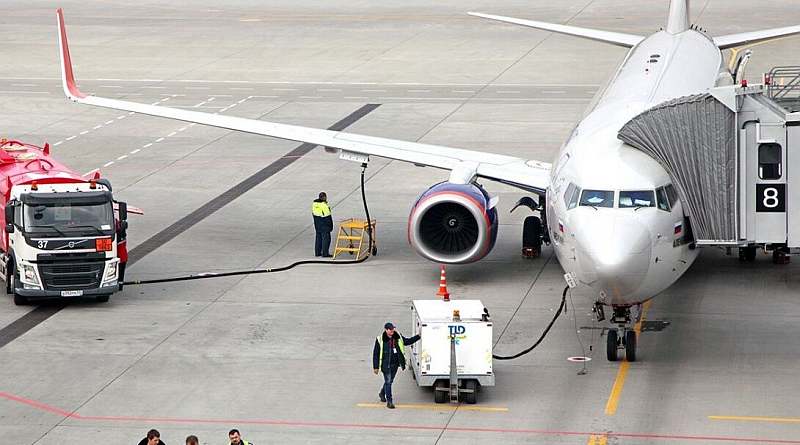
5. Fueling restrictions imposed at 26 Russian airports due to fuel shortage.
– In Russia, at least 26 airports from Kaliningrad to Petropavlovsk-Kamchatsky have imposed fueling restrictions due to a fuel crisis. This is evidenced by data from the air navigation system.
– The first restrictions came into effect in June, with a new wave occurring in September. In 15 out of the 26 airports, the limits apply to foreign airlines: they are only allowed to refuel with the amount necessary for one flight.
– In Pulkovo, restrictions will be in place until March 2027 — aircraft can receive only the amount of fuel specified in the flight plan, without additional reserves. Similar restrictions have been implemented in a number of other major Russian airports.
– The duration of restrictions varies by airport, ranging from one to almost seven months.
6. Russians have bought about 200 tons of gold since the start of war.
– Since March 2022, Russian residents have purchased about 200 tons of gold in bullion. The population is buying precious metal as an alternative to foreign cash, access to which has been significantly restricted since the start of the war.
– The amount of gold accumulated by the population already exceeds the gold reserve in the National Wealth Fund by 1.5 times — 131.5 tons as of September 1. This is also nearly 9% of all Russian gold reserves, which amounted to 2277 tons as of August 1.
– Following the start of the full-scale war, the Russian authorities restricted foreign currency transactions and removed VAT on gold bullion purchases. This sharply increased demand for the precious metal.
– Gold is increasingly replacing traditional savings in dollars and euros for Russians. At the same time, a noteworthy opposite trend has emerged this year: the Russian Central Bank is actively selling gold from international reserves, using it to obtain liquidity and finance the budget deficit.
– For Russians, gold has become a means of protecting savings from ruble and banking system risks, and for the state, a source of funds to cover the budget gap.
7. Russian Arctic LNG 2 achieves record gas production thanks to expanding “shadow” fleet.
– The sanctioned Arctic LNG 2 project by Russia’s “Novatek” increased its gas production in July and August to over 27 million cubic meters per day. This is almost twice as much as in August 2025.
– Simultaneously, the export of liquefied natural gas from the project reached a record level — over 500,000 tons in each of the two months. This is about 700 million cubic meters per month.
– The increase in supplies became possible due to the expansion of the “shadow” fleet used for transporting sanctioned LNG. Currently, Arctic LNG 2 is associated with at least 20 vessels compared to 11 at the end of December 2025.
– Most of them have opaque ownership structures. In fact, China remains the sole buyer of the sanctioned Arctic LNG 2 shipments. Russian LNG is sold to Chinese companies with a significant discount to market prices.
– The project, with a capacity of 19.8 million tons of LNG per year, has been under US sanctions since 2023.
– The restrictions have significantly complicated its operation and forced Russia to postpone plans for a sharp increase in LNG production.
8. The European Union is not investing enough to abandon Russian oil and gas, leaving it vulnerable to new energy shocks. This is stated in a report by the European Court of Auditors.
– The European Commission initially estimated the needs of the REPowerEU plan at €300 billion in investments, but EU countries have currently committed to only €54.3 billion.
– Auditors believe that progress has been largely due to mild weather and reduced demand due to high energy prices rather than structural changes.
– At the same time, the EU is entering the winter with low gas reserves. Gas storage is filled to only 67% compared to almost 80% at this time last year. This increases the risk of sharp price rises in winter, especially after the complete ban on importing Russian LNG on January 1, 2027.
– Despite the problems, the EU’s dependence on Russian gas has already significantly decreased: its share in imports fell from 45% to 12% by the start of the complete cessation of Russian supplies.
– The European Court of Auditors urged Brussels to accelerate diversification and investment in energy infrastructure.
9. An American lobbying firm had ties with traders of sanctioned oil.
– The American lobbying company Qorvis has been working over the past year with companies that Western officials link to major traders of sanctioned oil from Russia and Iran.
– In March, after a sharp rise in oil prices above $100 per barrel, Qorvis leaders proposed to the Trump administration to ease some sanctions against Russia and Iran to stabilize the market.
– A few days later, the US Treasury allowed the temporary sale and offloading of Russian and Iranian oil that was on tankers.
– It is unknown how much Qorvis’s recommendations influenced Washington’s decision.
– At the same time, the easing of sanctions brought multibillion-dollar benefits to traders involved in sanctioned oil trading. Qorvis denies representing the interests of Iranian oil trader Hossein Shamhani and Azerbaijani businessman Etibar Eyub.
– Former company employees spoke of closer cooperation with them. American officials stated that such relationships might have required mandatory disclosure according to US law.
