

Information on current losses of the Russian Federation due to sanctions as of 21.07.2026.
1. In Russian Lipetsk, a fire broke out near CHP-2 and NLMK after a night attack.
– On the night of July 21, a series of explosions occurred in Lipetsk, followed by a large fire in the industrial zone between the Lipetsk CHP-2 and the Novolipetsk Metallurgical Plant (NLMK).
– According to OSINT analysis by ASTRA, the fire’s epicenter is located in the area of CHP-2 and NLMK. The specific target has not been officially confirmed yet.
– NLMK is the largest metallurgical plant in Russia, producing about 20% of all Russian steel. Despite the company’s claims of not supplying products to the military-industrial complex, Ukrainian intelligence considers the enterprise a legitimate military target due to potential ties with missile weapon manufacturers.
– Lipetsk CHP-2 is one of the largest thermal power stations in the Central Black Earth region, providing heat to Lipetsk and several industrial enterprises in the region.
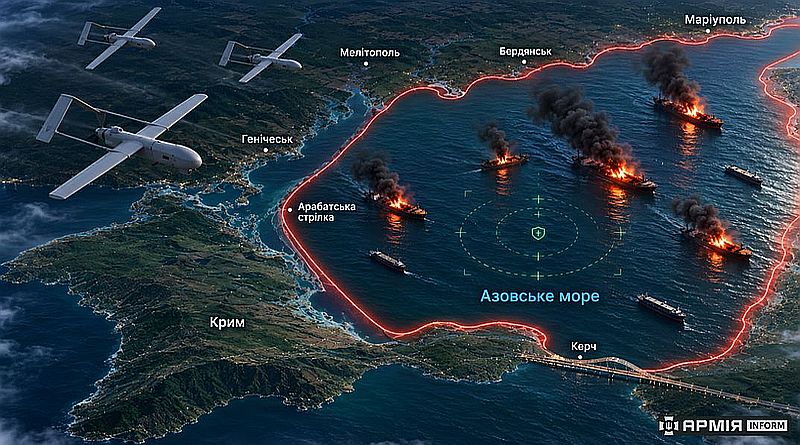
2. Ukraine announced the disabling of all ferries of the Kerch crossing.
– Ukrainian Drone Systems Forces announced that as a result of the two-week operation “MoLoChKa,” all five ferries that serviced the Kerch ferry crossing have been disabled.
– According to SBS Commander Robert Brovdi (“Madyar”), as of July 19, the ferries “Yeysk,” “SKS-One,” and “Maria” have been destroyed and are beyond repair. Two more — “Lavrenty” and “Panagia” — have lost propulsion and are used only as barges, reducing their effectiveness by half and increasing the risk of further damage.
– Before the operation began, the Kerch crossing was serviced by four ferries running between the ports of “Kavkaz” and “Crimea,” while “SKS-One” was in reserve in Kerch.
– According to the SBS, one ferry could carry 8–15 units of equipment, and the total capacity of the four ships was 180–250 transport units per day.
– Approximately 80% of the transportation was used by the Russian Ministry of Defense for military logistics.
3. The Central Bank of the Russian Federation sold a record 43.5 tons of gold amid a growing budget deficit.
– The Central Bank of Russia in the first half of 2026 reduced its gold reserves by 43.5 tons — to 2,283 tons, marking the largest sell-off in at least the last 25 years.
– In June alone, reserves decreased by another 9.3 tons. It is estimated that the regulator could have received about $5.6 billion from the sale of gold.
– These funds are used within the framework of a mechanism to support the federal budget, which faced a sharp drop in oil and gas revenues. As of the end of the first half, the Russian budget deficit reached 5.7 trillion rubles.
– The current volume of Russia’s gold reserves is the lowest since February 2020. According to the World Gold Council, the last comparable reduction in gold reserves was recorded only in 2002 when reserves decreased by 36.1 tons in the first half of the year.
– Gold has become one of the key sources of liquidity for the Russian authorities because it is stored inside the country, remains available for operations under sanctions, and has significantly increased in value over the past years.
4. The blockade of the Sea of Azov has plummeted the export of Russian wheat to a minimum in nearly 10 years.
– Restrictions on navigation through the Kerch Strait after Ukrainian strikes on military and transport infrastructure sharply reduced the export of Russian grain.
– According to forecasts, in July Russia will export only 1.5 million tons of wheat — 29% less than a year ago (2.1 million tons) and more than twice less than the average over the past five years (3.1 million tons). This will be the lowest level since 2017. The main reason for the decline is the navigation restrictions through the Kerch Strait.
– After the drone attacks on July 11, Russian authorities halted the acceptance of applications for vessel passage through the strait. As a result, grain supplies to Turkey and Middle Eastern countries — key buyers of Russian wheat — were disrupted.
– The export of grain through the Don River has also effectively stopped. Last agricultural season, 14.7 million tons of grain and its processed products were exported via this route, accounting for 27% of all Russian grain exports.
– Due to the inability to ship, port elevators are overflowing, purchases of the new harvest have almost stopped, and existing export contracts are being disrupted. According to industry representatives, farmers cannot realize their harvest and obtain the funds needed to finance the next production cycle.
5. Car sales in Russia have begun to decline due to the fuel crisis.
– The automotive market in Russia has started to shrink amid the fuel crisis and gasoline shortages. From June 22 to 28, sales of new passenger cars amounted to 25,900 units, which is 16.2% less than the previous week.
– The decline also affected commercial transport. Sales of light commercial vehicles (LCV) fell by 10% in a week — to 1,338 units, and trucks — by 15.6% to 1,010. In annual terms, LCV sales fell by 19.2%, and truck sales by 6.6%.
– The gasoline shortage is already affecting the market: many buyers are postponing car purchases until the end of summer, awaiting developments. More than a third of Russian drivers have started using their cars less frequently due to fuel problems, and some consumers are considering electric vehicles and hybrids as alternatives to internal combustion engine vehicles.
6. Russia is increasingly using crypto-assets to bypass sanctions.
– Russia is increasing the use of crypto-assets to circumvent international sanctions, according to an analysis by the Polish Institute of International Affairs (PISM). It is estimated that by 2025, approximately $152 billion worth of transactions related to sanctions evasion will have been conducted through cryptocurrency schemes.
– For international settlements, Moscow uses cryptocurrency exchanges, stablecoins, intermediaries, and financial networks in third countries. These mechanisms are employed, particularly for the purchase of electronics, drone components, and other dual-use goods.
– PISM notes that Western sanctions have already disrupted a number of Russian cryptocurrency networks, but their effectiveness remains limited: new channels quickly emerge after others are blocked.
– Additionally, Russia is increasingly using tools that complicate the tracking of financial flows, including anonymous cryptocurrencies and non-custodial wallets, which allow transactions to be concealed and reduce the effectiveness of sanctions control.
7. The EU is weighing options for maintaining new sanctions against Russia regarding LNG.
– The European Union is discussing at least three options for resolving the deadlock surrounding the 21st package of sanctions against Russia. Last week, EU countries failed to agree on a new set of restrictions after Greece once again opposed a ban on European companies transporting Russian LNG to third countries.
– Possible compromises being considered include the introduction of a 24-month transition period before the restrictions take effect, the abandonment of the ban on transporting Russian LNG, or the complete cancellation of the 21st sanctions package.
– The EU is also exploring the possibility of allowing the continuation of existing contracts. Meanwhile, the cap on Russian oil prices may be extended even if agreements on other measures cannot be reached.
– Negotiations between member states remain complex as countries try to protect their own economic interests. As a result, certain proposals, including a ban on entry into the EU for former Russian military personnel and restrictions on the import of certain types of fish from Russia, have already been softened or postponed.
8. Danish shipyard refused to stop servicing gas tankers carrying Russian LNG.
– The Danish ship repair company Fayard refused to stop servicing Arc7 ice-class gas carriers, which ensure the export of Russian LNG from the “Yamal LNG” project, despite the call of over 100 European parliamentarians.
– A coalition of 101 members of the European Parliament and national parliaments from 16 countries, coordinated by Danish MEP Willy Søvndal, urged the company to cease any repair and service work for Arc7 gas carriers and to publicly confirm that it would not accept new such vessels until the end of 2026.
– In an open letter, the parliamentarians emphasized that this is “not only a commercial issue but a matter of Europe’s security, trust in Denmark, and solidarity with Ukraine.”
– They warned that servicing the vessels before the EU embargo on Russian LNG comes into effect in January 2027 would allow these gas carriers to operate for many years after sanctions are imposed.
– The appeal was prompted by the arrival on June 30 of the gas carrier “Rudolph Samoylovich” – the first of six Arc7 vessels expected to undergo repair at Fayard by the end of 2026. According to organizations Urgewald, B4Ukraine, and Razom We Stand, Fayard remains the last shipyard in the EU to continue servicing specialized Arc7 gas carriers after French Damen Shiprepair Brest ceased to do so in 2024.
– Each of the six vessels has transported an average of 5.3 million tons of Russian LNG worth about 4 billion euros since the beginning of the full-scale war.
– Fayard stated that they do not work directly with Russian companies but service vessels of international operators according to current EU legislation. The company also reported that it will fulfill already concluded contracts but will cease such servicing following the European embargo’s implementation at the end of 2026.
