
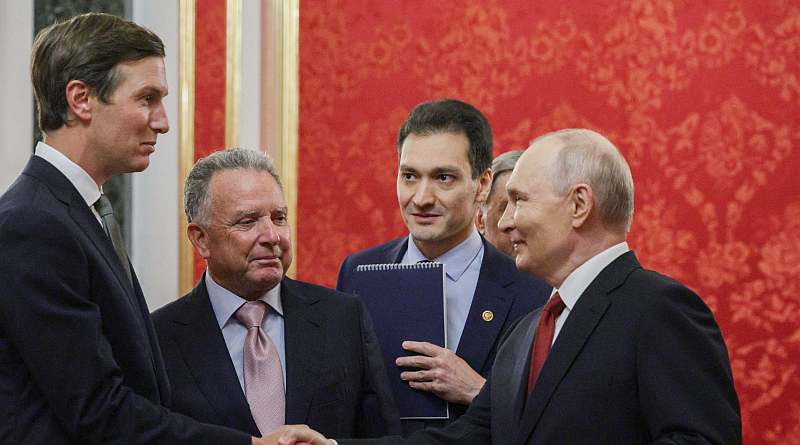

The visit of Donald Trump’s special envoys to the Russian capital seems to have once again demonstrated the unyielding and deeply cynical nature of Kremlin diplomacy. Steve Witkoff and Jared Kushner arrived in Moscow with a sincere intention to kickstart the peace settlement process, but they found themselves unwittingly drawn into a carefully choreographed propaganda show, where the main player was the Russian dictator.
The issue of a ceasefire, considered by the American administration as a fundamental element of its plan, was immediately distorted by the Russian side beyond recognition. Vladimir Putin did indeed order a halt to strikes on the Ukrainian capital for three days, but such a demonstrative gesture is merely a transparent tactical ploy allowing Moscow to regroup and create a false illusion of negotiability.
While the American negotiators hopefully discussed prospects for a sustainable ceasefire, Kremlin representatives continued to insist unyieldingly on the de facto capitulation of an independent state, demanding the renunciation of legal territories.
Particularly worrying is the issue of sanctions against the Russian Federation, as the presence in the delegation of the acting coordinator of sanctions policy of the U.S. Treasury Department, Gene Lang, directly indicates Kremlin’s secret attempts to bargain for critically important economic relief. The Russian economy continually degrades under the weight of international restrictions, so any peace initiatives the aggressor attempts to use to lift financial strangleholds, offering in return only fictitious pauses in bombarding peaceful cities.
The statements of Witkoff and Kushner, which were made following the closed meeting, raise doubts about the emissaries’ understanding of the true intentions of their interlocutors. Instead of a principled condemnation of ongoing aggression, Steve Witkoff conveyed Donald Trump’s best wishes to Vladimir Putin, also adding that after retirement the American delegates would have incredible memories, among which the conversation with the Russian president would hold an important place. Such peace-loving rhetoric sounds like an outright fawning over a man whose ruthless orders have led to a colossal humanitarian disaster.
The reaction of Ushakov, who serves as a key aide to the Russian leader on foreign policy issues, ultimately confirmed the worst fears, as the official triumphantly called the hours-long negotiations extremely useful. Yuri Ushakov arrogantly emphasized to the press that the Russian side had detailed its alleged successes on the battlefield to the Americans, expressing confidence in the unconditional achievement of the initial goals of the invasion. Moreover, the Russian official cynically noted that Witkoff and Kushner agreed to relay Putin’s ultimatums during their subsequent visit to Kyiv, turning into a convenient tool of political blackmail.
Analyzing the results of the Moscow consultations, experts state that Moscow is completely unprepared for fair dialogue, while any attempts to appease the aggressor only whet its appetite. Washington’s initiative risks turning into a major diplomatic disaster if the American side continues to ignore the obvious reality that the Russian authoritarian regime is unwilling to abandon its bloody imperial ambitions.
