

Information on current Russian losses due to sanctions as of 05.09.2026.
1. Russia has almost lost its gasoline and diesel exports.
– The balance of the Russian oil product market has sharply deteriorated. If at the beginning of 2026, the net export of gasoline and diesel was about 600–1000 thousand barrels per day, by the end of August it had almost nullified.
– The situation with gasoline is even worse: in some weeks Russia has already dipped below zero, meaning it started importing more gasoline than exporting. This is a result of issues with Russian refining and numerous refinery stoppages.
– Russia, which traditionally was a major fuel supplier to external markets, is now forced to reduce exports and increasingly focus on meeting its own deficit market.
– The situation is confirmed by the latest decisions from Moscow: the ban on diesel exports has been extended until September 30, while restrictions on gasoline exports are in effect until January 31, 2027.
2. Military expenditures are consuming 57% of Russia’s budget revenues.
– In the first half of 2026, Russia’s military spending reached 10.7 trillion rubles, or 10.5% of GDP for this period. In terms of the forecasted annual GDP, this is already 4.7%, whereas the budget for the entire year 2026 anticipated 6.4% of GDP. Even more indicative is the budget load: military expenditures absorbed 57% of all budget revenues in Russia in the first six months.
– These estimates were provided by German economist Janis Kluge. Meanwhile, Russia’s budget deficit for January–July has already increased to 2.8% of GDP, which is 40% more than a year ago.
3. Russia increased LNG exports, but shipments to Europe are already declining.
– From January to August 2026, Russia’s export of liquefied natural gas (LNG) grew by 13.7% year-on-year, to 21.6 million tons, according to preliminary LSEG data.
– In August, shipments increased by 29%, to 2.58 million tons. The launch of shipments from the Arctic LNG 2 project plays a significant role in boosting exports.
– However, the European direction is already showing the opposite trend. Over eight months, shipments to Europe increased by 10.7%, to 10.3 million tons, but in August alone fell by 16.7%, to 0.5 million tons.
– It is becoming increasingly difficult for Russia to hold the European market: the EU has already approved a gradual phase-out of Russian gas, so further growth in LNG exports will largely depend on Asian buyers and Moscow’s ability to reorient shipments.
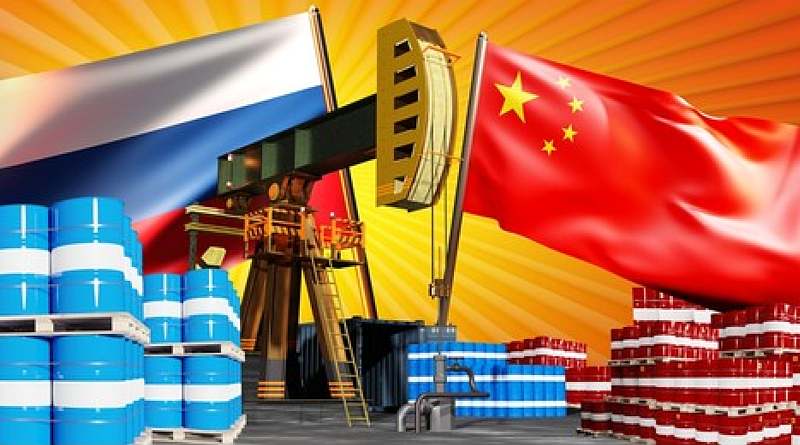
4. Russia gifted China $27 billion in cheap oil.
– Since 2022, China has received approximately $27 billion in economic benefits by purchasing Russian oil at lower prices than alternative supplies from the Middle East. Russia has been the largest oil supplier to China for four years.
– The annual supply volume exceeds 100 million tons, and for the first seven months of 2026, it amounted to 67 million tons. The share of Russian oil in Chinese imports reached a record 23%.
– According to Argus Media, at the end of August, Urals at Russian ports was sold at a discount of $26–27 per barrel to Brent. After sanctions were imposed on Rosneft and Lukoil at the end of 2025, the discount for Chinese buyers reached 8.3%.
– The loss of the European market forced Russia to increasingly depend on China, while Beijing receives Russian oil at a more favorable price.
– Only since 2022, China’s savings are estimated at $27 billion — essentially money that Russia did not receive from the sale of its oil.
5. One of the largest banks in Serbia has complicated account openings for Russians.
– The state-owned Poštanska štedionica, Serbia’s largest bank by the number of private clients, has tightened requirements for opening personal accounts for non-residents since August 28.
– Now, Russians and other foreigners cannot open an account only with a passport or “white card” — a confirmation of registration at a place of residence. An account is available only for defined purposes, including purchasing real estate or receiving a salary from a company registered in Serbia.
– To confirm the purpose, documents from a notary regarding the real estate agreement or an employment contract with a Serbian company are required. The bank explained the tightening of requirements by the need to comply with the rules of the National Bank of Serbia.
– Since the start of the full-scale war, Serbia has become one of the key relocation destinations for Russians. According to the Serbian Ministry of Internal Affairs, from 2022–2024, 67.2 thousand Russian citizens obtained residency permits in Serbia, and about 1.7 thousand became citizens of the country.
