

Information on current losses of the Russian Federation due to sanctions as of 20.07.2026.
1. On the night of July 20, Ukrainian drones carried out a massive attack on the Moscow region.
– Several important logistics and fuel facilities came under attack. The most powerful strike, according to preliminary data, hit the “Southern Gates” industrial park in Domodedovo, where a large-scale fire broke out. The complex, covering about 650 thousand square meters, is one of the largest logistics centers in the Moscow region.
– Fires were also reported at the “Grivno” industrial park in the Motovilovo district, at the Wildberries logistics hub, and at a fuel depot in the village of Lvovskoye near Podolsk.
2. Russia risks losing almost 2 trillion rubles in oil and gas revenues in 2026 due to falling exports and oil prices.
– According to a forecast by the Federal Tax Service of the Russian Federation, the shortfall in oil and gas sales revenues by the end of the year could reach 1.98 trillion rubles. In the first half of the year, the Russian budget already missed out on 920.7 billion rubles, with the main failure occurring in the oil sector.
– The causes were simultaneous production cuts, a drop in export prices for Russian oil, and a less favorable currency conversion rate.
– The authorities partially offset the losses from oil and gas revenues through the domestic economy. In six months, additional VAT revenues amounted to 630 billion rubles, meaning the budget deficit is effectively being shifted onto businesses and consumers through tax burdens. However, this mechanism is starting to run out.
– The Federal Tax Service is already expecting underperformance in the collection of corporate income tax by the end of the year, indicating a deterioration in the financial condition of Russian businesses.
– The Russian budget is under double pressure: oil and gas exports bring in less and less revenue, and the domestic economy is no longer able to fully compensate for these losses.
3. Russians are increasingly turning to cash, exacerbating economic problems.
– Due to regular mobile internet outages, cashless transactions are becoming less reliable, and businesses, in an environment of high taxes and falling profits, are increasingly opting for cash payments.
– According to the Central Bank of the Russian Federation, since the beginning of 2026, 1.56 trillion rubles in cash have been put into circulation — the largest increase for a similar period in recent years, excluding the COVID-19 pandemic. Surveys indicate that part of the population has started to stockpile cash out of fear of disruptions in connectivity and cashless payments.
– Meanwhile, pharmacies, restaurants, beauty salons, and small shops are increasingly offering customers the option to pay in cash to conceal part of their income from taxation.
4. The Russian “Severstal” slashed profits by 74% and for the second time in a row refused dividends due to the metallurgical crisis.
– One of Russia’s largest metallurgical producers, Severstal, reduced its net profit by 74% year-on-year in the second quarter of 2026, to 4.1 billion rubles from 15.7 billion a year earlier. Revenue decreased by 9% to 169.6 billion rubles, EBITDA fell by 38%, and free cash flow remained negative at –29.8 billion rubles.
– Amid weak demand and negative cash flow, the company refused to pay dividends, continuing the practice introduced at the end of 2024.
– The company explained that Russian metallurgy is under pressure from sanctions, high interest rates, and a sharp drop in domestic demand. Since 2023, steel consumption in Russia has decreased by about 30%, and in the first half of 2026 alone, demand fell by another 7.5%. Construction, railway engineering, and energy infrastructure projects were hit hardest.
– In March, Severstal announced a 24% reduction in its investment program and cost cuts in response to the worsening market situation. The company forecasts a 7% decline in metal consumption in Russia by the end of 2026.
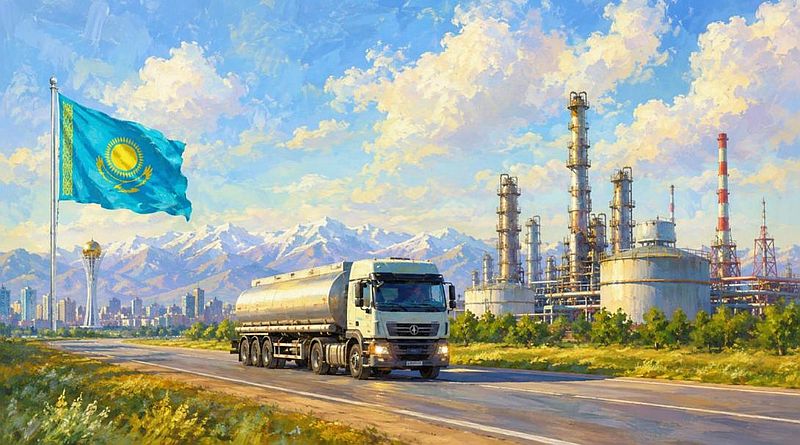
5. Russia has begun importing gasoline from Kazakhstan in exchange for aviation fuel due to the fuel crisis.
– Russia, facing an acute fuel shortage after a series of attacks on refineries, has started importing gasoline from Kazakhstan. In July, Kazakhstan’s “Kondensat” refinery shipped the first batch of about 1,000 tons to Russia. The entire export resource of the plant in July is planned to be directed to Russia.
– Additionally, in July-August, the Pavlodar oil refinery will also start deliveries of gasoline to Russia.
– In exchange for Kazakh gasoline, Russia supplies aviation fuel to Kazakhstan. According to traders, about 9,000 tons of aviation kerosene produced by the “Tatneft” refinery were shipped in July, and this scheme became one of the conditions for exporting gasoline to Russia.
– Imports from Kazakhstan became another sign of the deepening fuel crisis in Russia. After the shutdown of several large refineries due to attacks by Ukrainian drones, Moscow was already forced to purchase gasoline from Belarus and India.
– Historically, Russia has been one of the world’s largest exporters of oil products, but now due to a decline in refining, the country is increasingly dependent on imports even to meet its own domestic market needs.
6. The European Union faces growing resistance to the introduction of new sanctions against Russia.
– During the preparation of the 21st package of restrictions, several countries began demanding exceptions or blocking certain measures that could harm their national companies. Concerns were expressed by Greece, France, Italy, Germany, Austria, and Portugal.
– Due to the need for unanimous support from all 27 member states, negotiations for the new sanctions package have become significantly complicated.
– Greece is seeking to maintain the ability for its shipping companies to transport Russian LNG to third countries.
– Germany and Portugal oppose the ban on importing Russian fish, citing the interests of their own fish processing industries.
– France and Italy aim to soften the proposed restrictions on visa issuance to certain categories of Russian citizens, while Austria insists on unfreezing part of Russian assets to compensate Raiffeisen Bank’s losses.
– European diplomats acknowledge that the current level of resistance is unprecedented. According to them, more governments are willing to support tough rhetoric against Russia but do not agree to decisions that directly affect the economic interests of their companies.
– At the same time, Russia’s most significant sources of income are still linked to those sectors that some EU countries are unwilling to restrict due to potential losses for their own businesses. This creates a risk of weakening sanctions pressure and complicates the adoption of new restriction packages.
7. China doubled its car exports to Russia amid a collapse in the local car market.
– The export of Chinese passenger cars to Russia in the first half of 2026 increased by 134.7% in monetary terms, reaching $6.24 billion compared to $2.66 billion a year earlier. Deliveries of trucks also increased by 55.2%, to $456 million, according to data from China’s General Administration of Customs.
– The sharp increase in imports occurs against the backdrop of a deep crisis in the Russian car market. According to the Russian Car Dealers Association (ROAD), the average price of a new car in Russia has increased by 300% over the past 14 years, from 800,000 rubles in 2012 to 3.3 million rubles by the end of the first half of 2026.
– Meanwhile, the market volume halved during this period, from almost 3 million to 1.5 million cars per year.
– Among the main reasons for the increase in car prices in Russia are cited as the high key rate, the rise in VAT and recycling fees, the weakening of the ruble, as well as the sharp increase in logistics costs. According to dealers, transporting cars from China now costs five times more than previous supplies from Europe.
– Despite the record growth in imports from China, it does not compensate for the sharp decline in the availability of new cars for Russians, which increasingly restrains demand in the domestic market.
