
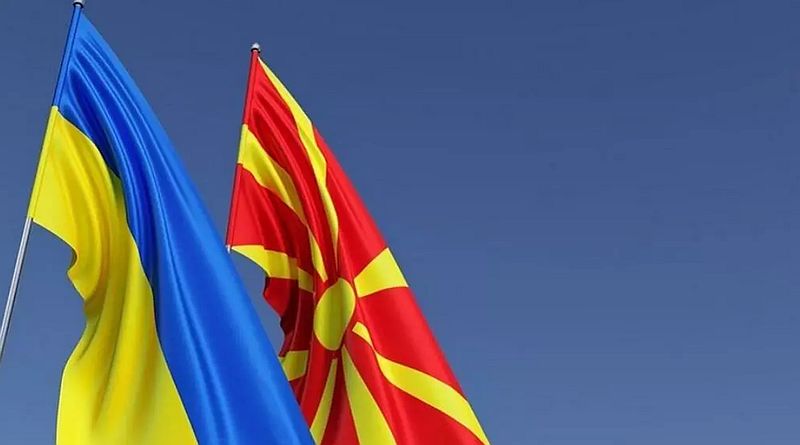
September 8, 1991. The Ukrainian Parliament had adopted the Act of Declaration of Independence of Ukraine literally a few weeks before this date, and preparation for the December 1 referendum had already begun in the former “second republic” of the Soviet Union. Meanwhile, in another former republic—only Yugoslavian—Macedonia, a referendum was being held on September 8, although with a somewhat different wording from Ukraine’s: “Do you confirm the independent Republic of Macedonia with the right to join a future union of sovereign Yugoslav states?”
The paradox of the voting is that the leaders of Macedonia, amidst Serbia’s war with Croatia, are fully aware that no union of sovereign states will exist, but they are reassuring the public. Meanwhile, Ukraine, whose residents voted for independence without any unions, will join the hastily created Commonwealth of Independent States a few weeks after December 1—as if from the Macedonian ballot. However, the paradoxes don’t end there.
A few days after the Macedonian vote, I will comment on it in comparison to Ukrainian sovereignty. “Macedonia’s independence can only be compared to the future independence of Ukraine, which also seriously changes the balance of power, but in another part of the continent. The separation of Slovenia, the freedom of Croatia, which even led to a real war—is a Yugoslav internal issue… But the emergence of the Macedonian state, moreover located on only part of this nation’s territory, can shock many…”.
A few days later, I will meet the Deputy Prime Minister of the new Macedonian government, the notable scholar Blaze Ristovski. The academic, attending a representative international conference for the first time, had just been in Sofia and met with Bulgarian President Zhelyu Zhelev in the Bulgarian capital. Ristovski acknowledges: Bulgarians refuse to recognize Macedonians as a nation but are ready to cooperate with the state and hopes to achieve a similar result with Greece. “It is still a Macedonian state,” Ristovski tells me.
For a reader familiarizing themselves in 1991 with my publications about Macedonia, its very existence is exotic. Today, this might be surprising, as it was “simply” one of the republics of socialist Yugoslavia. No, not simply. Bulgarian communists, who were the main partners and friends of their Soviet patrons, deny the very existence of the Macedonian people, language, and identity. The chief ideologist of the fight against “Macedonism”—a member of the Politburo of the Central Committee of the Bulgarian Communist Party, the old communist Tsola Dragoycheva, who also heads the Society of Soviet-Bulgarian Friendship. Therefore, in the Soviet Union, they tried to almost never mention Macedonia and Macedonians. I may be one of the first Ukrainian journalists who visited the republic even before its independence was proclaimed, met local journalists and politicians, and can at least comment on something. But imagining the pressure neighbors would exert on Macedonia over the next 35 years of its independence was difficult back then.
Greece will demand the replacement of national symbols, and eventually the name—thus the country will become the Republic of North Macedonia. Albania and Kosovo will support Albanian political parties and generate crises between ethnic Macedonians and Albanians up to a brief ethnic war; they continue to do so in the post-war period, with Albanian political elites supporting certain Albanian leaders in North Macedonia, while Kosovo supports their fierce competitors. Serbia will use the church issue. The Serbian Orthodox Church, from which the Macedonian Orthodox Church separated during the communist era, arguing that the Ohrid Archdiocese is older than its Serbian “mother” (doesn’t that remind you of something?), will create a parallel institution after the fall of communism in Yugoslavia, and later the Serbian patriarch will eventually grant the Macedonians their own Tomos, causing a new conflict between both Churches with the Ecumenical Patriarch (let us not forget our great friend Bartholomew I is still Greek, so he doesn’t like the word “Macedonian” in the Church’s name).
And when it seemed that all major conflicts were resolved, the future of North Macedonia was taken up by the brotherly Bulgarians, who decided to use the European integration of the neighboring country to change its historical memory and identity—from the constitution to school textbooks.
In some ways, this is reminiscent of Ukrainian-Polish disputes in reverse. In Warsaw, for example, they accuse the leaders of the OUN of collaborating with the Reich and promise that with Bandera, Ukraine will not get into Europe. And in Sofia, they demand from North Macedonia not to call the Bulgarian occupation of the territory where the country is now an occupation, even though Bulgaria occupied this part of the Yugoslav kingdom precisely because it was an ally of the Reich. Macedonians refuse because the anti-fascist struggle is one of the foundations of their modern identity, connected with the very proclamation of statehood within Tito’s Yugoslavia. And on the other hand, the alliance between Germany and Bulgaria is a historical fact. And if you don’t call occupation an occupation, it will be difficult to explain how the Holocaust occurred in North Macedonia and almost all local Jews perished, even though the Bulgarian government, under public pressure, did not hand over its Jews to the Nazis.
But the question is not who supported whom in World War II, but the real crisis of the European Union. The idea of a united Europe is precisely that all former historical differences should be considered within the EU, as it is the only tool that can prevent wars on a once devastated continent. But as a result, it turns out that those countries that managed to join the EU begin to dictate to candidate countries articles of the constitution or even pages from history textbooks. And the EU sides with its members, although their demands have nothing to do with the criteria for joining the EU.
North Macedonia has been stuck at the doors of the EU for decades not because it is not implementing reforms, but because it does not agree with Bulgarian blackmail supported by Europe. Meanwhile, the majority of citizens of Macedonian descent support their government’s position, believing it to be dignified. But aside from dignity, there is also practice. Young Macedonians do not want to wait for years; they obtain Bulgarian passports (you haven’t forgotten—Bulgaria considers them Bulgarians) and leave the country. Not to Bulgaria, of course (what’s in Bulgaria for them?), but to Germany.
And young citizens of North Macedonia of Albanian descent do not have the right to a Bulgarian passport and remain at home for now. Here’s the portrait of a demographic catastrophe of one small nation.
When Sofia first started dictating its demands, I hoped that Brussels would realize how dangerous the blackmail of history is. But that didn’t happen. And now I am preparing to watch how exactly, following the Macedonian scenario, the European integration of Ukraine will unfold. Because I already see how some Polish politicians cannot resist the temptation—and how to explain to the neighbors that this scenario is dangerous primarily for them, I do not know.
But it’s not only about the Poles, of course. Claims will be made against us by almost everyone later on: some because they will act in alliance with the Russians; some because they will see how the protection of minority rights and historical demands are well-received by the electorate; some simply because they are foolish.
The conclusion from this is simple and bitter: we will never become members of the EU if we do not change Europe now. If we cannot prove that it is necessary to punish those countries that violate the criteria, even if these countries are already in the EU. That it is impossible to blackmail with history. That the blackmailers should be cut off from European funds and deprived of their voting rights at least in matters of our integration.
We simply must do this. For our own sake. And for the sake of the Macedonians.
