
“We live in an era of great power rivalry. The rules-based order is disappearing,” said Canadian Prime Minister Mark Carney in his historic speech at Davos. In contrast to the new “law of the jungle,” he calls on countries with common values to unite in coalitions.
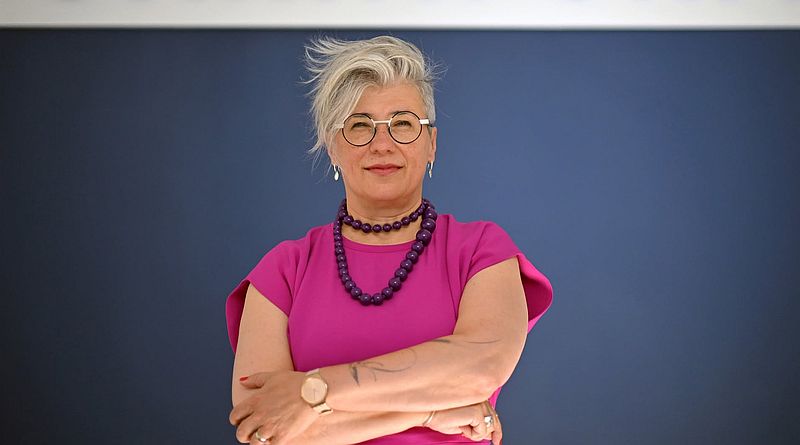
Natalka Cmoc, who has served as the Canadian ambassador in Kyiv for 3 years and has been building the partnership between the two countries since the 1990s, is confident that Ukraine is the one to unite with, as it shares the desire for a rules-based international order.
Ms. Natalka’s term as ambassador is coming to an end, so ahead of Canada Day, July 1, Ukrinform interviewed her about the results of the Canadian representation’s work under her leadership, as well as defense cooperation between Ukraine and Canada and support for our country within the “Group of Seven.”
25 CANADIANS WORK AT THE EMBASSY, AND WE ARE ALWAYS HERE
– Ms. Natalka, you are concluding your term as ambassador in Ukraine. Could you summarize your work since 2023? What have you achieved, and what haven’t you?
– I must admit that it is very painful for me to leave this position because my time here has been wonderful. I still can’t believe it’s ending.
We have accomplished a lot as a team. Firstly, when I first arrived, my task was to restore the embassy team, which was accomplished. Everything necessary for performing our work has also been restored.
Secondly, we prepared for our chairmanship in the “Group of Seven.” Ukraine is a priority for Canada in terms of our bilateral relations. In my opinion, we have had significant achievements within the G7 regarding Ukraine.
In the bilateral context, I would note that we were among the first to sign the Security Cooperation Agreement between Canada and Ukraine in February 2024. A year later, there was already an action plan. Ukraine must be certain of the support of its partners. The document covers what we agreed upon and serves as a foundation for expanding our security and defense cooperation.
Operation Unifier, a program for military training and mentoring of Ukrainian military personnel, which Canada launched in 2015, has been extended for another three years. I was one of those who worked on it during its formation stage.
On a personal level, I noticed that a lot of information was overlooked in Europe or Canada. Many Canadians asked me to provide more information about Ukraine, so I launched a podcast on KyivPost. We released 30 episodes with conversations about what other diplomats are doing here, what they think, how they feel, and survive.
– Regarding life in Kyiv – like all its residents, you have witnessed the endless Russian air terror. How has it affected you and what are your overall thoughts on it?
– It’s important that my team is here all the time. We are doing everything possible for this. Currently, 25 Canadians work at the embassy. We also have local staff we rely on. We have strict protocols for behavior during an air attack. We assess the level of threat, whether it’s drones or ballistic missiles, and take it very seriously.
Of course, we take shelter. Those without a shelter sleep between two walls, others go down into shelters. Is it scary? Yes. We are afraid, like everyone. We hear explosions, the work of air defense. It’s impossible to say whether it’s close or far.
We’ve had cases where the walls cracked, and the windows shook violently. I was sure they had shattered. It was an unpleasant experience, but we stay and do not plan to go anywhere.
Many diplomats would agree with me that Russia is now more aggressively attacking civilian, cultural objects, perhaps feeling more desperation considering how Ukrainians are coping on the front lines.
– Did the walls or windows crack for any of the embassy team members?
– Yes, particularly for our Ukrainian colleagues living on the left bank. Some team members’ homes were actually damaged. Thank God, not their apartments. Some saw it hit the neighbor’s building. Or family members had their apartments destroyed and had to be sheltered by them.
I make sure everyone is okay, but I cannot imagine if my country were attacked. It’s very, very painful. This war is illegal, unprovoked, and has no justification. It’s wrong, and it makes me angry.
UKRAINE HAS DONE GREAT WORK IN REFORMS, BUT THEY NEED TO BE ACCELERATED
– We hope a peace agreement or ceasefire will be reached as soon as possible, but you’ve already mentioned that Canada extended training missions until 2029. So, Canada will support Ukraine even after the war?
– Absolutely! Prime Minister Marc Carney, who was in Kyiv on Ukraine’s Independence Day last year, made it very clear right in front of Saint Sophia, that at every important stage of Ukraine’s history, Canada is present. And we do not plan to leave.
We were here before the full-scale invasion, before the annexation of Crimea, supporting Ukraine and its democratic ambitions, transatlantic aspirations. We speak loudly about recognizing your sovereignty and territorial integrity, supporting all dimensions of security: from cybersecurity to military training. We plan to be here for the reconstruction – for any future Ukraine chooses for itself.
– Ms. Natalka, as a member of the “G7” Ambassadors Group in Ukraine, how do you assess the reforms?
– The G7 Ambassadors Support Group was created in 2015 by the “G7” leaders and remains active today, which says a lot about the importance that G7 countries place on supporting the reform process in Ukraine.
Since 2015, we have seen progress. It is accelerating. We congratulate Ukraine on the opening of negotiation clusters with the EU.
In my opinion, it is important to continue to accelerate this. The G7 would like to see this. We want to support Ukraine’s future in the European Union, as these reforms play a significant role. I also acknowledge that this is a huge task, especially for a country at war, and I commend Ukraine for what it has achieved and continues to do.
We often talk about Ukraine’s anti-corruption strategy. We support ordinary Ukrainians, the public that desires this. Every Ukrainian cares about it. This is evidenced by all the polls. We are here to support various stakeholders – the government, communities, NGOs, members of parliament, and committees.
Canada has provided assistance in judicial reform. We supported various structures, police reform – last year we celebrated 10 years of our partnership with Ukraine in this area. So we are responding to what Ukraine has identified as a priority. And I think it’s quite fast.
Currently, we are focusing on veterans – what more we can do to support the largest veteran community in the world. We stand with Ukraine, as do our partners and other donors. We are not alone here, and this is very important, in my opinion.
Canada is a very strong middle power. Prime Minister Carney spoke at the World Economic Forum in Davos about recognizing that these alliances and coalitions are incredibly important, which is why Canada pays much attention to this issue – just like Ukraine. We are observing how it builds these coalitions and wants to be a part of them.
– In a world that Prime Minister Mark Carney described in his speech in Davos, about the breakdown of the rules-based world order and the rise of authoritarian regimes, do you see Ukraine as a complementary factor to value-oriented middle powers?
– Exactly. That’s actually the main reason why we support Ukraine. As long as it remains on a democratic path, as long as it shares the same values and a rules-based international order, we will continue to support you.
I believe the Prime Minister meant that we still believe in international rules, but we see they may not deliver the desired effect for us. We must strengthen these principles, reconsider – what we could do differently.
PARTNERSHIP WITH UKRAINE INCLUDED IN 5% OF CANADA’S DEFENSE SPENDING
– Next month there will be a NATO summit. What do you think allies will be able to achieve for Ukraine?
– First of all, before the summit on the sidelines of the defense ministers’ meeting, a G7-Ukraine coordination group will convene.
As allies, it is important for us to continue coordinating and making sure our defense sector understands how Ukraine is developing and meeting its needs in this war. And our pace is very fast. You are a very good partner in information exchange. We manage to support Ukraine as it needs when it comes to long-range and medium-range ammunition.
Ukraine is quickly developing and updating drones. What can we do here? For example, at the Canadian defense industry exhibition CANSEC, we signed an important agreement on joint production, where we study Ukrainian technologies and leverage Canada’s advantages and our production capabilities. We combine Ukrainian innovations with Canada’s strengths.
It is necessary to continue supporting the defense industry, the military-industrial complex, ensuring its network interaction and making adjustments when needed. I consider this important, and it will be discussed at the NATO summit.
President Zelensky will participate. As for Canada, we will focus on things such as continuing planning towards 5% and ensuring an equal distribution of the burden among all partners. There is much work ahead, but I think everyone is dedicated to the cause.
Allies must undoubtedly support Ukraine. We learn from it, and it is a very important partner. We see how the war itself is developing. Therefore, the NATO summit will be very important.
Canada is also increasing expenditures. The initial plan was to reach 5% defense spending by 2030, but we are looking for ways to accelerate the process. We will succeed, and our partnership with Ukraine contributes to this as it is factored into these 5%. For this, Canada proposed the concept of a Defense, Security, and Resilience Bank. We hope this will be announced as a concrete idea at the NATO summit.
Usually, multilateral banks cannot directly support defense. The idea is to create such a bank that would fund the expansion of small and medium-sized enterprises for partner countries so they can plan long-term.
– Military support and cooperation with Ukraine do not escape the attention of Russian intelligence, which attempts to disrupt them. We are aware of possible Russian interference in US elections, about hybrid attacks on EU countries. But what about Canada? How exactly is Russia working against you?
– Hybrid warfare exists and takes on various forms. You mentioned several examples, but even attempts of assassination, using migration as a weapon – all these are aggressive actions by Russia against European countries. This is likely to affect negotiations on EU accession. So, it is a very critical issue. Russia knows what it is doing and has been working on it for a long time. They are masters of disinformation.
Regarding Canada, of course, we see the consequences. We observe that the more disinformation or different interpretations of the same data are spread, the more the public believes in nothing.
Canada, both bilaterally and through the G7, is taking this very seriously now. We study foreign interference, and it is very cunning. We monitor, research, and counteract it.
Our government identifies Kremlin-fabricated disinformation and does everything possible to correct or provide the public with accurate information. It (the government) enjoys high trust.
Together with partners in the G7, we have initiated several very important initiatives based on our own rapid response mechanism, which allows tracking and identifying challenges. We have implemented these two aspects and are effectively the permanent chair of this group in the G7.
Another example is an academy that helps support analysts in this field. In cooperation with other countries, information exchange takes place and stronger tools for counteraction are created. Another example is something like a fund to support those who are victims of hybrid attacks. This refers to an organization, an individual, or very often a non-governmental organization that may not be able to withstand hybrid attacks.
Canada takes them absolutely seriously and recognizes this as a form of warfare.
UKRAINIAN DRONES DESTROY A VESSEL BUILT OVER YEARS IN AN HOUR
– Regarding the agreement on joint production of drones Airlogix-Sentinel between Ukraine and Canada, what type of drones is it and when will production begin?
– The agreement was just signed on May 29 at CANSEC, the largest defense industry exhibition in Canada. I witnessed the signing. It’s an important agreement. Currently, the focus is on aerial drones, but there’s nothing stopping us from expanding it to other types.
The plan for now is for Ukraine to have specially designed reconnaissance drones. They explore the area, help plan operations, and even protect infrastructure.
I need to be cautious when it comes to production because there are requirements regarding the protection of sensitive information. I won’t disclose many details, but the agreement is about the general framework I mentioned at the beginning, that together with Ukraine we need to change and expand. I believe this is just the first of many things we will support and develop together with Ukraine.
– Allow a futuristic question: Is Canada interested in maritime drones? Ukraine managed to defeat the Russian Black Sea Fleet with them. Will we ever see Ukrainian crewless boats patrolling the Arctic?
– I really hope so because protecting our waters is very important for Canada. Our country is surrounded by three oceans. Maritime surveillance and protection play a significant role.
We are all fascinated by what Ukraine has been able to accomplish. I’ve seen videos where you target a large maritime vessel and within an hour destroy something that took years to build.
So I wouldn’t rule out such patrolling. It would make sense. We hope it happens as soon as possible.
Photo: Yevhen Kotenko/Ukrinform
