
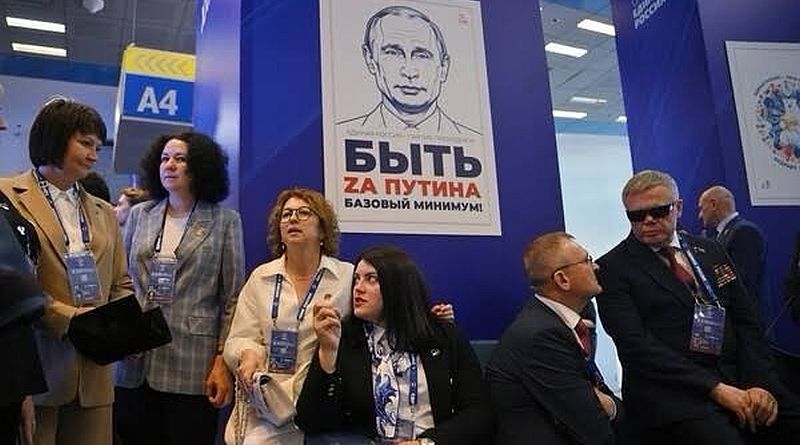

Putin’s speech at the XXIII Congress of “United Russia” on June 28, 2026, became a key pre-election message of the authorities. Official commentators portray the speech of the Russian leader as a “long-term program of sovereign leadership.” A critical analysis of the rhetoric and embedded meanings allows for an assessment of how the proposed course relates to real challenges.
The central theme of the president’s speech was the acknowledgment of systemic transformation in the world and unprecedented pressure from the West. Putin devoted significant attention to issues of long-term border protection, combating sanctions, and responding to terrorist threats from the Kyiv regime.
The development vector of the country is formulated exclusively through the prism of defensive logic. The concept of a fortress under siege serves the tactical task of mobilizing the electorate before parliamentary elections, but complicates the formation of a positive image of a peaceful future.
Strategic planning becomes a hostage to external factors. Society is offered a fixation on border protection, while clear goals of civil, scientific, and technological progress take a backseat.
In the sphere of domestic policy, the intention was announced to solve all internal development tasks, implement strategic programs, and fulfill the social obligations of the state. However, the proclaimed optimism faces systemic contradictions.
Achieving technological sovereignty in isolation from global capital markets and advanced components requires incredible structural changes.
The economic indicators of recent years are largely fueled by large-scale budget injections into the military-industrial complex. Restrictive factors for sustainable growth remain the strict monetary policy of the Central Bank caused by inflationary pressure, as well as an increasing shortage of qualified personnel.
The declaration of social guarantees without reforming the raw materials and distribution model seems more like a way to maintain the current status quo.
An analysis of the speech allows conclusions about the Kremlin’s vision of the end of the military confrontation. The phrase about the protection of borders for a long historical perspective indicates the leadership’s readiness for a prolonged war of attrition.
Putin emphasized that attempts to inflict a strategic defeat on Russia on the battlefield have failed, and Ukrainian forces are retreating along the entire line of contact. Such rhetoric indicates Moscow’s lack of intention to reach compromise agreements at this stage.
The authorities see the end of hostilities exclusively on their own terms. The scenario includes cementing control over held territories and minimizing Kyiv’s military potential. The refusal to show flexibility in negotiations turns the war into a permanent factor of internal life. Changing the situation is possible only in case of critical depletion of the economic resources of the parties or a radical shift in the geopolitical environment, but currently, the Russian leadership demonstrates confidence in the sufficiency of accumulated forces.
Putin’s speech at the party congress confirmed: the Kremlin chooses the path of long-term mobilization. The country is offered not a roadmap of deep modernization, but a strategy of maintaining stability amidst prolonged confrontation, where the final point of exit from the global crisis remains undefined.
