
Olesya Zhigalyuk, BBC News Ukraine
To rout the Russian army not at the front line, but in its deep rear – this is how Wall Street Journal describes Ukraine’s current strategy.
According to the publication, after the unsuccessful counteroffensive of 2023, Kyiv changed its approach and focused on the systematic destruction of Russian logistics, headquarters, and military infrastructure.
This logic was publicly confirmed by President Volodymyr Zelensky. As reported by Reuters, he stated that Ukraine would launch preemptive strikes on facilities that Russia uses for conducting war.
“Collapse the Russian army from the rear”
After the unsuccessful counteroffensive of 2023, Kyiv began searching for another way to change the course of the war, writes Wall Street Journal.
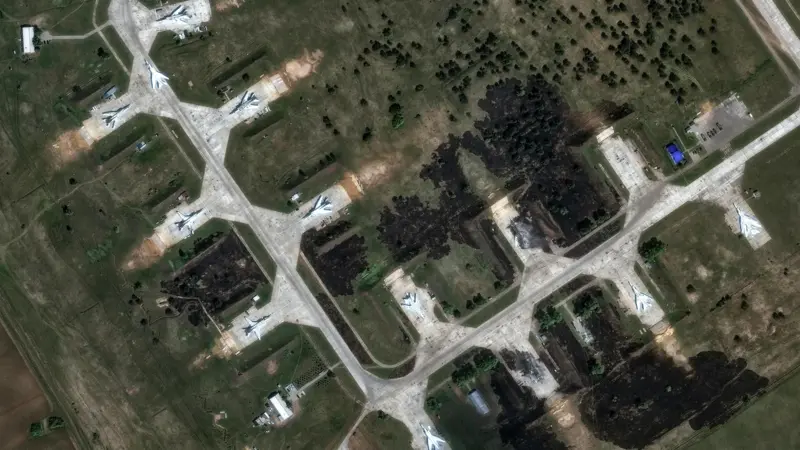
According to the publication, Ukrainian military together with Western experts developed a concept for a large-scale campaign aimed at destroying Russian logistics, headquarters, depots, drone control centers, and other objects supporting the army’s functioning.
This concept was developed with the involvement of former Ukrainian Defense Minister Andriy Zagorodnyuk along with Western advisors. One of them, Professor of Strategic Studies at the University of St. Andrews Phillips O’Brien, articulated its goal as: “The main task is to collapse the Russian army from the rear.”
In Western military doctrine, this approach is called air interdiction – the destruction of infrastructure that provides the army’s combat capability but is located far from the front line.
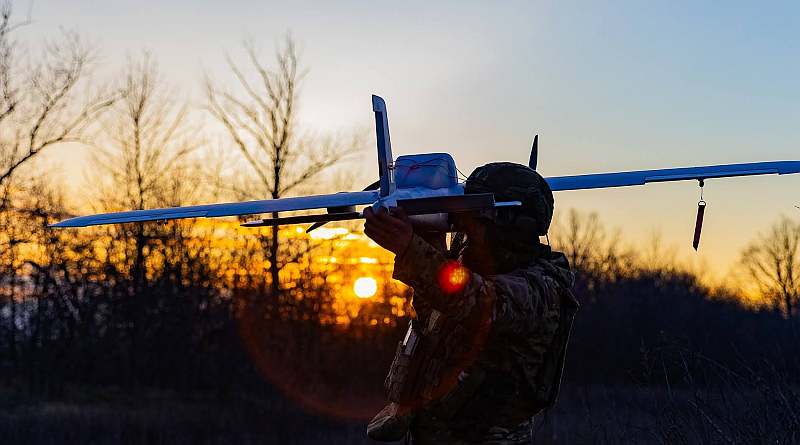
Instead of expensive combat aviation, Ukraine focuses on the mass use of medium-range strike drones. These, according to the Wall Street Journal, are becoming the key tool of the strategy.
According to Defense Minister Mykhailo Fedorov, the number of such strikes has quadrupled in recent months.
Commander-in-Chief of the Armed Forces of Ukraine Oleksandr Syrsky reported that in May alone, Ukrainian forces struck 414 Russian headquarters, command posts, and other critical military targets deep in the rear.
President Volodymyr Zelensky effectively confirms this tactic.
As reported by Reuters, the head of state stated that he instructed Ukrainian intelligence agencies and the military to conduct preemptive strikes on facilities that Russia uses for conducting war.
“I instructed our intelligence agencies and armed forces to take preemptive measures against facilities that Russia uses to expand its military actions,” said Zelensky.
Ukraine is also intensifying strikes on Russian energy infrastructure in an effort to increase pressure on Moscow and force it to come to the negotiating table.
Initial Results
According to Western analysts, this strategy is already starting to yield results.
The American analytical center Institute for the Study of War (ISW) believes that the combination of strikes on Russia’s rear and Ukraine’s advantage in the number of front-line drones is already changing the situation on the battlefield.
“We are seeing an operational effect that we haven’t observed at this scale before.”
According to ISW, for the first time since 2023, Ukraine began liberating more territory than it is losing.
At the same time, the pressure on the Russian economy is also increasing.
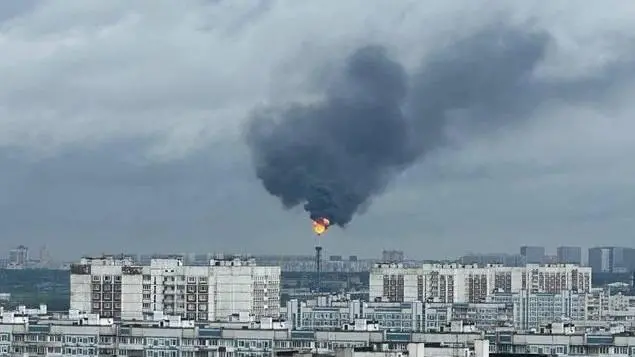
As reported by Reuters, following Ukrainian strikes, the Moscow Refinery suffered such severe damage that, according to the agency’s sources, it won’t be operational for about six months.
The agency also draws attention to rare official Russian data: in May, the production of petroleum products and coke decreased by 13.5% compared to the same period last year.
A separate direction of the Ukrainian campaign remains Crimea.
As noted by the Wall Street Journal, the peninsula is a key military base for Russia but critically depends on several supply routes. In recent months, Ukraine has regularly struck railways, roads, bridges, energy infrastructure, and air defense systems that support this logistics.
According to Andriy Zagorodnyuk, “if this campaign continues, Crimea will turn from an advantage for Russia into a problem.”
The Logic of Negotiations Changes
Amidst increasing Ukrainian strikes, the rhetoric of Moscow and Kyiv is becoming harsher.
Russian President Vladimir Putin reiterated that Moscow is ready for peace talks based on the Istanbul agreements of 2022.
Russian Foreign Minister Sergey Lavrov also stated that the war “can still be completely” resolved by politico-diplomatic means. At the same time, he emphasized that Russia is not going to stop at the current front line, will not accept “ultimatums,” and calls for resuming negotiations where they were interrupted.
Kyiv, on its part, also declares readiness for negotiations but makes it clear that it does not intend to wait indefinitely for diplomatic solutions.
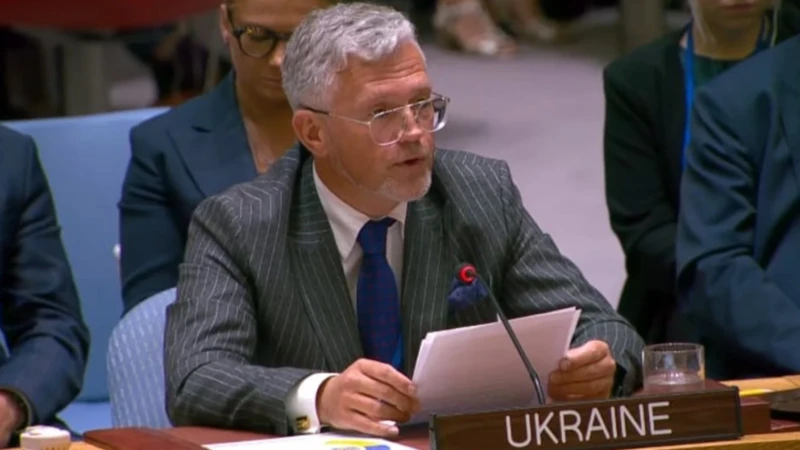
This was stated at a UN Security Council meeting by Ukraine’s Permanent Representative Andriy Melnyk.
According to him, Ukraine has been urging the UN Security Council for over a year to support a resolution for a full and unconditional ceasefire, but this has yet to happen.
“Ukraine is ready for direct negotiations with Russia for the sake of a just and lasting peace. But our patience is not limitless. If the Security Council continues to be inactive, Ukraine may reconsider its proposal. A ceasefire along the current front line is already a significant compromise,” said Melnyk.
The US representative to the UN, in turn, stated that time is not on Moscow’s side. According to him, the Russian army loses about 40,000 military personnel every month, the economy is increasingly feeling the effects of the war, and Ukraine is rapidly implementing new technologies.
“Time is not on Moscow’s side. Russia should make a deal,” said the American diplomat.
Trump has changed his tone on Ukraine
Amid recent events, the rhetoric of US President Donald Trump is also changing.
During a meeting with NATO Secretary General Mark Rutte, he stated in response to journalists’ questions that Volodymyr Zelensky is now “doing quite well.”
“He is holding up… A lot of people are dying on both sides, but I think he is handling it quite well.”
This assessment is noticeably different from Trump’s previous statements, in which he repeatedly spoke of Russia’s almost inevitable advantage.
Cover photo: 22nd Separate Mechanized Brigade
