
Illegal convictions and deportations of Ukrainian political prisoners deep into Russia and millions in funding for “university exchange” programs for thousands of students. The Russian Federation actively and systematically Russifies and destroys Ukrainian identity in the temporarily occupied territories of Ukraine.

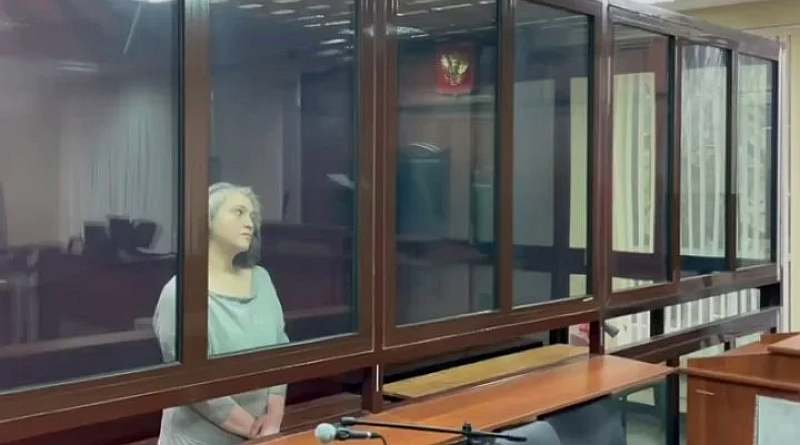
The Russian Federation illegally convicts and deports Ukrainians to penitentiary facilities in its own territory. The Crimean Human Rights Monitoring Group “Crimean Tribunal” reports, citing a source in the occupiers’ federal penitentiary service, that Crimean Tatar political prisoner Lera Dzhemilova, sentenced to 15 years in prison for “state treason” in August 2025, was transferred to a correctional colony in the Volgograd region. Olga Cherniavska, a resident of the Zaporizhzhia region abducted by Russians and convicted of “espionage,” was transferred to serve her sentence in colony No. 28 of the Volgograd region.
Moscow practiced illegal convictions and deportations of residents from occupied territories as early as 2014, and since 2022 has only accelerated this activity. Persecutions of Ukrainians are usually justified with accusations of state treason, terrorism, or espionage. This policy violates human rights and international humanitarian law norms, primarily the Fourth Geneva Convention prohibiting the deportation of civilians from occupied territories. The Prosecutor General of Ukraine submitted evidence to the International Criminal Court detailing Russia’s deportation of over 1800 Ukrainian prisoners from the occupied Kherson and Mykolaiv regions in November 2022.
The aggressor government is financing a university exchange program—a federal initiative that provides for the temporary transfer of Ukrainian students to Russian universities with the aim of indoctrinating them with Russian values and establishing long-term connections with the occupier state. On May 19, 2026, the Prime Minister signed a decree for the allocation of over 155 million rubles for this program for the current year. It is planned to fund and ensure the participation of at least 2300 students from the occupied Donetsk, Luhansk, Kherson, and Zaporizhzhia regions for studies in “leading pedagogical universities” in Russia, including in Samara, Tula, Volgograd, and Perm. The focus is on Russian “educational and cultural activities.”
The program was created by order of Putin in the summer of 2022, and since then, thousands of visits by Ukrainian students to Russian universities for vocational guidance and cultural integration have been organized by the Russians. A long-term campaign of Russification through the integration of Ukrainian youth into the Russian education system, establishing long-term connections with Russia, and replacing Ukrainian identity with Russian is ongoing.
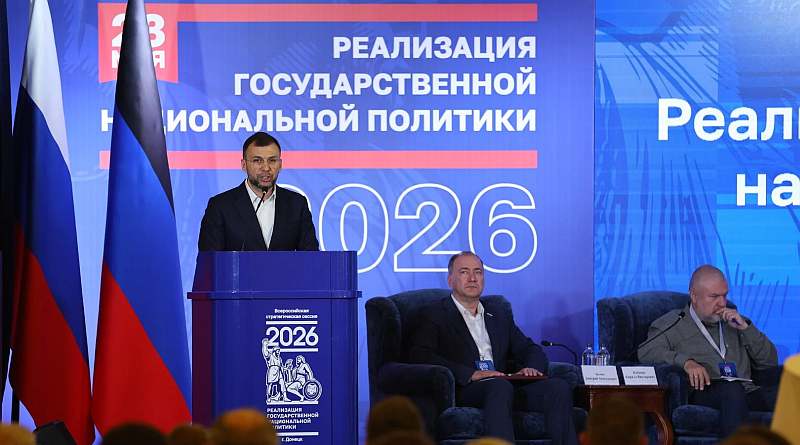
The social and ethnic policy of the enemy in the occupied part of Ukraine continues to be based exclusively on Russification and the eradication of any manifestations of Ukrainian identity. On May 23, a conference on “The Implementation of State National Policy” took place in occupied Donetsk as part of the Year of Unity of the Peoples of Russia. Propaganda Telegram channels noted the development of “Russian statehood” and “Russian national identity” in the occupied Donetsk region.
Putin signed a decree in November 2025 approving Russia’s strategy “State National Policy,” aimed at “strengthening the unity of the multinational people of the Russian Federation, the entire Russian civic identity, civic unity, and patriotism, interethnic and religious harmony.” This document will remain in effect until 2036 and codify the Russification of the occupied Ukrainian territories as a matter of Russian state policy. The formation of a “Russian national identity” in the occupied Donetsk region indicates that the Russification measures profoundly affect the local population.
The occupation administration of the Zaporizhzhia region is preparing to ensure the dominance of the Russian language by banning permanent access to Ukrainian sources, for which they are developing a law on the “protection of the Russian language.” Some enterprises in the occupied part of the Zaporizhzhia region are already replacing signs with Latin letters with Cyrillic symbols—even before the adoption of this “law.” The occupation authorities and the federal legislation of the aggressor country strictly limit the use of the Ukrainian language, especially in schools, and the mentioned “draft law” will further intensify efforts to create privileges for the Russian language in public places.
As the successor to the USSR, Russia exists “surrounded by enemies,” and thus institutionalizes educational-militaristic programs. For example, the director of the Simferopol College of Hospitality announced on May 26 that the Romanivskyi College and the Simferopol College of Radio Electronics received licenses to start “unmanned aerial vehicle” courses for the 2026/2027 academic year. Students of the Simferopol College of Radio Electronics previously underwent UAV operation training in Rosguard units as part of a large-scale strategic project “Drone Operator Staff of Crimea.”
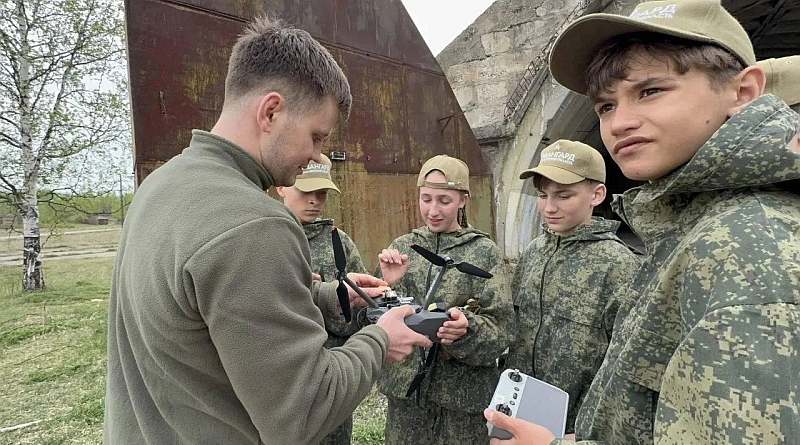
Since February 2026, more than 2,000 college students from the occupied Crimea have participated in this project. The initiative selected 200 high school students for further training, after which graduates can sign contracts and serve in the occupiers’ army or security agencies as certified drone operators. The head of the occupation administration of Crimea, Aksyonov, claims that “Crimea is the only region [in Russia] where a complete, seamless cycle of training drone operators from school to college to university has been created.”
Drone operator training courses are also available for young children through the international children’s center “Artek” and primary school courses through the educational program “Basics of Security and Homeland Defense.” Certification of program graduates strengthens and streamlines the cycle of militarization.
Another direction for consolidating occupation is the replacement of the local population with Russians. For example, the occupation administration of Mariupol has started a large wave of evictions as part of the seizure and redistribution of residential property, reports the Ukrainian Resistance Center. Official eviction notices requiring residents to leave their homes and surrender keys to the occupation authorities have begun to appear at the entrances of apartment buildings.
The occupation authorities are evicting even residents who have “properly” re-registered property according to Russian law. Previously abandoned housing from the municipal housing stock, handed over to the occupation administration by “court decisions” recognizing it as “ownerless,” is being massively redistributed. Such housing may be transferred to arrivals from Russia to support a broad campaign of settling occupied Ukraine with citizens of the aggressor country. Nothing new, as this happened a hundred years ago.
Personal documents issued by Ukraine are causing trouble for the occupiers. The enemy’s Ministry of Internal Affairs proposed simplifying the renunciation of Ukrainian citizenship since forced passportization measures in the occupied areas may face resistance. They want to remove the legislative requirement for translating Ukrainian documents into Russian. Eliminating this bureaucratic barrier indicates that passportization in the seized territories of Ukraine is not proceeding as planned. The assessment of the situation shows that a significant portion of the population in the occupied areas is passively resisting by refusing to undergo the bureaucratic process.
In parallel with the aggressive Russification of the occupied territories, another interesting process is underway — they are improving and organizing the regulatory framework of the free economic zone (FEZ) in the occupied areas of Donetsk, Luhansk, Kherson, and Zaporizhzhia regions. It is planned to reduce the minimum required capital investments from 30% to 10%, and FEZ participants will be allowed to lease land plots in the occupied territories without confirming the legality of the funds for their payment. The Kremlin is concerned with lowering barriers to entry into the occupied territories.
Facts indicate that the aggressor brazenly ignores international law norms in organizing life in the temporarily occupied territories (which is not new). Russia’s activities, which will create long-term consequences of occupation, seem threatening.
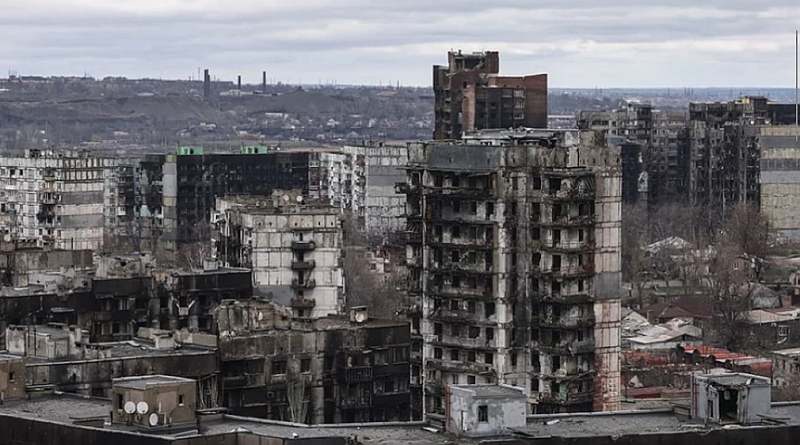
On the cover: Mariupol destroyed by Russian occupiers. Photo: twitter.com/Ukropivna1/
