
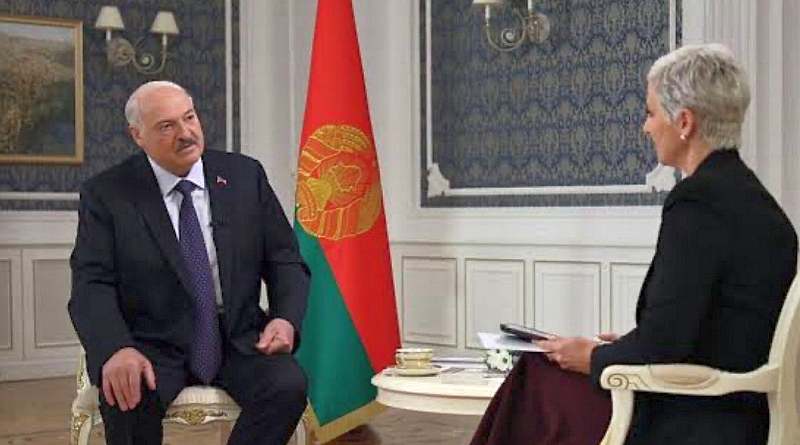

The sharp change in tone by Alexander Lukashenko in his recent interview with Al Arabiya TV channel, where he not only ruled out the possibility of Belarusian military intervention in the conflict but also publicly apologized to Ukrainian President Volodymyr Zelensky for past insults, indicates a progressing crisis in the entire survival strategy of the Minsk regime. Previously demonstrating unwavering loyalty to Moscow and allowing its territory to be used for aggression, the Belarusian ruler is now forced to frantically seek ways to reduce risks, understanding that blind support for the Kremlin is becoming a mortal threat to him.
This rhetoric is not driven by a sudden desire for humanitarianism, but by a clear awareness of the critical vulnerability of his own position in the face of a transforming geopolitical reality.
The main catalyst for such statements is a tangible fear of Ukraine’s military potential, which in recent years has demonstrated the ability to carry out effective remote strikes deep into the enemy’s rear. Lukashenko’s admission that his country’s territory is literally in the spotlight for Ukrainian military indicates Minsk’s understanding of the vulnerability of its key industrial, energy, and logistics infrastructure.
Realizing that Kyiv has verified targets on Belarusian territory and is ready to respond symmetrically to any provocations, the dictator has understood the inevitability of the collapse of his economic model in the event of actual hostilities. The internal legitimacy of the regime relies solely on strict control of the power apparatus, which cannot function in the event of the destruction of oil refineries and large industrial enterprises, which are the financial basis for the existence of the dictatorship.
At the same time, there is an obvious cooling of the once unbreakable ties between Minsk and Moscow, since the protracted nature of military actions has demonstrated the limits of Russian capabilities. Realizing that Putin’s army is exhausted and the Russian Federation itself is in deep international isolation and under unprecedented sanctions, Lukashenko no longer sees the Kremlin as a reliable and omnipotent guarantor of his security.
Moreover, due to its own growing deficits, Moscow has lost the ability to subsidize the Belarusian economy as before, making adherence to Russian policy extremely unprofitable. Constant statements by the Minsk leader about not wanting to turn his citizens into “mincemeat” for someone else’s illusory ambitions reflect his understanding that direct mobilization within Belarus will inevitably provoke a massive social explosion and a new wave of revolutionary protests.
In this complex diplomatic game, Beijing has become the crucial restraining factor for Minsk, providing Lukashenko with a kind of political umbrella that allows partial distancing from Moscow’s destructive initiatives. China’s leadership consistently opposes the expansion of the geographical scope of hostilities in Europe, as a stable logistics infrastructure at the EU borders is vital for implementing the global “Belt and Road” project.
Belarus occupies a key transit position in this concept, so the hypothetical involvement of Minsk in the war and the subsequent destruction of its transport arteries would directly harm China’s multibillion-dollar investments. Relying on tacit support from China, Lukashenko has gained the opportunity to subtly sabotage the Kremlin’s demands for further escalation, attempting to send signals to the West and Kyiv about his readiness for behind-the-scenes negotiations through Arab media.
Thus, apologies to Zelensky largely serve as an attempt by Minsk to restore minimal agency and save the regime from being buried under the wreckage of a weakening Russian geopolitical strategy.
