

Current information on Russian losses due to sanctions as of 14.06.2026.
1. Drones attacked one of Russia’s largest chemical plants.
– On the night of June 14, drones attacked the Tula region of Russia. The Novomoskovsk chemical plant “Azot” — one of the largest enterprises in Russia’s chemical industry, was hit.
– After the attack, a fire broke out on the plant’s territory. “Azot” is a key enterprise in Russia’s chemical sector. The plant produces ammonia, nitric acid, methanol, and mineral fertilizers.
– At the same time, the plant’s products are used as raw materials for the production of explosives and supplied to military-industrial complex enterprises.
– Information about the extent of the damage and the possible impact of the attack on the plant’s operations is currently being clarified. The Russian authorities traditionally do not disclose the full extent of the damage to strategic objects.
2. Gas stations in Kuban began to close due to the fuel crisis.
– In Russia’s Krasnodar region, the fuel crisis has entered a new phase: due to a shortage of gasoline and diesel fuel, at least 15 gas stations have temporarily ceased operations.
– Mainly, these are small private gas stations that purchase fuel in small batches and are most dependent on supply disruptions. Just a few days ago, local authorities acknowledged that a portion of the region’s over 500 gas stations had already faced fuel shortages. Similar problems have begun to surface in the Rostov region.
– The fuel crisis is unfolding against the backdrop of reduced production at Russian refineries, which regularly experience attacks by Ukrainian drones.
– As a consequence, there has been a gasoline shortage in several regions, a sharp increase in wholesale prices by 30–40% since the beginning of the year, and a record acceleration in gas station price growth.
3. Russia is hit by the largest wave of corporate defaults in the last decade.
– In the Russian corporate bond market, the number of defaults is rapidly increasing. It is estimated that the current wave has already become the largest in the past ten years, equaling the scale of the 2014–2016 crisis.
– Since the beginning of 2024, 25 Russian companies have defaulted on 97 bond issues totaling 66 billion rubles. The current crisis, by the number of insolvent issuers, may surpass the figures of the previous major wave of defaults after sanctions were imposed in 2014.
– Among the largest cases in recent years are the defaults of companies “Kivi Finans”, “Rosgeologiya”, “Garant-Invest” and the logistics operator “Monopolya”. Collectively, their unmet obligations amount to tens of billions of rubles.
– Problems cover companies from various sectors of the economy. This indicates not the difficulties of individual industries, but systemic problems in the Russian economy.
– A similar picture was observed during the global financial crisis and in the period following the imposition of Western sanctions in 2014.
– The increase in defaults is occurring against a backdrop of high interest rates, the rising cost of credit, reduced investment, and worsening financial condition of many enterprises.
4. Germany warned about the risk of Russia deploying nuclear weapons in space.
– The head of the Bundeswehr’s Space Command, Major General Michael Traut, stated that there are suspicions about Russia working on technologies to place nuclear warheads in Earth’s orbit.
– According to him, at the highest level of escalation, one cannot rule out a scenario in which Moscow attempts to transfer the nuclear threat to outer space.
– If a nuclear charge were detonated in orbit, the consequences could be catastrophic for the global satellite infrastructure. It would impact communication systems, navigation, banking infrastructure, aviation, maritime transport, weather forecasting, and military control systems.
– Additionally, the amount of space debris would significantly increase, potentially rendering certain orbital altitudes unusable for decades.
– The Bundeswehr notes that space threats have significantly increased in recent years. This includes not only the potential use of nuclear weapons but also the jamming of GPS signals, laser impacts on satellites, and other forms of space confrontation.
– As an example, the general cited regular instances of interference with GPS navigation in the Baltic region, affecting civil aviation and shipping.
– Against these risks, Germany plans to enhance its own space capabilities. Specifically, Berlin intends to purchase electronic warfare systems, laser complexes, and create a new military satellite network SATCOMBw 4 to ensure secure communications.
– The statements by German military officials indicate that in Europe, the threat of space militarization by Russia is being taken increasingly seriously. This is yet another area where the Kremlin’s aggressive policy forces Western countries to boost defense capabilities and prepare for new forms of confrontation.
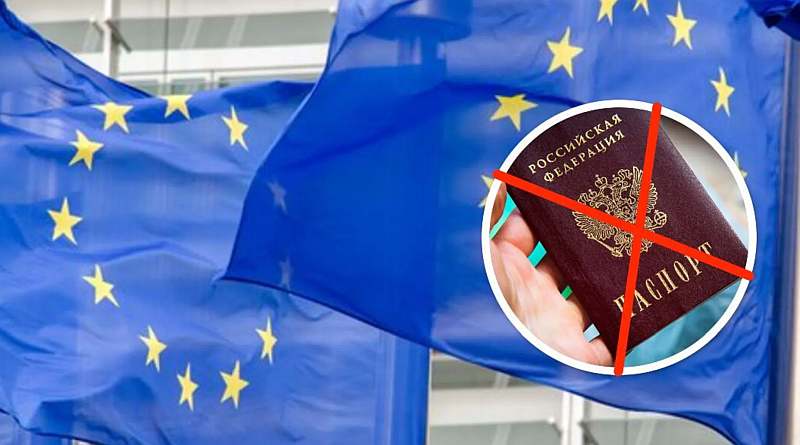
5. Germany’s ruling party called for a ban on tourist Schengen visas for Russians.
– Members of the European Parliament from the German CDU/CSU bloc have advocated for a complete ban on issuing Schengen tourist visas to Russian citizens. The party was outraged that last year over 500,000 Russians vacationed in European Union countries.
– “Vacationing in the EU is a privilege, not a right,” stated the MEPs, calling for the cessation of issuing tourist visas to citizens of the aggressor country. The initiative emerged amid intensified discussions in Europe on restricting entry for Russians.
– In early June, ministers from 11 European countries approached EU leadership with a proposal to tighten entry rules for Russian citizens and consider the possibility of banning tourist trips.
– The letter was signed by representatives from Poland, Sweden, the Czech Republic, Denmark, Estonia, Finland, Latvia, Lithuania, the Netherlands, as well as Norway and Iceland.
– The emergence of such initiatives indicates growing support in Europe for a tougher approach towards citizens of the aggressor state. According to supporters of the restrictions, Russians should not be allowed to freely enjoy the benefits of the European space while Russia continues its war against Ukraine, with daily strikes on Ukrainian cities and civilians.
6. Western intelligence suggests that Iran may have received new missiles from Russia.
– Western intelligence services believe that during the eight-week truce with the US, Iran significantly restored its missile arsenal and likely received new missiles manufactured in Russia.
– According to intelligence estimates, Tehran retained about 75% of the missile stock it had before the onset of large-scale strikes and has the ability to quickly expand its arsenals. Among the weapons that may have arrived recently are newly produced Russian missiles.
– These assessments significantly differ from the statements of US President Donald Trump, who previously claimed that Iran had only 21-22% of its pre-war missile potential left.
– Before the truce, Iran launched over 1850 missiles and thousands of Shahed-type attack drones. While some launchers and depots were destroyed, intelligence believes a significant part of the infrastructure was restored or cleared after the strikes.
– The production of Shahed drones remains stable due to a dispersed assembly system and the use of available components. This allows Iran to maintain production even under military pressure.
– If the information about the delivery of Russian missiles is confirmed, it will be further evidence of deepening military-technical cooperation between Moscow and Tehran.
– Both countries have already been actively collaborating in the armaments sector, and Iranian drones have long been one of the key tools in Russia’s aggression against Ukraine.
7. The UK intercepted a Russian tanker from the “shadow fleet” in the English Channel.
– The United Kingdom has detained a tanker from Russia’s “shadow fleet” for the first time, which was attempting to pass through the English Channel. The vessel SMYRTOS was intercepted with the involvement of Royal Marines special forces and officers from the National Crime Agency.
– According to the British Ministry of Defense, the tanker is currently under the control of authorities off the country’s coast, where an investigation is underway. London emphasized that the operation was conducted in accordance with British and international law.
– UK Prime Minister Keir Starmer stated that he personally authorized the interception of the vessel. “This successful operation strikes another blow against Russia and reminds those fueling Putin’s war in Ukraine that we will not let them hide,” Starmer said in a post on X.
– According to monitoring services, the tanker SMYRTOS sails under the flag of Cameroon. In early June, it departed from the Russian port of Ust-Luga in the Baltic Sea.
