

Information on the current losses of the Russian Federation due to sanctions as of June 10, 2026.
1. On the night of June 10, our drones attacked two important military-industrial and fuel-energy complex facilities.
– In Cheboksary, the “VNIIER-Progress” plant was hit. The enterprise specializes in the production of GNSS receivers and antennas for GLONASS, GPS, and Galileo satellite systems. This equipment is used in Russian “Shahed” attack drones, “Iskander-M” and “Kalibr” missiles, as well as in UMPK modules for guided aerial bombs.
– Simultaneously, in Samara, a fire broke out at the Kuibyshev Oil Refinery after the attack. According to OSINT analysts ASTRA, videos released by eyewitnesses confirm the damage to one of the largest oil refining enterprises in the region, which is part of “Rosneft”. The Kuibyshev Oil Refinery has repeatedly been a target of attacks.
2. Ukraine attacked important oil pumping stations near Moscow for the second time in two weeks.
– On the night of June 10, Ukrainian drones struck two “Transneft” oil pumping stations in the Vladimir region of Russia — “Vtorovo” and “Lobkovo”. Fires at both sites were recorded by NASA FIRMS satellite service, and the regional governor confirmed fires at two infrastructure sites after the drone attacks.
– The “Vtorovo” station is of particular importance, having been previously targeted on May 24. This hub supplies fuel to large oil depots around Moscow, as well as the Sheremetyevo, Domodedovo, and Vnukovo airports. Additionally, the station is the starting point of the “Vtorovo — Yaroslavl — Kirishi — Primorsk” main oil product pipeline, through which diesel fuel is transported to the Baltic port of Primorsk for further export.
– The “Lobkovo” station plays a crucial role in pumping oil to the Moscow region. The simultaneous damage to two facilities indicates the continuation of the campaign to pressure Russia’s fuel-logistics infrastructure.
– In recent months, Ukrainian strikes have regularly hit oil depots, refineries, tank farms, and oil transportation nodes.
3. The losses of the Russian army in the war against Ukraine remain extremely high.
– According to estimates by Janis Kluge, an expert at the German Institute for International Security, Russian troops are losing about 9,000 soldiers killed each month in 2026, or approximately 300 people per day.
– Analysis of the budgets of Russian regions that pay compensation to the families of deceased soldiers indicates that the Russian army suffered the greatest losses in August and December 2025 — over 12,000 killed per month. Compared to the beginning of 2024, when monthly losses were estimated at about 4,000 killed, this figure has almost tripled.
– The increase in losses is attributed, in part, to Ukraine’s active use of drones along the front line. The mass use of drones significantly complicates the offensive actions of Russian troops and increases their combat losses.
– According to the American Center for Strategic and International Studies (CSIS), the total losses of the Russian army by the beginning of 2026 reached almost 1.2 million killed and wounded. Of these, up to 325,000 soldiers may have died.
– Over more than four years of full-scale war, Russia’s losses have already exceeded the losses of the Soviet army in Afghanistan, as well as Russia’s losses during both Chechen campaigns many times over.
4. The Russian budget increasingly has to support the oil industry, which is facing problems due to regular strikes on refining infrastructure.
– For April and May 2026, the Russian government paid more than 700 billion rubles in subsidies to oil companies, effectively returning a significant portion of the taxes received from the industry.
– In May, oil workers received 204.3 billion rubles under a damping mechanism to curb fuel prices and an additional 153 billion rubles through a reverse excise mechanism. Overall, the state returned about 40% of the funds received from the mineral extraction tax to the companies.
– In April, the level of support was even higher — almost 360 billion rubles, which accounted for about 46% of the collected oil MET. The sharp increase in budget payments is associated with a crisis in refining.
– Since the beginning of the year, Russian refineries have been attacked by drones dozens of times, leading to a 14% decrease in plant utilization and a drop in refining to the lowest levels in many years. Some enterprises were forced to conduct unscheduled repairs or temporarily cut production.
– As a result, a significant portion of the additional oil revenues of the budget actually returns to the industry in the form of subsidies. This weakens the financial impact of high global oil prices and increases the burden on the federal treasury, which is already facing a growing deficit.
5. Russia is ready to sell part of its coal assets to Indian companies due to a deepening crisis in the sector.
– Indian state companies SAIL and NMDC are exploring the possibility of acquiring coking coal mining assets in Russia. In May, an Indian delegation visited Russia for preliminary talks with government and coal industry representatives. No final decisions have been made yet.
– Moscow’s willingness to sell stakes in strategic raw materials assets indicates serious problems in Russia’s coal industry. The industry’s total losses have already exceeded 600 billion rubles. Despite redirecting exports to Asian markets, companies are facing declining profitability, high transportation costs, sanction restrictions, and reduced access to traditional markets.
– India remains one of the largest buyers of Russian coal after China. In the first quarter of 2026, it increased its imports by 7% to 18.2 million tons. Meanwhile, New Delhi is not rushing with investments, assessing the economic viability of potential deals and the prospects of Russian assets.
– Due to the worsening financial state of the industry, Russia is increasingly forced to seek external investors to support enterprises that were considered strategic for the country’s economy just a few years ago.
6. The European Commission proposed freezing the price cap on Russian oil until January 2027 to prevent its automatic increase.
– This was announced by European Commission President Ursula von der Leyen during the presentation of the 21st package of sanctions against Russia. Currently, the price cap on Russian oil is set at $44.1 per barrel and was established in January 2026.
– Under the current mechanism, the price cap is reviewed every six months and must remain 15% lower than the market price of Russian Urals oil.
– However, due to a spike in oil prices following the escalation in the Middle East and shipping disruptions through the Strait of Hormuz, a new review could lead to an increase in the allowable price for Russian oil.
– To avoid additional revenues for the Russian oil sector, the European Commission proposes to temporarily suspend the adjustment mechanism and maintain the current cap until early 2027.
– Brussels believes this will maintain sanction pressure on Russian oil revenues until the global market returns to a more stable state.
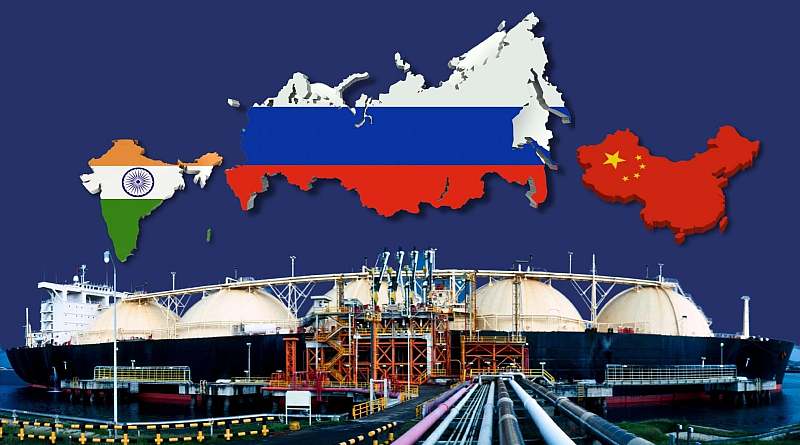
7. India and China are once again forcing Russia to sell oil at discounts.
– India and China have begun to demand new price concessions from Russian suppliers for Urals oil, indicating a worsening position for Moscow in its key export markets.
– Urals shipments for July-August are trading at a discount of $2-3 per barrel compared to Brent, whereas in April-May, Russian oil was sold at a premium of $7-8 per barrel.
– The reason is weaker activity from Asian oil refiners. Refineries in India and China are reducing purchases, using up stored supplies, and seeking alternative crude sources.
– Particularly noticeable for Russian exporters is the cooling demand from China, which, along with India, essentially remains the main buyer of Russian oil following the loss of the European market.
– According to traders, some Chinese buyers even refused to accept Russian shipments from June deliveries, increasing pressure on sellers and forcing them to agree to additional discounts to avoid oil accumulation in floating storage.
– The situation demonstrates Russia’s growing dependence on the two Asian markets. While after the start of the war Moscow managed to redirect exports to India and China, now these countries are increasingly dictating their terms and using Russian companies’ dependence to obtain better prices.
8. The EU is preparing one of the most extensive sanction packages against Russia: targeting banks, crypto services, and energy exports.
– The European Union has presented the draft of the 21st package of sanctions against Russia, which could become one of the most painful for the Russian financial system since the beginning of the full-scale war. The new restrictions target the banking sector, cryptocurrency platforms, drone manufacturers, energy infrastructure, and sanction evasion schemes.
– The package proposes to impose sanctions on about 90 Russian banks. Once adopted, the total number of sanctioned credit institutions will exceed 100, covering more than half of Russia’s internationally connected banks. Some of them will face a complete blockade of operations, asset freezes, and other financial constraints.
– In Brussels, it is stated outright that the goal is to further weaken the financial system of the Russian Federation and complicate Russian business access to international settlements. Particular attention is paid to small banks through which Russian companies have been trying to circumvent Western sanctions in recent years.
– The restrictions could also affect 11 cryptocurrency platforms and a number of financial structures in third countries that help Russia carry out transactions circumventing the sanctions regime. The European Commission is proposing for the first time a mechanism for the complete ban of crypto services in countries that facilitate the circumvention of restrictions.
– A separate block of sanctions concerns the energy sector. The EU proposes to maintain the current price cap on Russian oil at $44.1 per barrel at least until the beginning of 2027, despite the rise in global oil prices. In Brussels, it is emphasized that this would prevent additional revenues for the Kremlin from the increase in energy prices.
– Oil traders and refineries in third countries that help Russia maintain energy exports may also be subject to sanctions.
– Additionally, it is proposed to strengthen restrictions on Russian LNG, prohibit the resale of gas carriers, and include 30 more ships of the so-called “shadow fleet” in the sanctions lists.
– The new package also includes restrictions on the export to Russia of high-tech metal alloys, critically important for the defense and aerospace industries, as well as new measures against drone production.
– The tightening of sanctions is occurring against the backdrop of increasingly noticeable problems in the Russian economy, which faces slowing growth, high interest rates, a growing budget deficit, and a worsening financial condition in certain sectors.
– In the Russian expert community itself, warnings are already being voiced about accumulating risks in the banking system, although the Central Bank of Russia continues to deny the threat of a crisis.
