
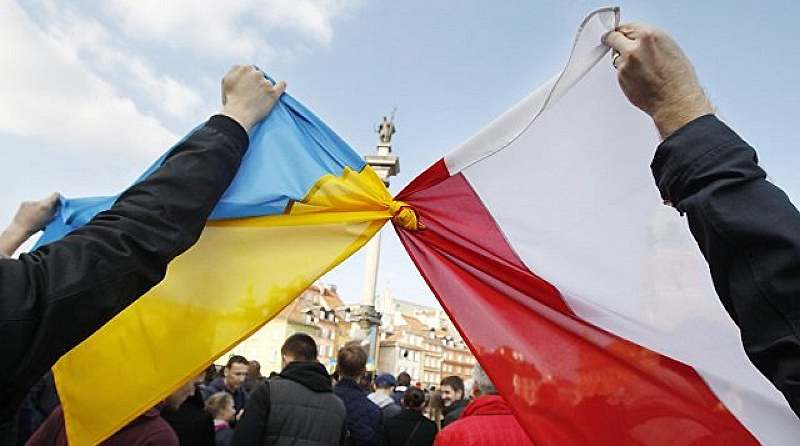
The biggest mistake in Ukrainian-Polish relations was the departure from the formula “we forgive and ask for forgiveness.” This formula was used by Polish and German figures for Polish-German reconciliation. Later, at the initiative of Pope John Paul II, the same formula was proposed and supported by Ukrainian and Polish clergymen, and later by politicians.
The departure from this formula began with the adoption of legislative acts in Poland characterizing the Volhynia tragedy as genocide.
It’s Poland’s matter how to perceive its own history. After all, as Myroslav Marynovych noted, forgiveness is a spiritual and individual act. It does not mean forgetting. However, Polish politicians, by instrumentalizing history and turning it into a political tool, logically abandoned the spiritual formula that did not erase history but also did not allow the past to be used to destroy future cooperation, beneficial to both the Ukrainian and Polish peoples.
The formula “I forgive and ask for forgiveness” was effective for Ukrainians as well. Society realized that there were reasons to ask for forgiveness. Some military units of one of the OUN factions—OUN(b)—destroyed peaceful populations. There is no justification for this. And if the apologies from Poles for pacification, the killing of tens of thousands of Ukrainians (actions of the government and later units subordinate to the government in exile) are not heard, it does not mean that we should not kneel before the memory of the innocent victims of Volhynia. Ukrainian presidents have done this.
So why have Polish politicians (unlike society, which demonstrated its own humanity and maturity by helping Ukrainians in 2022) forgotten about the crimes of Stalin and Hitler? After all, Stalin began the ethnic cleansing of Poles in 1937–1938 by killing over 100,000 innocent people, among whom was my wife’s great-grandfather. It was Stalin, together with Hitler, who divided Poland and organized the mass killings of Poles in Katyn and other places.
The crimes of Hitler also seem to be little mentioned by Polish politicians.
Why?
The assertion that Ukraine is becoming strong and scares Poland with competition in the European Union is, in my view, partially incorrect. On the contrary, the initiators of the instrumentalization of history consider Germany and Russia too strong to allow themselves to build domestic policy against them. Ukrainians, on the other hand, are weakened by war and misguided policies of previous years. Attacking Ukrainians is not intimidating.
We ourselves, not fully understanding the pain of the Poles and the importance of cooperation between our peoples, not realizing the importance of building a society that values human life, often justify the mistakes of previous generations. This is a delicate issue. Both the UPA and the AK killed peaceful Poles and Ukrainians. But in both, the majority were heroes who did not participate in such crimes but gave their lives fighting against Russian and German aggressors.
It is strange that the statements of some Polish politicians about fighting “Banderism” sound almost the same as Putin’s words, who justifies Russia’s aggression against Ukraine by the need to fight “Banderism.”
This makes it obvious to me who started and is playing this anti-Ukrainian game. It is a game against both Ukraine and Poland. It is easily played by exploiting the irresponsibility of certain Polish and Ukrainian politicians.
However, I believe in the wisdom of our societies, which have already proven their maturity. It lies in the fact that we must forgive and ask for forgiveness to build a future together and be the strongest allies in Europe.

During Budanov’s visit to Poland, the Ukrainian side allegedly proposed to change the name of the Special Operations Forces unit, which caused a scandal in Poland. According to Wirtualna Polska, the proposal is to mention only those UPA soldiers who fought against the Soviet Union (and what about the fight against the Nazis? – V.V.).
The very fact of this information appearing in the Polish media looks like a deliberate leak from the Polish side. Its purpose is clear — to demonstrate to Ukraine its supposedly subordinate position and Poland’s right to dictate whom Ukrainians should honor in their own history on their own territory.
The logic of this approach is absurd. It essentially reduces to the idea that the concept of “UPA heroes” has no right to exist because among the UPA soldiers were people involved in crimes against Poles. Hence, the right to determine whom Ukrainians can honor and whom they cannot is proposed to be handed over to Polish politicians. Exceptions are possible only for those figures who receive their approval.
This is not only a distortion of history, which has nothing to do with the actual past. The goal of some Polish politicians is much broader — to achieve a general condemnation of the UPA by Ukraine. In this, they strikingly align with the Russian demands for “denazification,” which also involve the renunciation by Ukrainians of their own liberation tradition and their own perspective on their history.
For Ukraine, this approach is unacceptable. It contradicts the historical truth and the actual role of the UPA as a movement for the independence of Ukraine. Moreover, a concession on this issue will not stop new claims. On the contrary, it will only encourage further demands aimed at limiting Ukrainian subjectivity and the right of Ukrainians to independently determine their historical memory, and thus their future.
