
Ester Ljunggren, CEPA / Translation by iPress
Retired U.S. Army Major General Gordon “Skip” Davis, in an interview with the Center for European Policy Analysis, asserts that NATO is unlikely to “freeze” in the event of a direct Russian attack. A significantly more complex issue, in his view, would be the speed, coherence, and scale of the Alliance’s collective military response. He believes that the multinational forces deployed on the eastern flank and broader military command capabilities reduce the risk of political paralysis. Meanwhile, one of the main risks Davis points out is a possible Kremlin miscalculation, which may underestimate NATO’s readiness for a swift and tough response.
The fear that NATO might falter or hesitate to respond in the event of a direct Russian attack on one of the Alliance’s countries is exaggerated. A significantly more serious problem could be the speed and coherence of the collective military response. This assessment is given by retired U.S. Army Major General, former senior NATO official, and Senior Fellow at the Center for European Policy Analysis (CEPA) Skip Davis.
According to him, in recent years, NATO has significantly strengthened the eastern flank, expanded military command capabilities, and created mechanisms that allow preparation for repelling aggression even before all allies make a collective political decision.
NATO troops will not need separate permission for self-defense
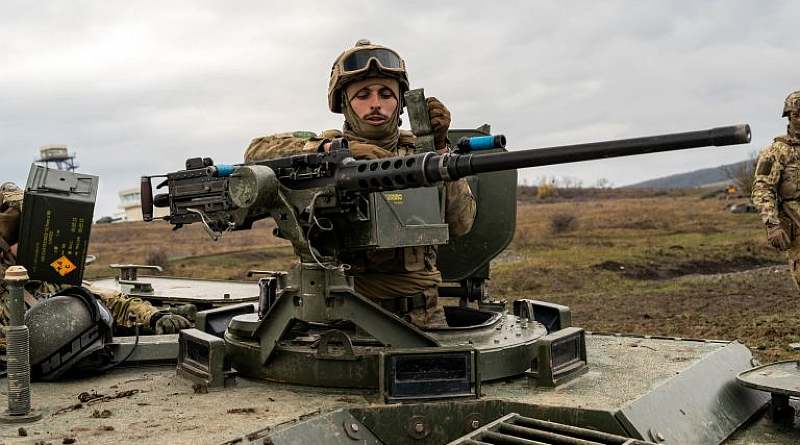
Multinational battle groups and brigades are already stationed on the eastern flank of the Alliance – from Finland and the Baltic states to Poland, Slovakia, Hungary, and Romania.
Davis emphasizes that according to NATO doctrine, these forces have the right to act in self-defense. If Russian forces directly attack them or cross a NATO country’s border, commanders on the ground do not need to wait for additional political permission to respond.
At the same time, according to him, open Russian aggression would hardly be a complete surprise.
It would most likely be preceded by troop movements, force build-up, and other signs of preparation – similar to what occurred near Ukraine’s borders in 2021.
That is why NATO constantly monitors so-called indicators and warnings of possible hostile intentions. This includes ground force movements, air and naval activity, radio exchanges, satellite data, and other signals.
Davis notes that NATO air patrol units have already used force against drones violating Alliance member airspace, and a joint intelligence, surveillance, and reconnaissance system operates on the eastern flank.
NATO command can begin troop deployment even before an attack
One of the important changes after 2022, according to Davis, is the expansion of the powers of the Supreme Allied Commander Europe (SACEUR).
According to him, SACEUR has delegated political authority to deploy individual elements of the Allied Reaction Force or the Force in full in a region or state potentially threatened by Russian aggression.
For this, he does not need to wait for a separate decision from the North Atlantic Council.
Davis considers this a significant change compared to the pre-war system. It allows the military command to increase readiness and deploy forces even at the stage when intelligence is only recording Russia’s preparations for a possible attack.
At the same time, he differentiates between deployment of troops and their combat use.
If NATO has not yet been attacked, the use of forces against Russia in response to potentially hostile actions will require a political decision by the Alliance and corresponding rules of engagement.
After an actual attack, the situation changes.
The state that becomes a victim of aggression can invoke Article 5 of the Washington Treaty. Additionally, individual allies can provide it with assistance without waiting for a collective decision by the entire Alliance. At the same time, such a state will likely immediately request consultations under Article 4 or a collective NATO decision to apply Article 5.
Davis cites the example of 2014, when after the onset of Russian aggression against Ukraine, the U.S. deployed additional air and ground forces to the Baltic countries.
In the case of an open attack, Davis does not consider attribution to be the main problem
One potential scenario of Russian strategy is often mentioned as an attempt to create uncertainty about who exactly carried out the attack, to slow NATO’s political response.
Davis believes that in the case of open military aggression, the possibilities for this will be limited.
Crossing the border by regular troops, strikes with cruise or ballistic missiles, or massive use of drones, in his opinion, can be relatively easily identified and linked with Russia.
He explains this by noting that NATO’s capabilities in air surveillance, border protection, and intelligence on the eastern flank have significantly increased. Therefore, according to Davis, in the event of obvious military aggression, it is unlikely that a situation will arise where the allies will not have sufficient evidence of the attack.
The situation is different with hybrid attacks. Davis acknowledges that in such scenarios, determination may be more difficult. For example, if unmarked drones attack a German transport carrying goods to Ukraine, Russia might try to use the uncertainty to deny its involvement.
Davis considers the risk of NATO “paralysis” to be low
When asked whether NATO might “freeze” at the moment of decision-making, Davis replies that he considers such a risk to be low. He is more concerned about the lack of a coordinated, timely collective military response.
At the same time, he points out that in the eastern flank countries, troops from many Alliance members are already present. In the Baltic countries, Poland, and other states in the region, units from the USA, the UK, Germany, Canada, France, and other allies are deployed.
According to Davis, this significantly complicates the scenario of a localized attack for Russia.
If military personnel from several NATO countries come under attack, the governments of these countries will be forced to react regardless of how quickly a formal consensus in the North Atlantic Council is reached.
He emphasizes that these countries already have plans to reinforce their contingents and, in the event of a crisis, can begin to implement them within a few days.
This is where Davis sees one of the main functions of advanced troop deployment: a significant number of allies are effectively involved in defending the eastern flank even before a potential war begins.
The main dispute may arise over the scale of the response
According to Davis, in the event of an open Russian attack, the main point of discussion within NATO may not be whether to respond, but what the scale of that response should be.
In particular, allies will have to decide which Russian targets can be attacked and how extensive the strikes should be to stop aggression without causing uncontrolled escalation.
Davis considers the Russian forces directly launching attacks from Russian territory on a NATO state as obvious targets. He describes this logic with the formula: NATO should not just “catch all the arrows,” it can “hit the archer.”
According to Davis, this approach aligns with the Alliance’s defense policy.
At the same time, he suggests that NATO will try to avoid striking objects directly connected with Russian nuclear forces. This includes nuclear submarines, strategic bombers, and other systems that can be used for nuclear weapons delivery.
Here, he assesses that escalation control will be particularly important for the Alliance.
Will all allies support Article 5
Davis is skeptical of the assumption that a NATO country, itself fearing Russian aggression, would refuse to support the application of Article 5 in the event of a clear attack on another ally.
According to him, every state must understand that it could be the next target of aggression. At the same time, he recalls that Article 5 does not automatically oblige each country to send troops or provide assistance in the same form, except for commitments already agreed in defense plans.
Countries can provide different types of assistance according to alliance plans and their own capabilities.
Davis also highlights the political factor. He believes it is important to monitor how governments formed by far-right forces in certain major European states might influence preparedness for collective defense in the future.
He mentions “Alternative for Germany” and the French “National Front” (now “National Rally”) as examples. However, Davis doubts that even political differences among some allies could completely block the actions of SACEUR and joint force commanders.
One of the greatest risks is a Russian miscalculation
Separately, Davis warns of the risk that Russia might misinterpret NATO’s readiness to respond. According to him, Moscow may assume that allies will hesitate, seek to avoid escalation, or fail to reach quick agreement.
But such a calculation could prove wrong.
Davis suggests that after an attack, some allies may insist on a very tough response—not only against the Russian forces directly involved in the aggression but also showing readiness to strike other groups if Moscow continues to escalate.
He states that this creates the risk of both horizontal escalation—meaning geographical expansion of the conflict—and vertical escalation, where the parties resort to increasingly powerful means.
Against this backdrop, Davis highlights NATO’s vulnerability to massive missile and drone attacks. In his assessment, the Alliance does not yet have as integrated an air and missile defense system as Ukraine has developed during the war.
A direct attack on the Baltics is currently less likely than hybrid warfare
Davis acknowledges that NATO is increasingly taking the possibility of a limited Russian attack on the Baltic states seriously. One concern is that the Kremlin might see a “window of opportunity” before the eastern flank’s defense becomes significantly stronger. However, Davis assesses the likelihood of such a scenario as relatively low while Russia continues its large-scale war against Ukraine.
According to him, as long as Russia is at war with Ukraine, it would be difficult for it to carry out a limited ground invasion of NATO territory.
He notes that the capabilities of Ukrainian forces to conduct combined arms operations and use autonomous systems for advancement point to this. If Russia diverts its attention from Ukraine and attacks a NATO country, it will struggle to retain the captured territory.
Instead, Davis considers the continuation and intensification of hybrid warfare much more likely. At the same time, he is concerned about the vulnerability of European allies to air and missile threats.
Poland and the Baltic countries are already preparing for possible escalation
Davis recently visited Poland, Latvia, and Lithuania. He was in Warsaw, Rzeszów—a major aviation and logistics hub for allied support to Ukraine, Vilnius, and Riga. According to him, these countries take the Russian threat very seriously and share Denmark’s assessment of the strengthening of Russian “shadow war” and the potential for further aggression.
Latvia and Lithuania are enhancing early warning on their eastern borders, creating engineering obstacles, preparing defense and reinforcement plans, and constantly exchanging intelligence information. According to Davis, Estonia is conducting exercises to strengthen the eastern direction in case of an attempted territorial seizure.
Davis believes that such a system increases the likelihood that allies will detect Russia’s preparations for a large-scale ground operation in advance.
Davis: The problem is not whether there will be a response, but its speed and scale
Ultimately, Davis assesses the likelihood of a scenario where Russia carries out an overt military attack and NATO does not respond at all as low. He is more concerned about the possibility of an insufficiently rapid or not well-coordinated collective response.
Meanwhile, multinational forces already deployed on the eastern flank, in his estimation, significantly reduce the risk of complete political paralysis: an attack on one NATO state is highly likely to immediately involve the military forces of several allies.
Davis cites a possible miscalculation by Russia as a separate risk. The Kremlin might believe that NATO will hesitate or limit its response. However, he suggests the allies’ reaction could be quicker and harsher than Moscow expects.
That is why, in Davis’s view, not only the Alliance’s readiness for defense is crucial, but also the ability to swiftly manage escalation after the conflict begins.
Photo: NATO
