
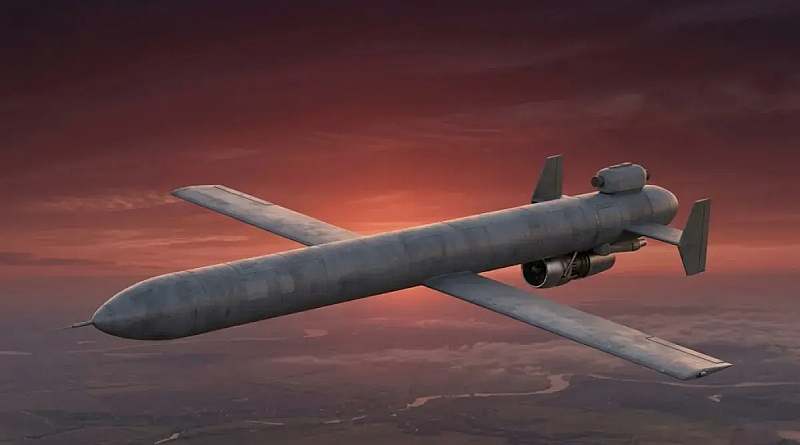
Ukraine may return to blackout measures if Russia begins mass use of drones equipped with the optical navigation module “Susanin”. This was stated by Ukrainian presidential advisor, military radio technology specialist Serhiy “Flash” Beskrestnov.
“In 2022, we did this out of fear and misunderstanding, but now, we may have to act consciously,” Beskrestnov wrote.
He predicts that if Russia starts using the “Susanin” optical navigation module en masse on “Gerań-5” and other UAVs (missiles) at night, “Ukraine may have to reconsider blackout measures.”
“This particularly concerns the lighting of roads and sections of highways,” says Flash.
In 2002, in the early months of the major war, there was much speculation about the need for blackout measures, even though Russian missiles then did not operate on light.
Earlier, the GUR reported that the new modification of Russian reactive drones “Gerań-4” had an additional autonomous navigation system called “Susanin”.
It is designed to reduce the drones’ dependence on satellite signals and increase their resistance to electronic warfare (EW) means.
The system operates on an optoelectronic correlation principle.
It compares images from the drone’s optical sensor with reference terrain frames pre-loaded into the onboard computer’s memory.
This allows the drone to check its route from launch point to target point and navigate even in conditions of active satellite signal suppression by EW means.
The GUR reminded that the DSMAC system is not a complete replacement for satellite guidance due to its lower accuracy, so it is used as a backup mechanism.
On October 28, the GUR also stated that Russia continues to improve its reactive UAVs.
“In particular, the new modification of the “Gerań-4” received additional means of autonomous navigation, including an optical terrain image matching system. A similar system is integrated into the “Gerań-5″ — version K5,” stated the GUR.
Dependence on Lighting
A key drawback of the “Susanin” module is its strong dependence on lighting conditions, notes the publication “Military Aviation”.
The system’s accuracy is affected by the angle of sunlight, the time of year, and even the specific time of day due to varying shadow lengths. At night, DSMAC performs noticeably worse unless additional lighting or special frame processing is used.
Despite this, the Russian military consciously makes compromises: they often deploy aircraft with this system at night, sacrificing navigation accuracy to make visual detection and interception by Ukrainian mobile fire groups more difficult, writes “Military Aviation”.
The blackout regime was introduced in Ukraine at the beginning of the full-scale invasion. It lasted throughout the country for about three months.
On the cover: Russian reactive drones “Gerań-5” in K5 modification equipped with the autonomous navigation system “Susanin”, which increases resistance to EW means but has dependence on lighting. Illustration: “Military Aviation”
