
In the fifth year of the great war, signs of fatigue in the Russian state are emerging. Ukrainian strikes on energy have reduced budget revenues, recruitment rates are falling, and progress is slowing. However, Russia is waging this war not for Ukrainian territories, but to reshape the system of international relations in Europe.
Are there signs of the Kremlin preparing to open a second front, what is the role of the Baltics in its strategy, and why might the region hold the key to both victory and Moscow’s complete collapse?
In the previous article, we examined how Central European states are preparing their citizens for war amid the growing threat of a Russian invasion. Such an action by the Kremlin may seem irrational, considering the slow advance of Russian forces in Ukraine, but it is entirely consistent with Moscow’s modus operandi. While Europe is not ready to repel aggression, its probability increases.
One of the less obvious characteristics of the current war is that control over Ukraine or its territories is not the ultimate goal of the Russian Federation. The costs of the war since 2022 and the losses from it have reached levels that will render territorial gains in Ukraine Pyrrhic for the Kremlin. Financial costs from the start of the aggression to the end of 2025 have reached 550 billion US dollars, but assessing losses solely in monetary terms is an oversimplification, as there is also concurrent degradation and primitivization of the Russian economy, a decline in consumer purchasing power (and thus the ability to support the economy through consumption), an exhausted labor market, and other negative processes whose effects cannot be corrected in the medium term. This is accompanied by the loss of Soviet equipment stocks at a rate exceeding production capacity. If Moscow agrees to peace and gives geopolitical opponents enough time to prepare, it will enter the next conflict less capable than it is now. Thus, Kremlin’s strategy excludes a sustainable peace in the near future.
China, the senior partner of the Russian Federation, is also not interested in peace in Europe. It benefits from forcing Washington to expend resources supporting Ukraine or NATO forces in Europe, diverting attention from the Pacific region. Russian aggression additionally opens a path for China to pressure EU leaders while pushing Russia toward deepening an unequal economic cooperation with Beijing. This situation guarantees China cheap energy resources and a strategic reserve in case of escalation following a possible attack on Taiwan, which could draw Beijing into armed conflict with the United States and possibly their allies in the region.
The strategic goal of Russia, synthesizing the statements of its representatives, is to destroy the unipolar world of US hegemony and establish multipolarity, which in the context of the Kremlin should be understood as a return to the concept of great powers with established spheres of influence recognized by other major powers. An empire in essence, yet without sufficient means for economic expansion or as an author of values (the Russian integration project suffered a fatal defeat in Ukraine in 2014), Moscow has no other means to achieve this goal except by military means. Russia will consider the breakup of NATO or its retreat from its borders to the limits of 1997 as an indicator of achieving its goal, increasing the vulnerability of states of the former socialist bloc to Russian ultimatums.
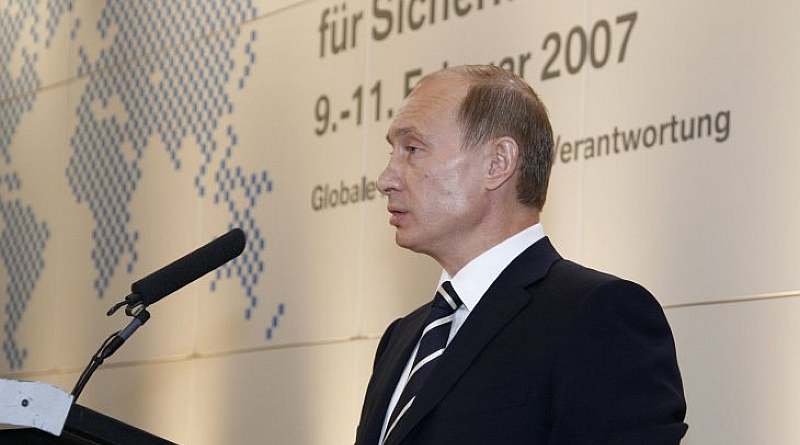
This foreign policy maxim was consistently articulated by President Putin in his famous Munich speech in 2007, his December ultimatum in 2021, and likely during closed rounds of negotiations with the U.S. throughout and ahead of Russia’s war against Ukraine. Notably, in 2021, NATO Secretary-General Jens Stoltenberg, without the knowledge of the Alliance members, offered Moscow to transform the Baltic states into a buffer between NATO and Russia.
The way to achieve the goal—both the effective demise of NATO and the return of Moscow’s sphere of influence due to the already mentioned lack of means—is military aggression against Alliance members. The most likely target is the Baltic states. The slow pace of Europe’s re-militarization, strained relations between the subcontinent and the U.S., and Washington’s apparent disinterest in supporting Ukraine create a window of opportunity to implement aggression.
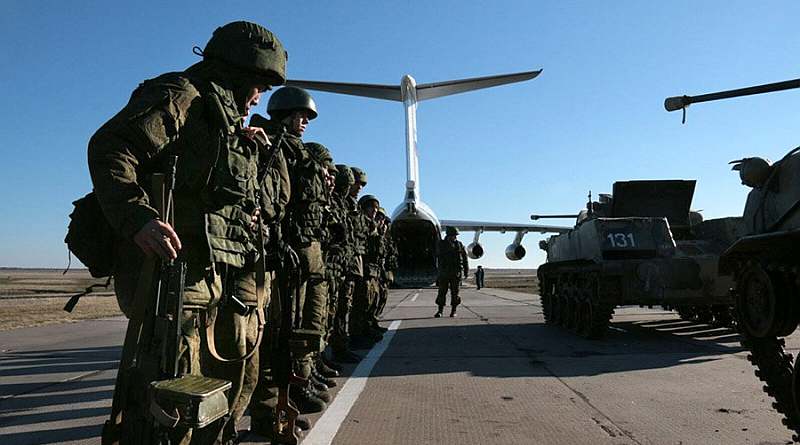
Since the first year of the invasion, Moscow has been carrying out a large-scale military reform, transitioning from a rather Western model of an army as expeditionary forces to a force for full-scale war. In December 2022, the Russian leadership announced intentions to restore the Moscow (aimed against threats from Europe and Ukraine) and Leningrad (directed at the Baltic and Scandinavia) military districts, with a decree signed in February 2024. This initiated the creation of new military units through which Russia is consistently increasing its military presence near its northwestern borders.
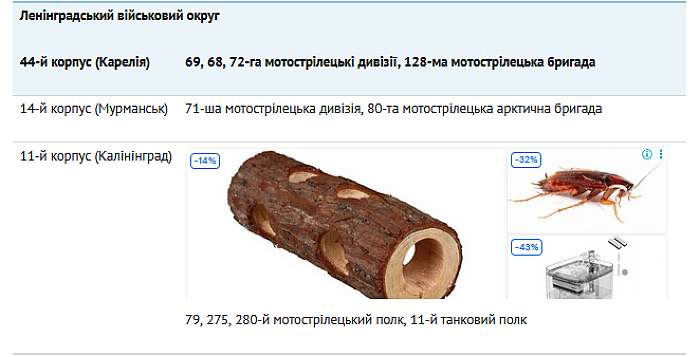
Within the 6th Army, the 44th Army Corps (Petrozavodsk) was formed, and the 138th and 25th Guards Motor Rifle Brigades were expanded into the 69th and 68th Motor Rifle Divisions (Vyborg and Luga). Within the 44th Corps, the 128th Motor Rifle Brigade and the 72nd Motor Rifle Division were additionally formed. In another formation within the Leningrad Military District, the 14th Army Corps, the 71st Division was created based on the 200th Motor Rifle Brigade; the corps also includes the 80th Arctic Brigade. Additionally, the 11th Army Corps from the Kaliningrad exclave was transferred to the LVO from the Baltic Fleet’s subordination: the 79th, 275th, and 280th Motor Rifle Regiments and the 11th Tank Regiment.
It is important to note that most of these military formations and units are participating in combat operations on the territory of Ukraine, so their actual combat capability is likely lower than stated; however, the replenishment process is continuous. Meanwhile, the current tactic of assaults in the Russian Armed Forces is primarily based on the quantity of infantry personnel rather than its quality or established inter-unit cooperation. In the event of a reduction in the intensity of hostilities, particularly offensive ones, with the current level of replenishment, the LVO would be able to saturate its formations with new recruits in relatively short terms. However, compensating for equipment losses is significantly more challenging.
A factor that could significantly increase the Russian Armed Forces’ capabilities for aggression against the Baltic is a possible new wave of mobilization, rumors of which intensified in the Russian political and military information space in February-March 2026. The nature of the measures is uncertain, as are the objectives, but given the decrease in volunteer recruitment, which poses a threat to Russia’s ability to maintain the current level of pressure on the front in Ukraine, mobilization may be a forced step by the Kremlin to maintain combat capability and may not be related to Moscow’s plans regarding the Baltic.
In addition to land forces, the Russian Federation possesses air and naval military components in the region: airbases Chkalovsk, Chernyakhovsk, Besovets, Khotilovo, Pushkin, as well as the Baltic Fleet. However, considering the experience and results of the Black Sea Fleet’s actions against Ukraine, it is reasonable to assume that the Baltic Fleet will not play a leading role in the event of a hypothetical attack. There are several reasons for this: the small size of the Baltic Sea overall and the narrow Gulf of Finland in particular, where the Russian fleet is enclosed, creating conditions where both Russia and NATO states in the region can keep enemy ships under the threat of anti-ship missile systems. Russia’s advantage is Lake Ladoga, into which, as part of tests, part of the fleet has been deployed, potentially allowing missile carrier ships to launch under the cover of St. Petersburg’s ground-based air defense.
By 2026, additionally, as part of the establishment of separate unmanned systems forces, the formation of three UAV battalions and one counter-UAV battalion is planned in the Leningrad Military District. Currently, there is no data on the creation of these units; the most likely reason for the delay is a lack of funding. However, if the plan is implemented, the Russian Armed Forces will strengthen their forces directed at the Baltic, with the NATO armies having limited experience and capability to counter them.
War Thoroughfares
The Baltic direction is considered, though not the only one, the most likely vector of a Russian Federation attack on Europe. The reason lies in its location—with respect to security and logistics, the Baltic region can be described as a peninsula, limitedly accessible for NATO and completely open to attack from the east due to the extensive borders of its states:
- Estonia: 338 km of border with Russia (135 km is land);
- Latvia: 283 km of border with Russia and 173 km with Belarus;
- Lithuania: about 680 km of border with Belarus.
Moreover, land connection with other NATO and EU countries is only possible through the Suwałki Corridor – a narrow strip of Lithuanian-Polish border, 64 km wide, threatened from the east by Minsk and from the west by the Kaliningrad region.
An additional challenge is the mismatch of the Baltic States’ railway network, which is almost entirely based on the Soviet gauge of 1520 mm, with the European standard of 1435 mm. This discrepancy critically complicates NATO’s military logistics. Any cargo from Europe will have to be reloaded at the narrow “bottlenecks” of the Lithuanian stations Mockava or Sestokai, which will become priority targets for Russian strikes in the first minutes of a conflict.
Also, a single gauge standard could facilitate the supply of Russian forces in case of aggression. The RF Armed Forces have 10 railway troops brigades capable of rapid repair and track laying in combat conditions, as already demonstrated in Ukraine. The same gauge standard is of course used in Belarus, which is partially controlled by the Kremlin.
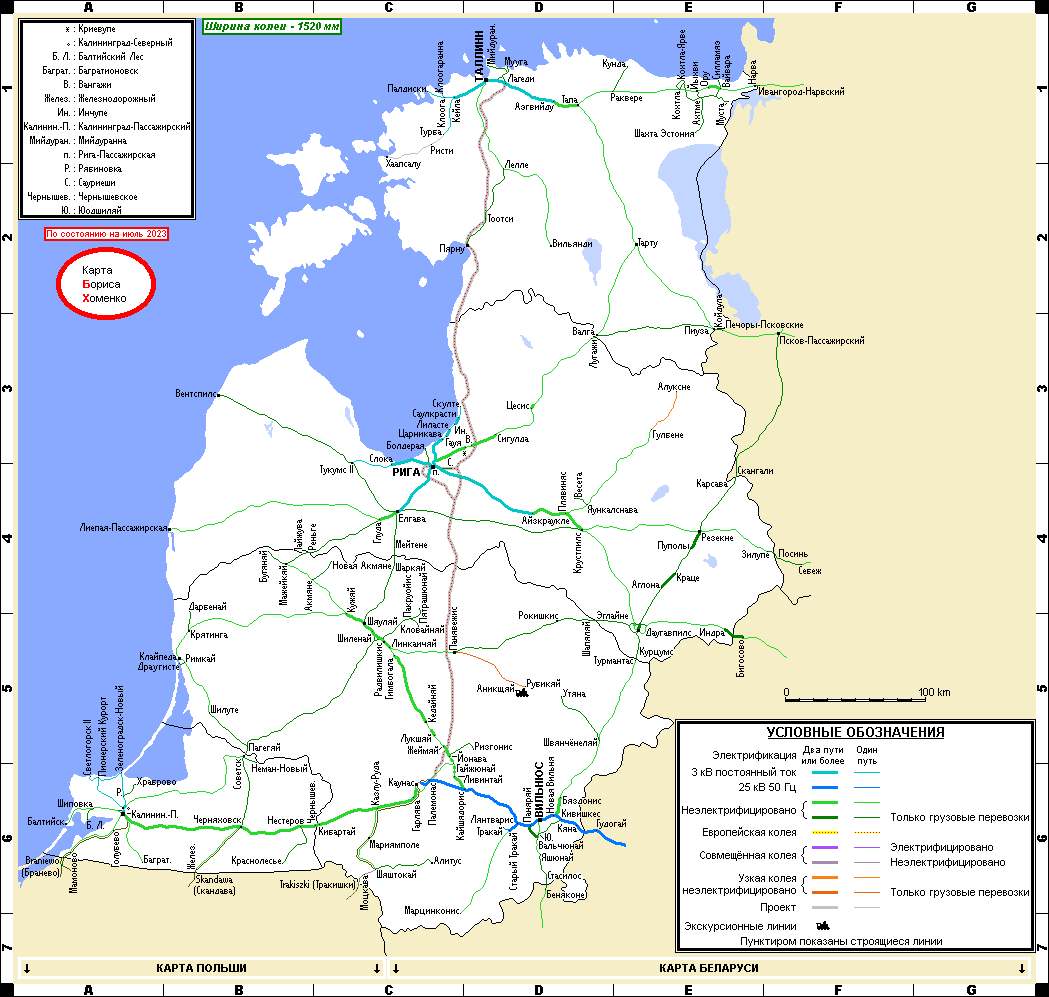
So far, the Lukashenko regime has demonstrated enough independence not to allow its armed forces to be directly drawn into RF Armed Forces’ combat actions. However, in 2022, Minsk allowed Moscow to use its territory to launch an offensive on northern Ukraine, and subsequently, from Belarusian territory, Russia carried out missile and drone attacks on Ukraine. As a result, while the involvement of Belarusian Armed Forces in potential Kremlin aggression against Europe cannot be considered guaranteed, for Lukashenko, it would only mean losses. Nevertheless, considering the deepening cooperation with the Kremlin over recent years and isolation from the EU, it is assumed that Russia would use Belarusian territory as a foothold if it has such a strategic need. This consideration is appropriately supported by the fact that the RF Armed Forces practiced the scenario of an attack on NATO countries from Belarusian territory during the “Zapad” military exercises. These exercises are held every 4 years (the latest were in 2025; the 2021 exercises were used to cover the preparation for the invasion of Ukraine).
Minimum and Maximum
Critical question: what format might the Kremlin’s aggression against the Baltics take if it begins at all? The Russian Armed Forces’ offensive in Ukraine has over the years transformed from mechanized column attacks to slow infantry infiltration by groups of 1-2 soldiers. Several reasons for this include the high density of Ukrainian FPV drones and artillery, depletion of Russian armored stock, and strong Ukrainian air defense that limits Russian aviation. The Russians are forced to disperse infantry as much as possible to ensure survival during task execution.
This model of offense might be inappropriate to apply to possible plans against the Baltic states, as NATO countries have yet to develop sufficient capabilities to counter drones and utilize their own as offensive tools. In 2025, the Baltic states, Poland, Finland, and Norway launched the “Drone Wall” project (later “The European Drone Defence Initiative”), aimed at enhancing Europe’s protection from drone attacks. However, the implementation pace remains slow, and results are uncertain. Therefore, the Russian Armed Forces might be able to apply a more aggressive offensive tactic than in Ukraine, as current capabilities of the Baltic states and NATO might allow them to do so.
The main deterrent factor for Russia is the need to redirect part of the military resources from the Ukrainian front as well as redistribute the intake of new recruits, which will be critical to maintaining the pace of the offensive. Since the exact operational plans of the Kremlin remain unknown, it is prudent to model two basic scenarios: “Maximum” and “Minimum,” acknowledging that intermediate options are possible.
As mentioned above, the Kremlin’s strategic goal in the war is to push NATO back to the borders of 1997 or to lead to its actual destruction, allowing for claims of regional leadership or influence over the former socialist bloc states.
As part of the Maximum Scenario, Russia may aim for a complete land cut-off of the Baltics from Europe by attacking the Suwałki Corridor from Belarus and possibly Kaliningrad, as well as striking vulnerable border cities of the Baltic states:
Vilnius, the capital of Lithuania, 30 km from the Belarusian border, is the most critical target because the loss or encirclement of the capital could paralyze Lithuania’s governance apparatus;
- Narva, Estonia, a city on the border with Russia;
- Daugavpils, the second city of Latvia, 30 km from the Belarusian border;
- Rezekne, an important logistical hub of Latvia, 50 km from Russia.
The main threat for Russia in this scenario, besides, of course, a clash with NATO, is the overextension due to the need to allocate significant forces to a full-fledged second front, which would require hundreds of thousands of servicemen and internal troops, even assuming that NATO would not be able to organize a counterattack against Russia, and the Baltic states would be left alone with the Kremlin. Therefore, today the likelihood of the Maximum Scenario should be considered low. The increase in its probability will only be indicated by a significant slowdown in the offensive operations of the Russian Armed Forces in Ukraine, the conduct of large-scale mobilization, and the clear accumulation of forces in Belarus.
A more realistic scenario would be the Minimum Scenario. To create a crisis that questions NATO’s capability, the Kremlin doesn’t need to capture the entire Baltics, but rather create a local crisis, for example, by capturing a border city—primarily referring to the Estonian Narva and adjacent territories.
The city is located directly on the border with Russia, featuring railway connections with Ivangorod. 97% of the 52,000 population speak Russian (2% speak Estonian at home). The city is economically depressed, with an unemployment rate of 10.5% (2023) compared to the national rate of 6.4%. The region suffers from youth outflow and emigration overall. In 1993, a referendum was held in the region (later declared illegal by the Estonian Supreme Court) regarding the proclamation of regional autonomy to protect the Russian-speaking population. The turnout was 54%, and 97% of voters supported autonomy. Although there are currently no separatist tendencies or organized forces in Narva, local Russian speakers feel discrimination and cultural segregation from Tallinn, potentially creating opportunities for Russia to exploit resentment in a hybrid war.
The forces needed to implement a scenario of attack and seizure of Narva are significantly smaller than in the Maximum scenario. Its implementation could threaten the full or partial collapse of NATO if its members fail to respond or regain control of the seized territories. The greatest doubts about readiness to act according to Article 5 are raised by the USA under Donald Trump’s leadership. The main risk for Russia in this scenario is a NATO attack on the Kaliningrad region, which the Kremlin is likely to try to prevent by nuclear blackmail.
Another threat for Russia is the complete blockade of trade through the Baltic ports, the main export routes of the state, which would endanger the Kremlin’s fiscal capacity overall. However, considering the potential prize, it is conceivable that Moscow might take this risk.
Conclusions
More than four years of war in Ukraine have not brought the Kremlin closer to achieving its strategic goals underlying the war—to push NATO back to the 1997 borders. The worsening socio-economic situation, dwindling volunteer recruitment, extremely slow progress of Russian Armed Forces in Ukraine, and the factor of Putin’s aging force Russia to look for ways to turn the situation in its favor to conclude the conflict with a victory.
The development of military infrastructure in the Leningrad Military District suggests that the probable target is the Baltic region. A hypothetical aggression is most likely to have a combined nature: an advance of equipment and infantry along with massive strikes by unmanned systems will be accompanied by hybrid destabilization of societies within the Baltic region (primarily in Estonia) and the use of the entire spectrum of political influence to sabotage NATO.
The main risks for Russia remain a lack of human resources, a NATO attack on Kaliningrad, and a blockade of Baltic ports. These factors do not guarantee Russia will refrain from aggression, as it continues to prepare military units in the region.
Thumbnail: Russian army. Photo: Occupier’s media
