
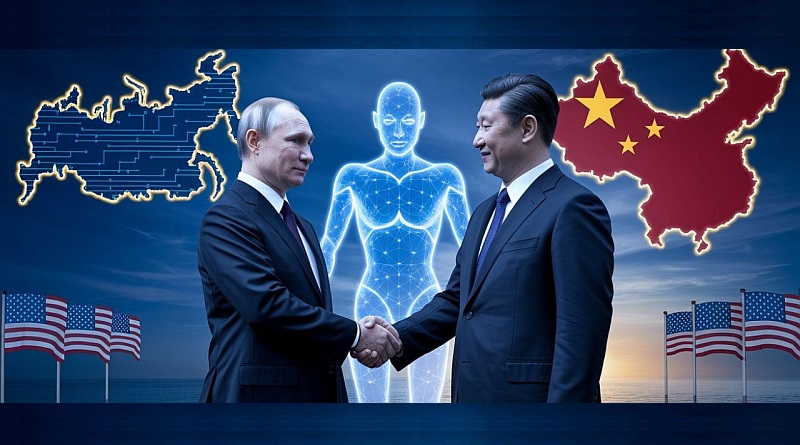

Information on current losses of the Russian Federation due to sanctions as of 04/17/2026.
1. Russian oil sea exports are declining and could drop to the lowest level since 2023 in April, highlighting the industry’s critical dependence on vulnerable port infrastructure.
– Mid-month shipments fell to their lowest levels since summer 2024, and exports plummeted by 16.1% during the week of April 6–12 — to 291 thousand tons.
– The hardest hit was Novorossiysk, where volumes fell by 73.2% — to just 19 thousand tons, effectively paralyzing one of the key export routes for Urals crude.
– The Baltic ports of Primorsk and Ust-Luga maintained shipments at 54 thousand and 46 thousand tons respectively, but this is not enough to compensate for the losses.
– Meanwhile, about 60% of Baltic exports are directed to India and another 33% to Turkey, indicating a narrow circle of dependent markets.
– The decline was caused by strikes on port infrastructure at the end of March — beginning of April, which disabled certain facilities in Ust-Luga, Primorsk, and Tuapse.
– As a result, export volumes have been declining for the second consecutive week, and market participants do not expect full Urals shipments from Novorossiysk to resume by the end of the month.
– It is estimated that by the end of April, sea exports could amount to only 310–360 thousand tons per day — the lowest in the past two years. Meanwhile, redirecting flows to other ports is hampered by pipeline system restrictions and a shortage of tankers, and the logistics overhaul requires at least two weeks.
– Additionally, the situation is worsened by the reduction of oil stocks in tankers: if previously up to 100 million barrels were afloat, now this volume may decrease to 10–20 million barrels, sharply limiting room for maneuver.
– Against this backdrop, even rising Urals prices and reduced discount do not bring the expected effect, as physical limitations do not allow an increase in exports. Average supply volumes have already dropped to about 3.2 million barrels per day, and the restoration of port operations is slow and with limitations.
– As a result, Russia finds itself in a situation where a favorable price environment does not convert into revenues, underscoring the systemic weakness of its oil export model.
2. Revenues to the Russian federal budget from oil and gas in April 2026 could rise to approximately 0.85 trillion rubles, which is 38% more than in March.
– However, even against this short-term rise, revenues remain significantly lower than a year ago: compared to April 2025, they will decrease by approximately 0.24 trillion rubles, or 22%.
– The growth is mainly attributed to a temporary factor — a sharp increase in global oil prices in March due to the escalation in the Middle East. The biggest contribution to April’s revenue will come from the mineral extraction tax (MET): it is expected to rise to about 0.4 trillion rubles, almost 91% more than in March. This resulted from the increased calculated tax price of Russian oil to approximately $77 per barrel against $44.59 in February.
– Despite the monthly recovery, the trend of annual decline indicates a gradual weakening of the key source of income for the Russian budget.
– Dependence on external price shocks and a reduction compared to last year demonstrate the instability of the oil and gas model of financing government expenditures during the wartime period.
3. Russia is considering the possibility of deploying nuclear weapons in orbit, which could lead to massive destabilization of global infrastructure and ultimately undermine the remnants of international space regulations.
– According to the head of the U.S. Space Command, General Stephen Whiting, the discussion involves creating an orbital anti-satellite charge that, if detonated, could disable up to 80% of all satellites — effectively paralyzing communication, navigation, intelligence, and a significant portion of civilian services worldwide.
– Such a scenario, already termed a potential “space Pearl Harbor,” would mean a direct violation of the Outer Space Treaty and a sharp escalation of global conflict.
– Meanwhile, Moscow, according to U.S. assessments, has increased its activities in space after the war against Ukraine began, including extensive GPS and satellite communication jamming, creating risks for civilian aviation in Europe.
– Russia is increasingly resorting to asymmetrical and risky strategies, reflecting not technological leadership, but an attempt to compensate for lagging behind through radical methods.
– The idea of using nuclear weapons in space appears to be an extreme measure, which could have uncontrolled consequences for Russia itself, as the destruction of satellite infrastructure would also impact its own capabilities.
– Simultaneously, the U.S. and its allies are increasing investments in space defense, while China is developing its own anti-satellite technologies, gradually turning space into a new arena for global rivalry.
– In this context, Russia’s actions only accelerate the militarization of space and increase the risk of conflict, where it no longer appears as an equal technological player, but rather as a source of escalation.
4. South Korea is gradually reducing the share of Russian LNG in its import portfolio.
– In March 2026, the cost of supplies from Russia decreased by about half month-on-month — to 61.5 million dollars, marking the lowest point since June 2025. By the end of the first quarter, Russian suppliers lost about 22% of revenue compared to the same period last year.
– Russia dropped from seventh to eighth place in the ranking of gas suppliers to South Korea. The vacated volumes were quickly taken by other exporters. The top five suppliers include Australia with approximately 692 million dollars in deliveries, as well as Malaysia, Canada, China, and the USA.
– Despite political disputes over American energy exports, the United States supplies more LNG to South Korea than Russia. This trend indicates Moscow’s gradual loss of position in one of the key Asian energy markets, while other countries actively fill the emerging gap.
– Meanwhile, Asian buyers are increasingly using alternative supply sources or reselling LNG batches among regional traders.
5. A new scandal is unfolding in the United Kingdom regarding attempts by the Russian oil industry to circumvent international sanctions.
– The National Crime Agency has charged 75-year-old British financier John Michael Ormerod with money laundering and violating sanctions against Russia.
– The investigation believes he was involved in creating the infrastructure for transporting Russian oil via a so-called “shadow fleet,” used to bypass restrictions imposed after Russia’s full-scale invasion of Ukraine.
– According to the investigation, Ormerod organized the purchase of at least 25 used oil tankers from December 2022 to August 2023. The total value of the transactions exceeded 700 million dollars. The vessels were registered through a network of offshore companies on the Marshall Islands, allowing the concealment of actual buyers and actual control over the fleet.
– The financing came from the Dubai company Eiger Shipping DMCC, associated with Litasco — the trading arm of the Russian oil company Lukoil. After acquisition, these tankers transported over 120 million barrels of Russian oil, with about 97% of all shipments attributed to Lukoil.
– The investigation believes the scheme was created to systematically bypass Western restrictions on the transportation of Russian oil. The Russian oil sector is increasingly relying on opaque financial structures, offshores, and intermediaries abroad to maintain exports and foreign currency earnings under sanction pressure.
6. Slovakia promises to block EU sanctions against Russia but supports a loan to Kyiv.
– Slovakia has threatened to block new European Union sanctions against Russia, attempting to use the sanctions mechanism as leverage in the dispute over oil transit through Ukraine. This was stated by Slovak Foreign Minister Juraj Blanár.
– According to him, Bratislava is ready to halt the adoption of the next package of restrictions against Russia if it does not receive “transparent and verifiable” guarantees from Kyiv for the restoration of oil pumping through the damaged Druzhba pipeline across Ukrainian territory.
– At the same time, the Slovak authorities have made it clear that they will not block financial support for Ukraine. Blanár announced at a meeting of the parliamentary committee on European affairs that Slovakia will not impede the provision of a 90 billion euro loan to Kyiv.
– This position effectively represents a softening of the rhetoric of Prime Minister Robert Fico’s government, who previously threatened to completely block any aid to Ukraine amid the dispute over the pipeline damaged after a drone attack in January. Kyiv denied these accusations.
– The change in Bratislava’s position indicates that the Slovak government may gradually be moving away from a hard line that previously played into the interests of the Kremlin and undermined EU unity on supporting Ukraine and sanctioning the Russian economy.
– The situation was also influenced by the political weakening of Hungarian Prime Minister Viktor Orban — one of Fico’s key allies in attempts to block European decisions regarding countering Russia.
7. In the United States, discussions are underway on the possibility of imposing sanctions against companies from China and Russia due to suspicions of illegally copying American artificial intelligence technologies.
– The initiative involves responding to instances of using AI models to create equivalents without the developers’ permission. The bill, titled “Preventing the Theft of American Artificial Intelligence Models Act,” was introduced by Republican Congressmen Bill Huizenga and John Moolenaar.
– It provides for identifying organizations in China and Russia engaged in unauthorized copying or data extraction from American AI systems, with subsequent blacklisting and potential sanctions.
– Potential targets include Chinese laboratories DeepSeek, Moonshot, and MiniMax, as well as companies Alibaba and ByteDance. American lawmakers view such practices as a form of technological espionage aimed at rapidly replicating advanced developments.
– The initiative was prompted by statements from AI developers, including OpenAI, Anthropic, and Google, reporting cases of creating copies of their models through “distillation” — training new systems on the results of existing ones.
8. China and Russia have become the eyes of Iran in the sky.
– During the 40-day war in the Middle East, Iran likely used Russian and Chinese space technologies to guide strikes on American targets. Alongside a Chinese satellite, Russian devices were also operating over the region, transmitting images of targets almost in real-time.
– One of the most notable episodes was the strike on March 27 against an E-3 Sentry airborne warning and control system aircraft valued at about $500 million. This incident caused significant concern within the US command, as it pointed to an unexpectedly high level of intelligence capabilities by Iran, which it cannot independently provide.
– Sources close to the Iranian military directly confirm the use of Russian and Chinese technologies, emphasizing their effectiveness. At the same time, this demonstrates that Russia effectively acts only as one of the data suppliers in a broader cooperation, where China increasingly plays a key technological role.
– Modern conflicts are transitioning into a phase of total surveillance from orbit, where the advantage is determined not by the amount of weaponry but by access to accurate intelligence data.
– Russia’s participation in transferring such data to Iran appears as an attempt to maintain influence through risky cooperation, but at the same time, it highlights its dependence on joint projects and gradual lag in the high-tech segment.
