
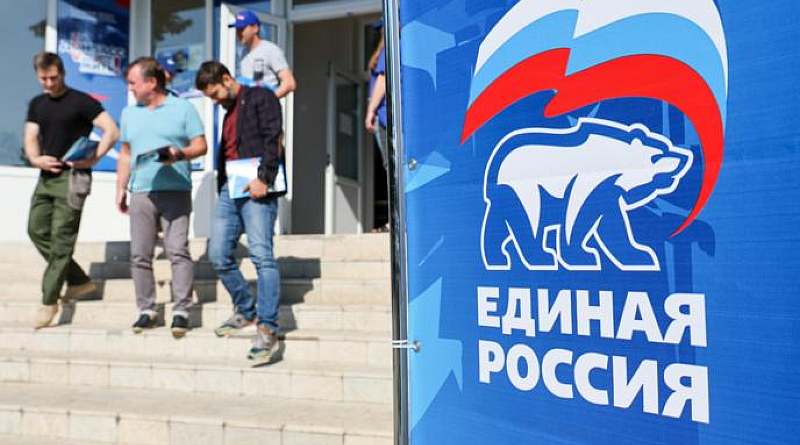

The start of the election race for the State Duma highlights deep systemic contradictions in the architecture of Russian domestic politics.
The Kremlin’s political technologists are making an obvious bet on a total hollowing out of the information field, aiming to plunge voters into a state of managed apathy. However, the handcrafted calm in the media space resonates irresistibly with the grim reality where the daily lives of residents of metropolises and border regions are shaped by explosions and alarming sirens.
According to June studies by the Center for the Study of Political Culture of Russia, the ruling “United Russia” has managed to restore undisputed dominance on key media platforms. The completion of the preliminary intra-party voting paradoxically did not lead to a decline in the activity of the functionaries. On the contrary, in the first half of June, the party chronicle filled the air despite the lack of significant news hooks. At the same time, systemic players like the Communist Party or “A Just Russia” lost the remnants of their platform, while the LDPR and “New People” finally entrenched themselves as voiceless satellites.
Simultaneously, managers from the Presidential Administration have imposed strict censorship, reminiscent of an unspoken moratorium on any toxic topics. Irritating stories that disturbed minds in the spring instantly vanished from the federal discourse: forthcoming tax reforms; tightening control over businesses; blocking VPN services; potential restrictions within Telegram.
If spring discussions served as a backdrop for the possible resumption of mobilization activities, now the subject of troop recruitment has been deliberately pushed to the distant periphery of public consciousness to demonstrate an illusory stability.
The political technologists’ plan for the artificial pacification of the masses collapsed due to the inability of the Russian air defense to control the skies. Regular raids by Ukrainian drones on the metropolitan region and federal entities disrupt the well-calibrated grid of media control.
According to experts from the field of political consulting, military realities completely devalue any PR strategies of the ruling party. Drones and missile strikes have become the defining factor of the agenda, one that official reports cannot overshadow.
The clichéd rhetoric of the ruling camarilla, focused on paternalism, support for combatants, and upbeat declarations of the so-called “people’s program,” appears archaic. Against the backdrop of declining economic expectations among citizens and a subconscious sense of vulnerability even deep in the rear, such slogans provoke only a stifling of electoral interest.
The current political calm is perceived by the overwhelming majority of the population solely as a temporary respite before an inevitable storm.
The main demand of the voter today lies beyond party reporting. Society is fervently seeking a clear perspective on the end of Putin’s unnecessary war and the contours of the post-war future of the country. The inability of the current elite to offer a tangible vision of tomorrow turns total control over the press into a useless tool, incapable of transforming into genuine growth in ratings.
