
Andrew A. Michta, RealClearDefense / Translation iPress
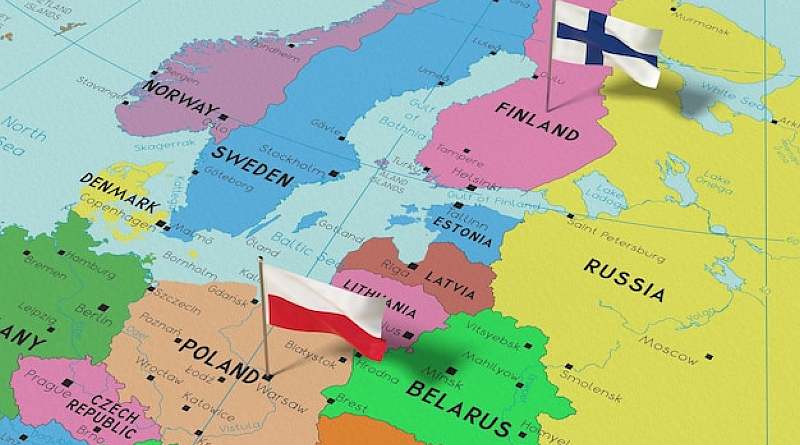
The professor of strategic studies at the Hamilton School at the University of Florida and a non-resident senior fellow at the Atlantic Council, Dr. Andrew Michta believes that NATO’s strategic center of gravity is shifting from Central Europe to the northeastern flank—from Finland through the Baltic region to Poland. These countries, which lived under Soviet rule for decades, understand the threat from Russia best and invest the most seriously in their own defense. Washington needs to recognize this reality and reorient its strategy, making the North Baltic-Polish corridor the new support of the Alliance. Poland, undertaking the most ambitious military modernization program on the continent, according to Andrew Michta, is increasingly becoming the anchor of the renewed collective defense architecture. We hope he focuses on Poland only because it is a NATO member: nowadays it is clear to everyone that Ukraine is the core of future European security and defense.
Throughout most of the Cold War, NATO’s center of gravity was West Germany. American troops were stationed there because Germany was the front line. The Fulda Corridor remained the most dangerous vulnerability of the Alliance, and American strategy reflected this reality. Today, the strategic geography of Europe has changed, but NATO’s perceptions have not fully caught up with these changes. A new geostrategic outline of Europe is already emerging. However, Washington has yet to update its strategy accordingly.
The key space for the Alliance no longer runs along the old division line between East and West that defined Cold War planning. Now it stretches from Finland through the Baltic region to Poland. This North Baltic-Polish corridor has become the most important military frontier in Europe—and the part of NATO that takes its own defense most seriously. Russia’s invasion of Ukraine did not create this shift, but merely exposed it. For three decades after the Cold War, much of Europe operated on the assumption that military threats on the continent had largely disappeared. Defense budgets were cut. Ammunition stocks were depleted. The defense industry narrowed. It was believed that economic integration would achieve what deterrence once sought.
When Russia reemerged as a revisionist state, many European governments found that military potential can quickly be destroyed, but rebuilding it takes years.
The contrast within NATO is striking. While much of Western Europe reduced defense spending and readiness, countries bordering Russia reached different conclusions. Poland started one of the most ambitious military modernization programs in Europe. Finland maintained large reserves and a strong culture of national defense. The Baltic states invested significant funds despite limited resources. Sweden reversed long-standing defense cuts and joined the Alliance.
The countries that form the North-Baltic-Polish corridor did not have the luxury of misinterpreting geography. They understood that deterrence relies on real capabilities, not declarations. This new northeastern bloc embodies a phenomenon increasingly rare for Europe: a concentration of allies who share both threat assessments and strategic priorities. During the Cold War, such a consensus existed in most NATO countries. Now it is strongest along the northeastern frontier of the Alliance. Washington should take this into account.
The United States has compelling reasons to remain an indispensable security partner for Europe. However, the era when America could indefinitely subsidize European defense while preparing for strategic competition with China is coming to an end.
With national debt approaching $40 trillion and growing needs in the Indo-Pacific region, the United States cannot simultaneously remain Europe’s main protector in conventional arms and a balancing force in Asia. Nor should it.
The answer is not America’s withdrawal from Europe, but a more balanced division of responsibilities. NATO allies must assume primary responsibility for conventional deterrence and defense on the continent. The United States should continue to provide what only it can reliably offer: a nuclear umbrella, strategic intelligence, advanced supply capabilities, long-range strike capabilities, logistics, and global power projection.
But if Washington is to focus resources, it must do so where they will have the greatest strategic effect. This means viewing the North-Baltic-Polish corridor as the new center of NATO’s defense architecture. American force deployment should shift eastward. Investments in military infrastructure should aim at strengthening the northeastern flank. Defense-industrial cooperation should deepen with those allies who are serious about their own security.
Among the countries on NATO’s northeastern border, Poland holds a special place. It is situated at the crossroads of the Baltic and Central European theaters, is the main gateway for reinforcing NATO’s eastern flank, and is undertaking the most ambitious military modernization program on the continent. If the new center of the Alliance lies in the Northeastern corridor, Poland increasingly becomes its anchor.
None of this diminishes the importance of Germany, France, or other long-standing allies. However, strategy is above all about setting priorities. The purpose of alliances is not to preserve past arrangements but to counter present threats.
The reality is that NATO’s military future increasingly depends on countries that stood completely outside the Alliance just a generation ago. The irony is striking. States that spent decades under Soviet rule now understand the Russian threat most clearly. States once considered the periphery of NATO are becoming its strategic core. NATO does not need a new mission. It needs a new map.
The Alliance that won the Cold War did so because it understood where the decisive area was located. If NATO wants to remain credible in the coming decades, it must realign its strategy with geography. And this geography now unmistakably points to NATO’s Northeastern corridor.
