
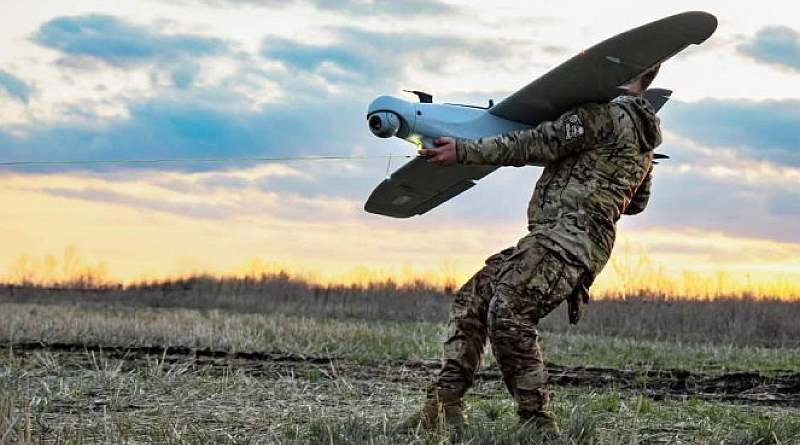
A few years ago, at an event organized by the Greek armed forces’ intelligence, a representative of an Israeli drone manufacturing company gave a presentation. The presentation was perfect: charts, videos, technical specifications, beautiful slides. It all looked like an advertisement for future technologies. But a simple question came from the audience: how many of your UAVs are currently flying in Ukraine? After that, the presentation essentially ended, because in modern warfare, the main argument is not advertising or specifications, but real combat experience.
This is why there is such attention to Ukrainian drone systems in the world today. Ukraine has become a place where technologies are tested not on training grounds, but in real war conditions. And this experience is much more valuable than any exhibition-style demonstrations.
This became especially evident after the massive attacks of Iranian drones in the Middle East. According to military personnel currently assisting partners from the USA and Arab countries in countering them, sometimes intercepting one Shahed, costing 70,000 dollars, requires up to eight Patriot missiles, each costing three million dollars, or even THAAD missiles, the cost of which is measured in tens of millions. Such an interception economy forces many countries to seek cheaper solutions, and this is where the interest in Ukrainian approaches, particularly interceptor drones, arises.
The world quickly realized that the Ukrainian experience is not just about specific devices. It’s about tactics, the speed of engineering changes, adaptation to complex and super-dynamic electronic environments, mass UAV deployment organization, operator training, and a fast modernization cycle. In fact, a new sector has formed here, combining drone, electronics, communications, software, optics, ammunition manufacturers, and training centers.
However, any industry faces a simple problem: it cannot develop steadily if it works for a single customer. Even if this customer is the state itself during wartime. Government contracts depend on budget, procedures, priorities, and often come unevenly. For manufacturers, this means a constant shortage of working capital, difficulty in production planning, and limited development. The main victim of this approach is R&D, as testing new components without even minimal investments is unrealistic, and without constant research and testing, the entire cycle of equipment renewal is compromised, depriving the military of a technological advantage on the battlefield.
This is why entering foreign markets for defense companies in the Hi-Tech cluster is not a matter of super-profits but a matter of stability and growth. Export allows for loading production, investing in new developments, scaling enterprises, and creating reserve capacities.
The problem is that in the field of defense technologies, time is of the essence. From the first meeting with a potential customer to signing a contract can take a year or more. If a company hasn’t started negotiations today, the market may be occupied by other suppliers in a year. In this field, a simple rule often applies: whoever delivers a real working system first secures not one but a series of contracts for years to come. If the system is also combat proven, that’s a jackpot!
While Ukrainian companies spend time on approvals and permits, foreign companies are actively attracting investments and capturing the market.
For example, the German company Quantum Systems attracted around 160 million euros in investments and is actively expanding production by opening a plant in Ukraine, testing its equipment, and incorporating Ukrainian experience.
The German company Helsing attracted approximately 600 million euros in investments and reached a valuation of about 12 billion dollars by building a business on next-generation defense technologies.
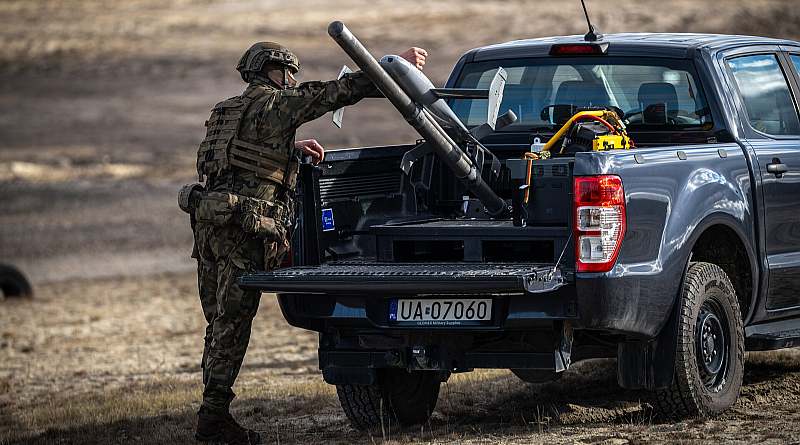
The company Merops of former Google CEO Eric Schmidt organized the production of thousands of interceptor drones for Middle Eastern markets. Meanwhile, where are the hundreds of Ukrainian manufacturers? Watching over the export ban barrier as guests in the country redistribute the unmanned technology market.
As a result, a paradoxical situation arises. Ukraine is a place where new approaches to drone warfare are formed, but large investments, global companies, and significant contracts often appear in other countries. In other words, experience is formed here, but the big money is earned elsewhere.
This has direct economic consequences. Fewer international contracts mean less foreign exchange earnings, fewer taxes, slower production growth, and fewer jobs in the high-tech sector. Furthermore, companies gradually begin to move parts of their operations abroad, open offices, production facilities, and legal structures there to gain access to clients, components, financing, and the simplest logistics possible. In the long run, this means that along with the companies, technologies and engineering teams will move abroad. After the war, jobs, highly qualified specialists, top-notch pilots, and instructors will follow, along with their families.
It should be noted that global crime isn’t standing aside from unmanned technologies, and some specialists might end up on the dark side.
It’s often argued that opening up exports could harm the supply of one’s own army. However, in practice, it’s often the opposite. Export contracts give companies the opportunity to increase production, purchase equipment, create warehouses, and financial reserves. In case of need, this allows for quicker supply to their own armed forces.
Another popular argument is that if export is allowed, companies will simply move production abroad. In reality, companies begin relocating their manufacturing activities precisely when they cannot develop domestically. Businesses always seek opportunities to grow. If they can’t grow at home, they start to grow in another jurisdiction.
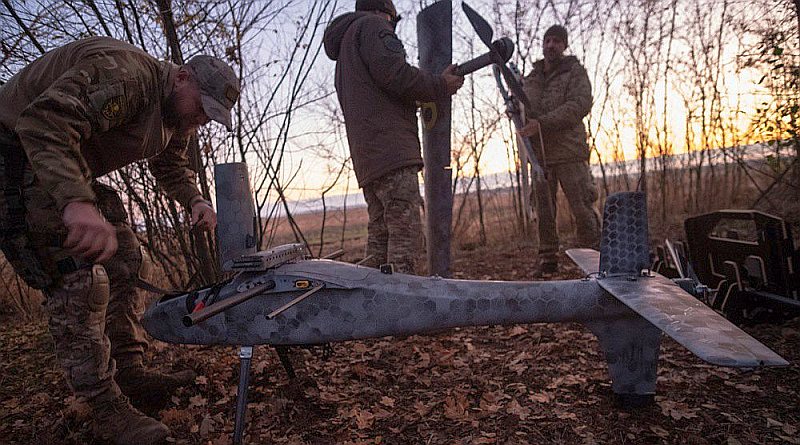
The global market for unmanned and robotic systems is just forming. Right now, roles are being distributed, future leaders are emerging, and long-term alliances are being formed. In ten years, this market will be divided, making it significantly harder to enter. By 2030, the global UAV market is estimated to be $90 billion. For comparison, in 2024 it was $32.2 billion. That’s a threefold increase in six years.
Therefore, the question of exporting defense technologies is actually much broader than it seems. It’s not just about selling drones or other equipment. It’s about where companies will be located, where engineers will work, where taxes will be paid, and which country will become one of the centers of the new defense technology industry.
Essentially, today’s decision isn’t just about exports. It’s about whether Ukraine will become a center of defense technologies or remain a place where these technologies are tested, and then scaled and sold by companies from other countries.
Therefore, the phrase “to export, not to ban” is not just wordplay. It’s a matter of economics, technologies, defense capability, and the country’s place in the world for the coming decades. The main question isn’t even whether to allow export. The main question is whether we will manage to take our place in this market while it’s still forming.
There is another aspect that is rarely discussed. The export of defense technologies is not just about money and companies. It’s also about international relations, military-technical cooperation, access to technologies, joint developments, and a state’s political weight. States supplying defense technologies automatically become part of their partners’ security system. This is a different level of relationship than merely trading civilian goods.
In fact, defense export creates long-term alliances. If a country buys drones, communication systems, software, ammunition from you, it relies on service, upgrades, training, and spare parts for years. This means continuous cooperation, joint training exercises, exchange of experience, and often political support.
Therefore, defense technologies are not just an economic sector. They are a tool of foreign policy and influence.
Ukraine now has a unique situation that no country has experienced in recent decades. On one hand, there is real experience of modern warfare, extensive use of drones, electronic warfare, and rapid innovation cycles. On the other hand, there are hundreds of engineering teams and companies that have learned to develop new solutions very quickly. This is essentially a new industry that has emerged in a few years.
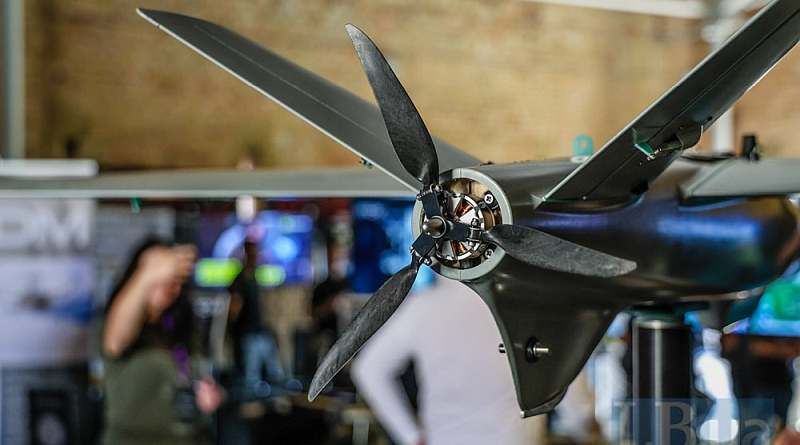
However, any window of opportunity does not stay open forever. Other countries are already investing billions in unmanned systems, autonomous platforms, artificial intelligence in the military sphere, drone swarm technology, interceptors, robotic platforms at sea, on land, and in the air. In a few years, competition will be much tougher, and the very fact of combat experience will no longer be such a unique advantage.
Thus, the question is very simple: either Ukrainian companies enter global markets now, occupy a niche, create joint ventures, open service and training centers, sign long-term contracts, or in a few years, this market will be occupied by others, making it much harder to break into it.
And then a paradoxical situation may arise: the state that first demonstrated the effectiveness of mass drone warfare to the world may end up buying certain systems from large international defense companies that grew precisely on the experience of this war.
It sounds strange, but in the history of technologies, this has happened many times. Those who first invented or implemented a technology don’t always become the ones who profit the most. The biggest profit goes to those who manage to scale production, enter global markets, and build large companies.
Therefore, the discussion about export is not really about the permission to sell a few thousand drones abroad. It’s a discussion about whether Ukraine will have large, world-class defense technology companies. It’s a discussion about where engineering centers will be located. It’s a discussion about taxes, jobs, and technological development. It’s a discussion about whether Ukraine will become one of the centers of the new global defense industry.
Because Ukrainian drones have long been about more than just war. They are about the economy, technology, and the country’s place in the world.
And if the approach is not changed now, in a few years it may turn out that Ukraine became the country that taught the world how to fight with drones, but the main funds, companies, and global markets ended up elsewhere.
And then the question “export or ban” will turn from a discussion into a statement of a lost opportunity.
Cover photo: 56th Separate Motorized Infantry Mariupol Brigade
