
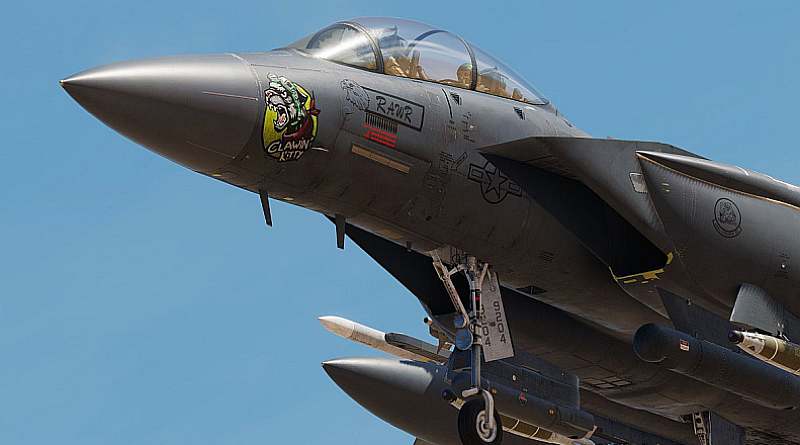
On April 3rd, near the Karun River close to Behbahan, Khuzestan Province, Iranians shot down an F-15E Strike Eagle aircraft (tail number 96-0204) from the 494th Squadron Mighty Black Panthers of the 48th Fighter Wing of the US Air Force (stationed at RAF Lakenheath in the UK). The pilot and the weapon systems officer ejected. On the tail of the squadron’s aircraft, there is a red stripe and the image of a panther. Specifically, on the downed aircraft, there was a black, scratching kitten and the word Rawr (“roaring”). In 2024, this aircraft operated in Syria and once shot down ten enemy UAVs in a single sortie.
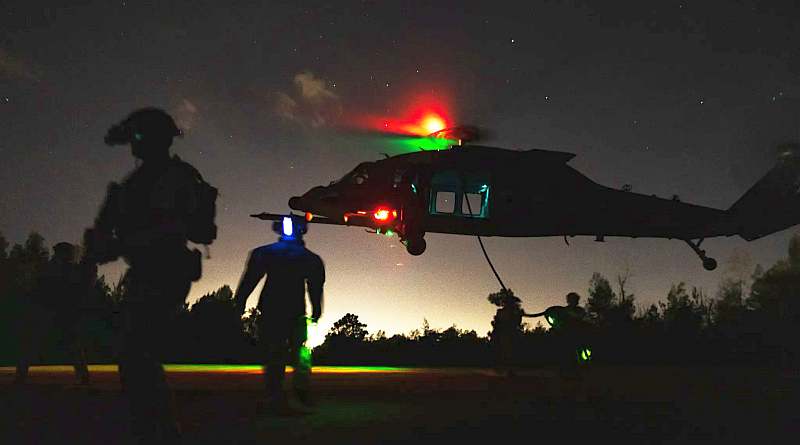
Upon receiving the signal that the aircraft had been hit, the Americans initiated Guardian Angel — a standard search and rescue operation plan for the US Air Force. Navy special forces (6th SEAL team) and specialized Air Force special forces for these tasks: Combat Search and Rescue (CSAR), Combat Rescue Officers — along with escort aircraft, were sent to search for the crew. Usually, CSAR rescuers operate from HH-60W Jolly Green II helicopters and have their own refueling aircraft HC-130J. CSAR personnel are tough guys, combining skills of special forces, medical assistance, and survival. Because who knows where an ejected pilot might end up?! The unit’s motto: These Things We Do, That Others May Live.
This time, a pair of planes landed in a remote area of Iran, from where the special forces started their operation. The pilot was found the same day and evacuated. The injured weapon systems officer landed at the bottom of a gorge and, understanding that both sides would search for the crew, did not activate the emergency beacon or make contact (pilots carry secure radios for such cases). He climbed 2000 m (almost the height of Mount Hoverla) over two days, only then signaling his presence for the rescue team. From there, everything proceeded smoothly, and the weapon systems officer (rumored to be a colonel) is already in a hospital at the base in Kuwait. In a post on Truth Social, Donald Trump described his condition as critically injured.
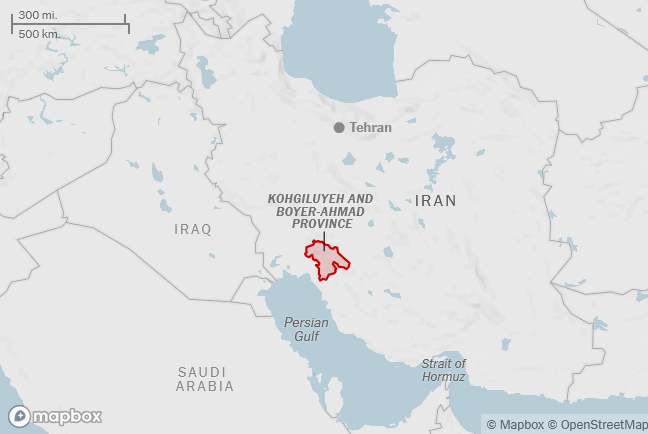
Iran announced a reward of 60,000 USD for each pilot captured alive.
Why am I telling you this?
For the rescue of TWO US Air Force pilots, the following were used (according to open source information):
• two HH-60W Jolly Green II helicopters with search and rescue teams;
• an HC-130J Combat King II tanker aircraft (serving as an advanced airborne command post for the mission);
• several A10 Warthog (Thunderbolt II) attack aircraft to support ground teams (one was shot down, the pilot ejected over Kuwait);
• several F-35 fighters for reconnaissance, air defense suppression, general coverage;
• several MQ-9 Reaper drones for reconnaissance and ground target engagement if needed;
• up to a dozen other aircraft (as Trump said, this might not be reliable).
USAF HC-130J and HH-60G Pave Hawks on a deep combat search and rescue for the downed F-15 Strike Eagle crew in Iran. pic.twitter.com/vhCqUupLuz
— OSINTtechnical (@Osinttechnical) April 3, 2026
Now, let’s take a calculator.
The rescue of two pilots during a two-day search and rescue operation with low-altitude flights and low-altitude helicopter refueling approximately might cost:
• Operation of HH-60W Jolly Green II / HH-60G Pave Hawk helicopters (2+ helicopters for search and evacuation, both damaged by ground fire but returned to base): $10.5–11.3k per flight hour. Assume 4–8 hours per helicopter (search + evacuation + return) × 2–4 machines = $100–400k;
• Operation of support and refueling aircraft HC-130J Combat King II: about $10–20k per hour. For low-altitude missions and multiple refuelings — $200–500k;
• Operation of A-10 Warthog attack aircraft: $6–18k per hour. If one or two aircraft flew for several hours, $50–200k. One A10 was lost, add $18–20 million for the aircraft itself;
• Flight resources for F-35, MQ-9 Reaper, other fighters, drones, reconnaissance: F-35 — $30–40k per hour, F15/F16 — $20–30k per flight hour. For Trump’s “dozen aircraft” — $1–5 million easily.
All operational costs for CSAR: $2–10 million.
Approximate cost of the operation:
• minimum estimate (only CSAR, without losing F-15E): $3–8 million (flight hours + support);
• realistic estimate (with loss of F-15E): $85–110 million;
• maximum estimate (considering full support, damage to several aircraft, ammunition, and loss of A-10): $120–150 million.
Our assumptions do not include medical evacuation, treatment of the wounded, depreciation and repair of damaged helicopters, indirect costs (personnel, logistics, intelligence, etc.).
Let’s not forget that due to technical reasons, two special operations transport planes MC-130J Commando II could not take off from an improvised site in the mountainous area of southwestern Iran (they were supposed to evacuate rescuers, commandos, and rescued pilots). Both were destroyed to prevent them from falling into enemy hands. The price of such a plane is $100 million (excluding special equipment for special operations, special communications, and cryptography). We add another $200 million. To execute the evacuation, three more of these planes arrived in the area, also expending certain non-free resources.
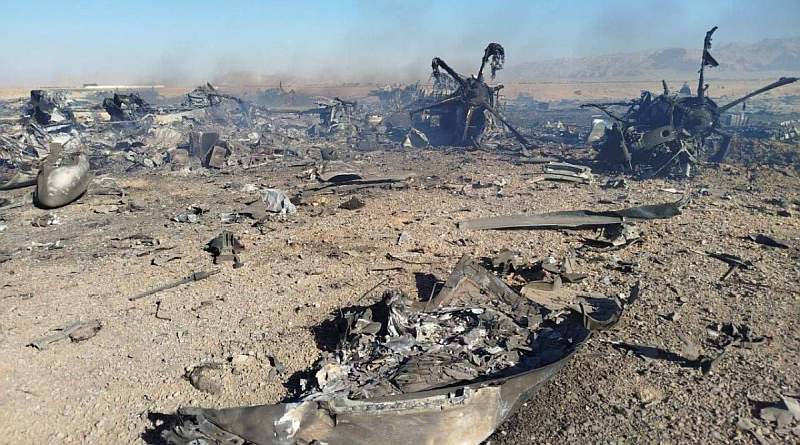
The lives of two pilots are worth more than $350 million to the US Air Force.
This is what no one left behind means (“no one is left behind enemy lines”).
When we sit down to talk about the value of a soldier’s life, we should remember not the enormous sums of money and the cost of equipment/resources but life itself.
The Ukrainian Special Operations Forces can do the same. In 2014, a special forces regiment conducted a successful operation to evacuate a fighter pilot who was shot down near Luhansk. The group went behind enemy lines, found the pilot, and disguised him according to local fashion. The evacuation was brilliant: the group with the pilot boarded a diesel train, arrived without incident at the Hirske station, where they crossed the front line. The pilot later recounted that the scariest part was hiding in the forest under a huge fir tree, while nearby two children were gathering forest goods. Thankfully, the kids bypassed the tree.
For objectivity and balance, it’s worth mentioning not only positive cases but also sad ones.
In memory of Sergeant Zhuravliov, whose life was lost in vain, shamefully, publicly, and virtually online. And no one was held accountable.
Cover photo: Corporal Alora Finigan/U.S. Marine Corps
